Views: 211
Writing about beauty products has taken me to some dreamy places, from rose fields in Provence to ritzy Manhattan penthouses. But my most recent beauty journey—to Paris—found me at the cosmetics equivalent of a tech conference. In fact, if it weren’t for the singular wee-woo sound of the city’s police sirens, you’d think I was in Cupertino, Calif., applauding a new iPhone. Instead, I found myself at Le Visionnaire, L’Oréal’s historic headquarters on Rue Royale, where the stage was set for a day of keynote addresses, panel discussions and bated-breath announcements—all centred around the theme of longevity. You’ll encounter that word, “longevity,” a few times in this story—and likely in many to come, as the term has become the beauty industry’s latest rallying cry. “Longevity is an age-old dream of life that defies time,” says Barbara Lavernos, L’Oréal Groupe’s deputy CEO in charge of research, innovation and technologies, in her keynote address. Today, that dream is coming closer to reality, as people are living longer and longer. (The global centenarian population is estimated to increase to 3.7 million by 2050, compared to just 500,000 in 2015; plus, by 2040, it’s estimated that one in every five people will be over 60.) But, as Lavernos says, “it’s not just about counting the years but making them count.”
Lancôme Cell BioPrint. Photography courtesy of L’Oréal
If we’re living longer than ever, it stands to reason that we would want to feel—and, let’s be honest, look—as good as possible for all those added years. But it goes deeper than that. “The skin is a mirror to overall health,” says Dr. Andrea Maier, a pioneer of aging science and a professor at the National University of Singapore, during one of the day’s panels. “If I have a wrinkle on my face, then it’s likely I have a figurative wrinkle on my heart,” she reasons. Just don’t call it “anti-aging,” which has typically taken a reactive approach to correct what’s already happened. For L’Oréal (which, in case you need a reminder, is the world’s biggest beauty company, with dozens of brands under its umbrella), longevity is about taking a proactive approach that’s bolstered by cutting-edge technology. To that end, the company has been quietly acquiring various biotech and software start-ups (including Toronto’s own Modiface, which uses augmented reality to enable virtual makeup try-ons) to boost its innovation power and leveraging AI to rapidly analyze its 17,300 terabytes of qualified data.
Lancôme Cell BioPrint. Photography courtesy of L’Oréal
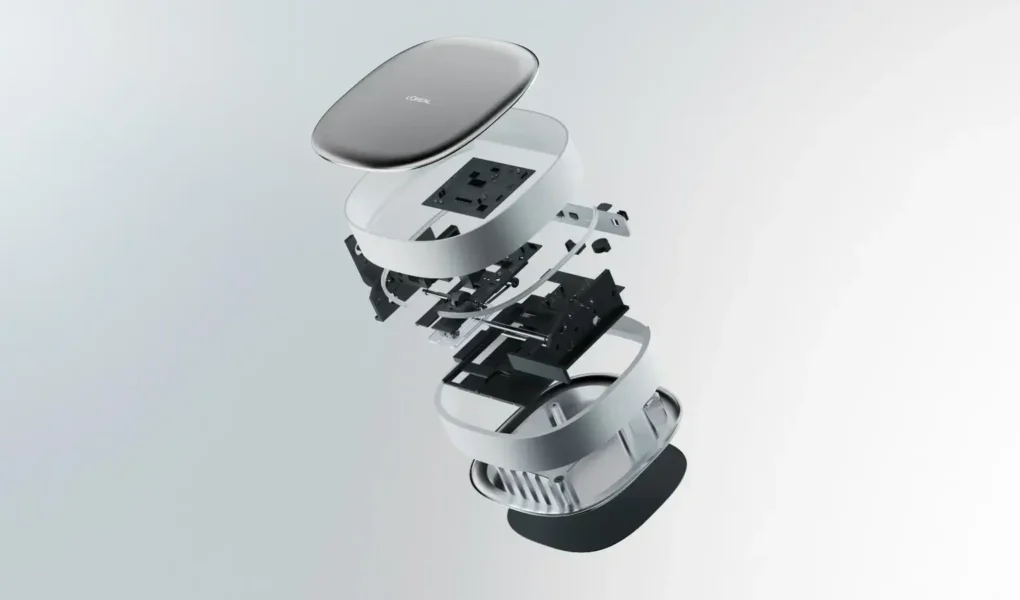
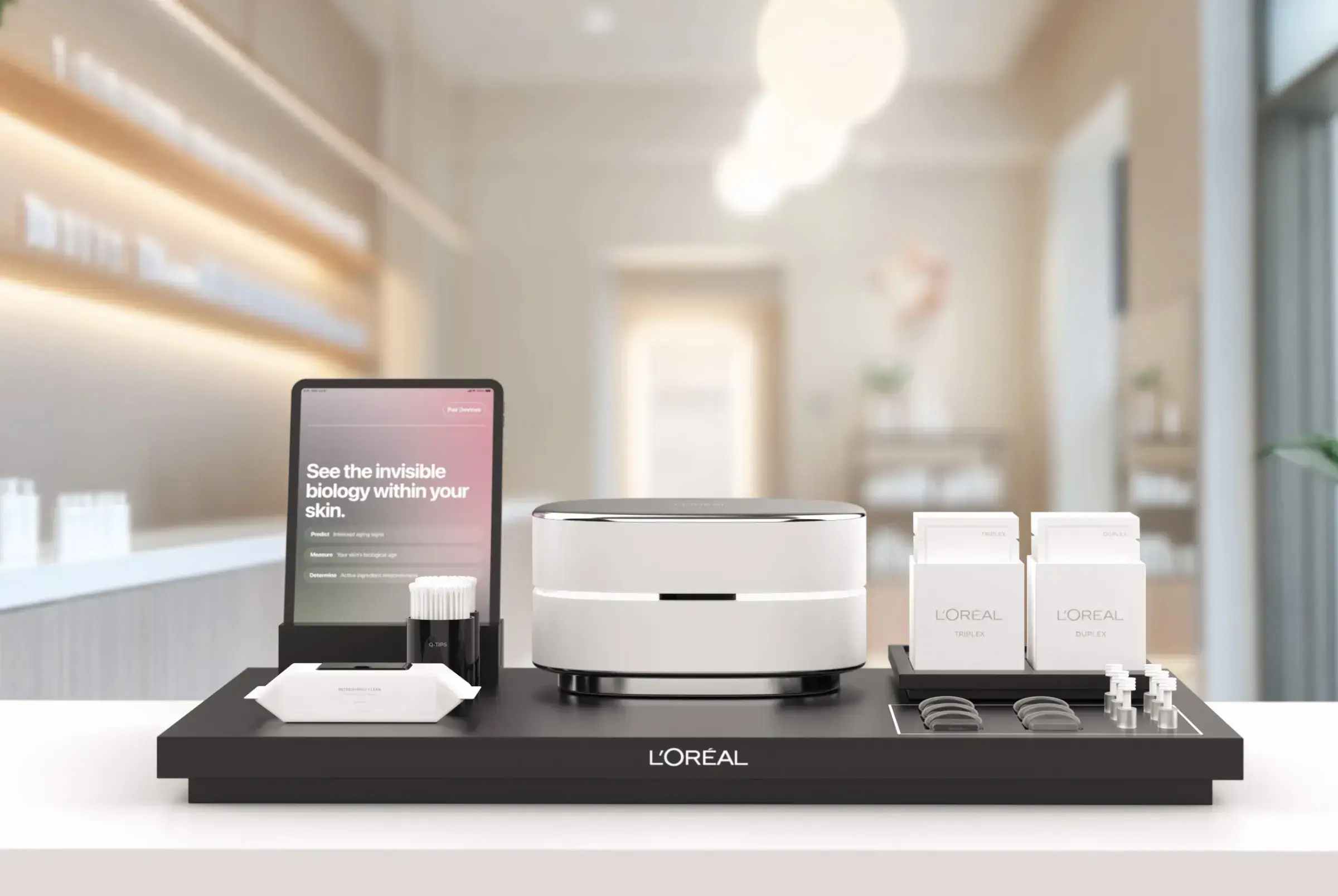
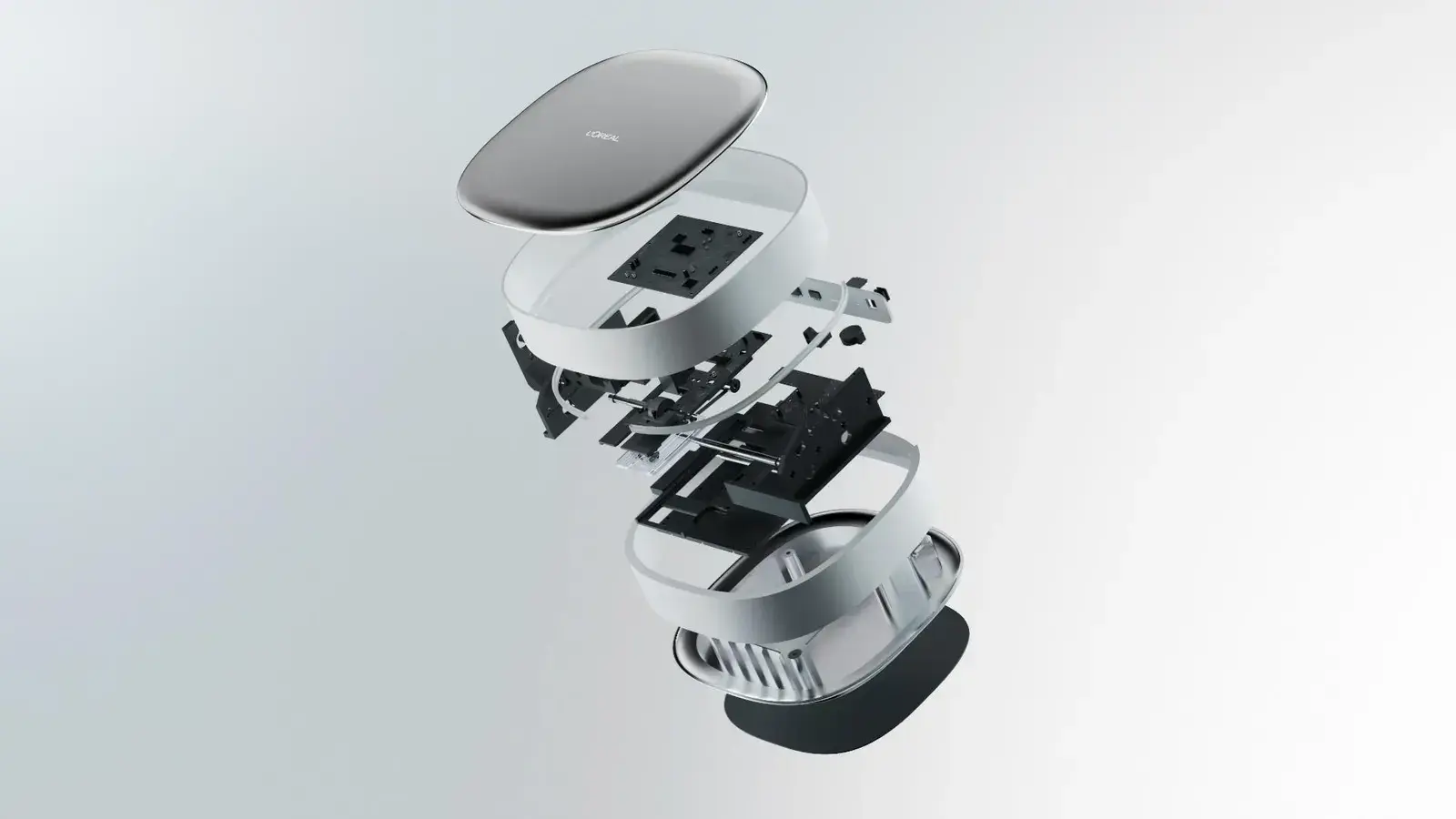
But how does all of this techy buzz trickle down to the average skincare enthusiast? One example: the hot-out-of-the-lab Lancôme Rénergie Nano-Resurfacer 400 Booster (available in October), an at-home device inspired by professional microneedling. Instead of needles, it uses more than 400 ultra-precise nano-tips to create invisible micro pathways to boost serum absorption and deliver clinical-grade results on wrinkles, dark spots and skin texture—all without pain or downtime. Then there’s the Lancôme Cell BioPrint, a tabletop device that relies on a small tape strip that’s applied to the face and then analyzed in just five minutes by looking at the skin’s protein biomarkers. It accurately calculates your skin’s biological age (which is not the same thing as the age on your driver’s licence, by the way), predicts its responsiveness to ingredients like retinol and forecasts future issues. When the device hits Lancôme counters in 2026, it will help usher in a new era of hyper-personalized product recommendations. Talk about skincare that’s in it for the long haul. This article first appeared in FASHION’s September 2025 issue. Find out more here. Continue Reading