Views: 145
Mario Fugnitto’s moulded-leather bodices make the wearer look as if they’ve been dipped in the material like a Greek statue cast in bronze. It’s his signature look, and it’s one that has found its way onto the likes of Lauren Chan and Charli XCX. Fugnitto achieves this by soaking the leather in water for hours, breaking it down until it becomes malleable enough to closely mimic the landscape of the body. It’s an expensive, time-consuming process, and Fugnitto admits to sleeping for only four hours a night. He wakes up at 4 a.m. to pursue not only the craft that has made him famous but also the one that pays the bills: making dance costumes for halftime-show amusements like the Raptors Dance Pack.
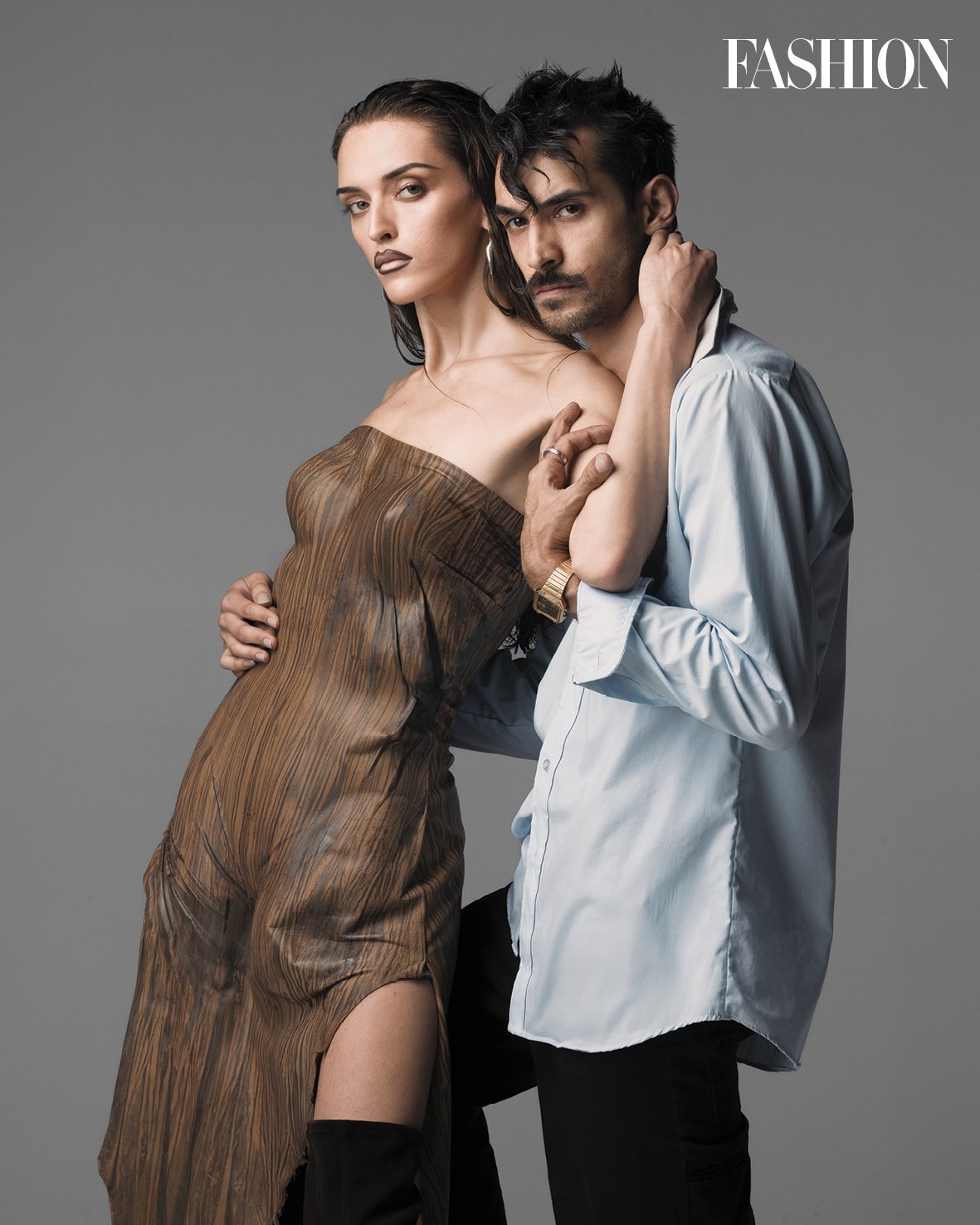
On Fugnitto: Watch, Citizen. Top, pants and ring, Fugnitto’s own. On model: Dress, Fugnitto. Boots, Jimmy Choo. Earrings, Vimeria.
Such is the life of the modern designer: creating beautiful fantasy while fighting against harsh commercial reality. This push-pull is one that most fashion designers constantly grapple with. And while the abundance of fashion talent in this country is a given, the career is often described as hard and lonely.
That might be especially true for Canadian designers. As someone who has written about “the state” of the Canadian fashion industry for over a decade, I can tell you that the story typically goes something like this: A lack of robust investment, government funding, recognition or market share stifles fledgling brands. The Canadian fashion customer is painted as a cliché of risk-averse practicality, clad in Lululemon spandex and sheathed in a parka. A fashion capital we are not—not without the institutional infrastructure of Paris or Milan. Our shopping malls are filled with foreign-owned chains peddling products made even farther away.
Hold on—aren’t we living through a period of renewed national pride? Haven’t tariffs and invasion threats, along with a push for sustainability and individual expression, made buying from Canadian designers a compelling—even necessary—proposition?
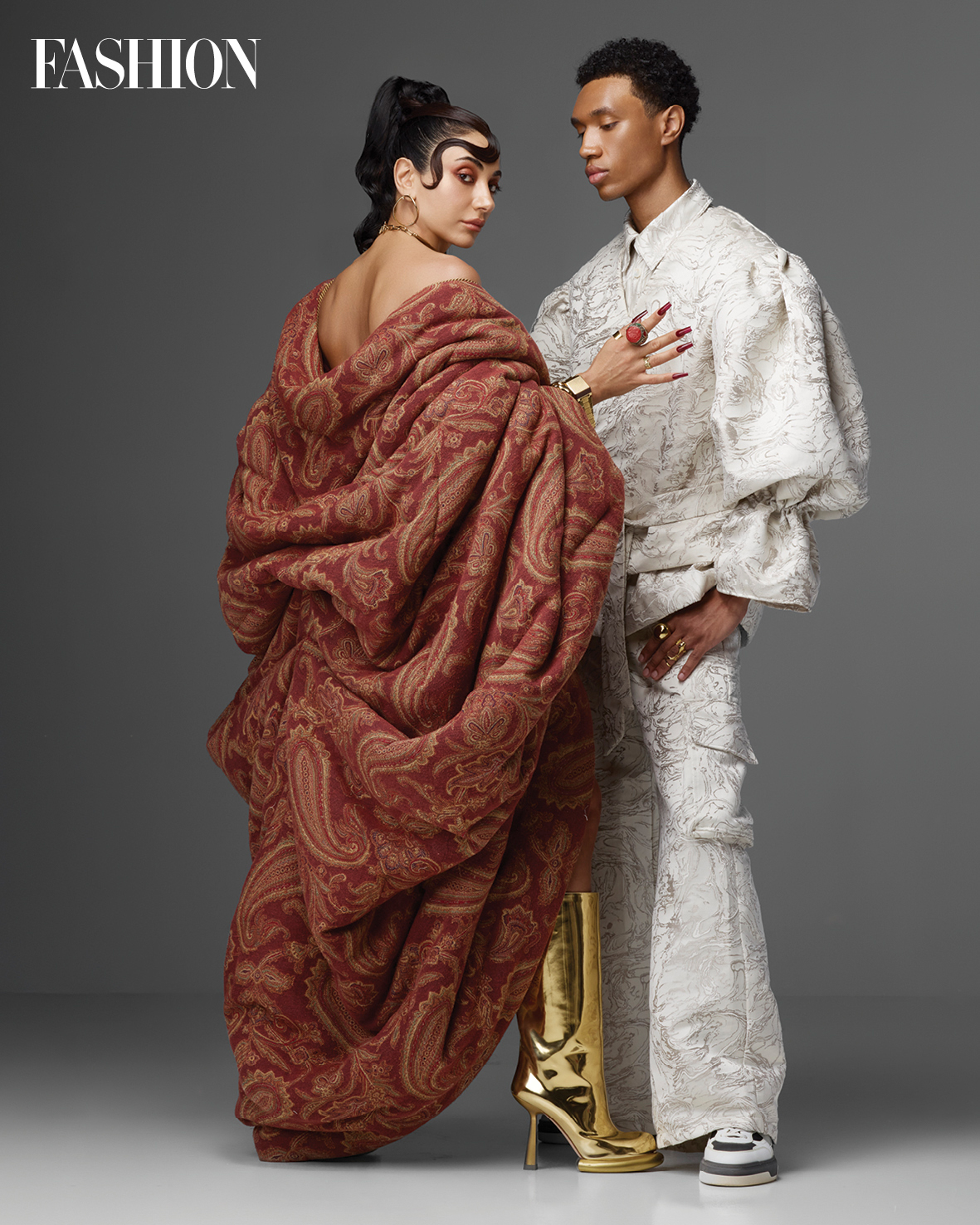
On Who: Coat, Dorian Who. Boots, Francesca Bellavita. Necklace and bracelet, Vitaly. Watch, Bulova. Earrings and rings, Who’s own. On model: Jacket, top and pants, Dorian Who. Shoes, Christian Louboutin. Rings, Who’s own.
If any designers have benefited from a “Shop Canada” movement, Dorian Who isn’t among them. “Most of my orders come from the U.S.,” Who tells me on the phone from Paris, where she’s attending the couture shows. Who is known for her maximalist, genderless designs that pay tribute to her heritage (her family is in the Persian-rug business), and she’s determined to keep making her line in Canada. Yet Canada isn’t making it easy for her. “I’ve had moments when I’ve asked myself, ‘Why am I even doing this here?’” she says, pointing out that something as simple as making a buttonhole is difficult to do locally.
Despite the accolades, awards and collaborations with brands like Nike and Puma, Who doesn’t feel like a success—at least not yet. “Everyone thinks I’ve made it, but I’m struggling,” she says, alluding to her Instagram presence, which depicts a jet-setting lifestyle of beautiful clothes and endless glamour. “I’m tough on myself,” she admits.
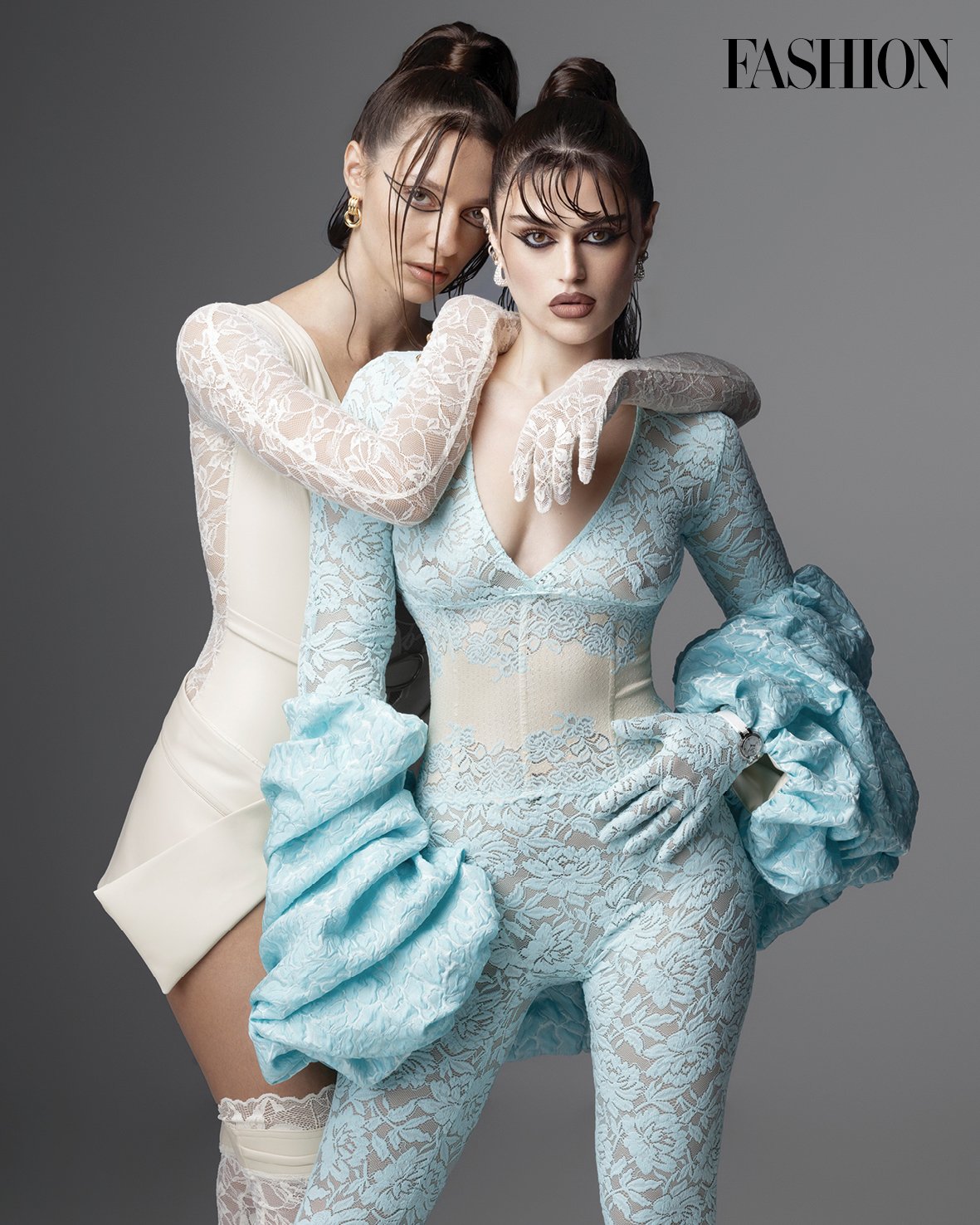
On Szynkarsky: Catsuit, Brielle. Earrings (bigger), Drae Collection. Watch, Bulova. Earrings (smaller), Szynkarsky’s own. On model: Bodysuit and socks, Brielle. Earrings, Drae Collection.
In order to take their brands from modestly profitable creative outlets to sustainable, long-term businesses, designers need outside investment. “I’m getting really frustrated,” says Gabrielle Szynkarsky, a retired competitive-ski racer who pivoted to fashion earlier than planned following a failed knee surgery.
“It’s getting to the point where I have to look outside Canada,” Szynkarsky tells me from her office in Montreal, adding that her target customer isn’t necessarily here. “They’re in L.A., they’re in Miami. When I show my business outside Canada, they get it instantly.”
Szynkarsky’s line, Brielle, is all about high-octane going-out clothes inspired by her aerodynamic ski suits (if ski suits were made of lace and latex, that is). Her clothes have been worn by celebrities like Kourtney Kardashian, yet Szynkarsky does not pay herself a salary so that she can put earnings back into the business. Without an outside cash injection, she may never be able to break this cycle and take her brand to the next level. Still, Szynkarsky is dauntless. “There is no Plan B,” she says, crediting her athletic career for the discipline. “If you want your child to grow up to be a fashion designer, put them in sports,” she jokes.
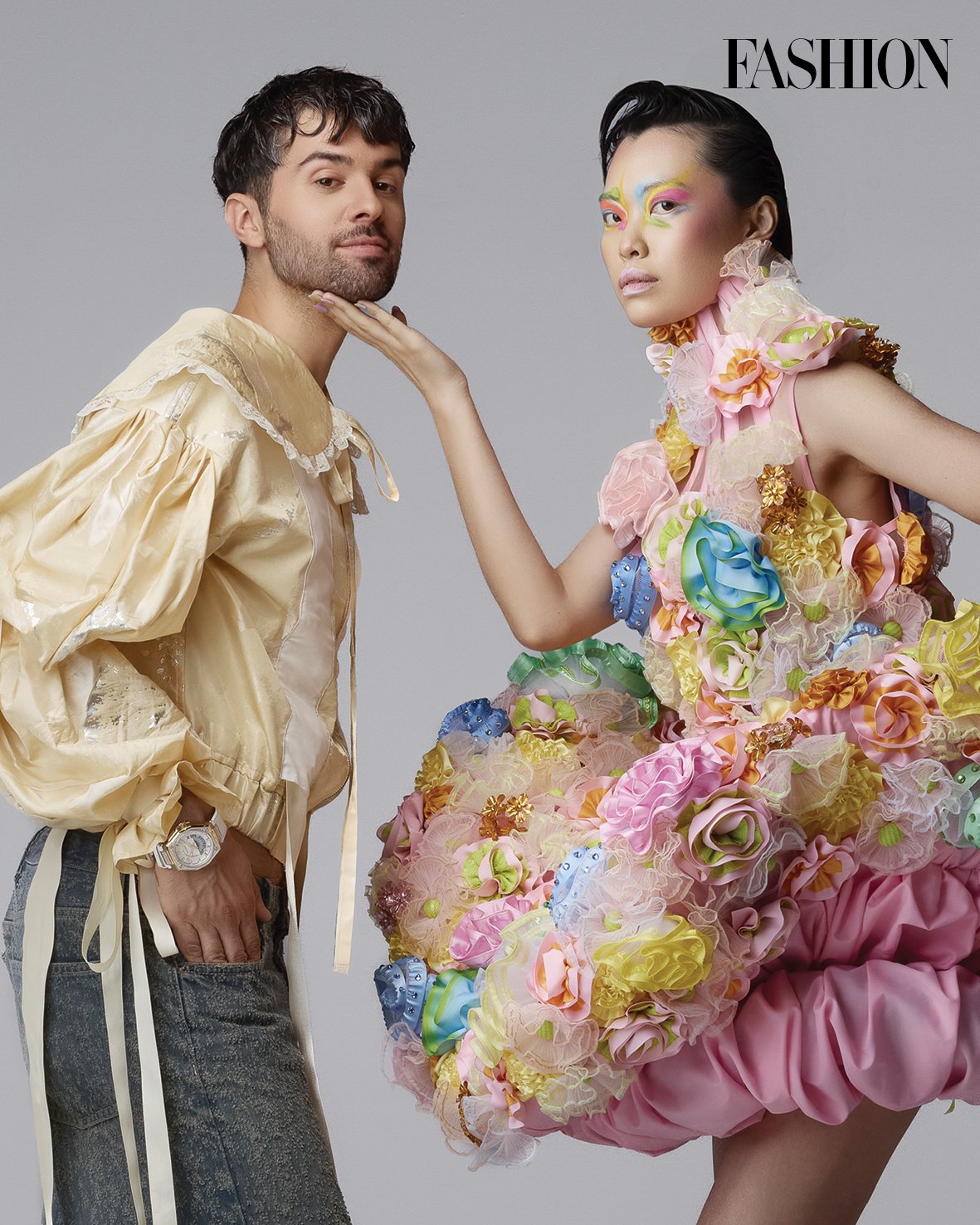
On Réhel: Top and pants, Tristan Réhel. Watch, Bulova. On model: Dress, Tristan Réhel.
Some designers still manage to retain a romantic vision of their work. Montreal-based Tristan Réhel considers himself an artist first, an entrepreneur second—an approach in keeping with his fantastical designs. Thanks to his background in theatre, his MO is surrealism, with one of his collections titled Wake Up. It’s Not Real.
Réhel creates an escapist alternate reality that celebrates the ideas of chosen family and club-kid culture. For him, success is not about money or visibility—it’s about “the opportunities that my creation can bring me,” he says. And while he points out that being from Canada is what makes him the designer he is, our conversation takes place days before Réhel is set to relocate to Antwerp, Belgium, to attend art school.
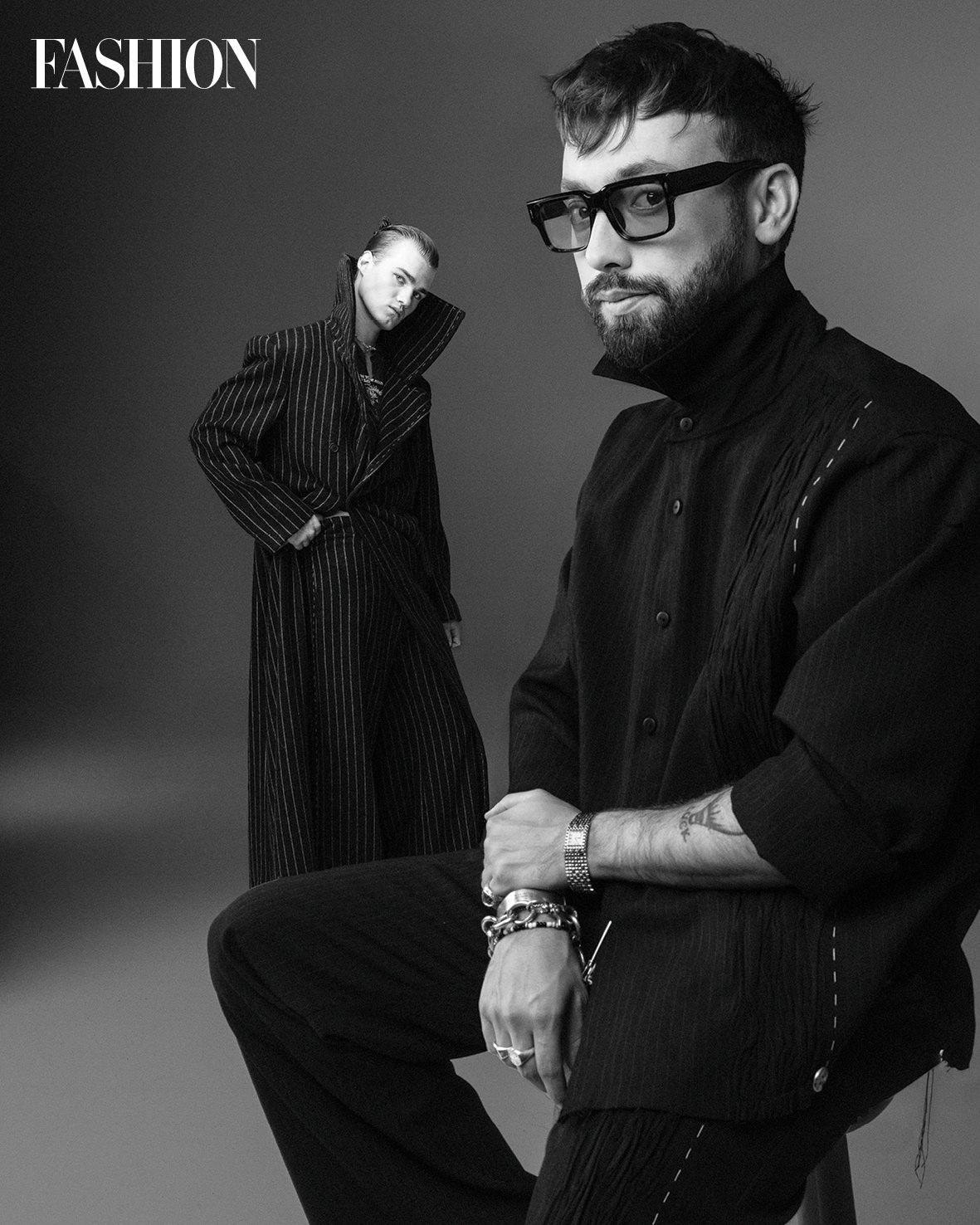
On Gollish: Jacket and pants, Mr. Saturday. Watch, Frédérique Constant. Glasses, bracelets and rings, Gollish’s own. On model: Coat, top and pants, Mr. Saturday. Necklace, Vimeria.
Going abroad is a common theme in these conversations, with Paris circled on several of the designers’ maps—Joey Gollish’s included. “Canada is such a point of inspiration for me, but Paris is the home of fashion,” he tells me from his office at the Roots headquarters in Toronto, where he works as creative director in residence for the classic Canadian brand. He’s also the founder of Mr. Saturday, which he likens to a “wearable museum,” where every collection celebrates a different moment in subcultural history—punks, skaters et al.—through the lens of tailoring.
If only you could be successful if just Canadians listened to your music or watched your TV show, but the world doesn’t work like that.
By any measure, Gollish is a success, something that did not come without challenges: He cites broken relationships and a terrible, since-recovered, credit score. He chalks this up to his business acumen (before fashion, he co-founded a software company) and also his refusal to limit himself to being just a “Canadian” designer. “If only you could be successful if just Canadians listened to your music or watched your TV show, but the world doesn’t work like that,” says Gollish.
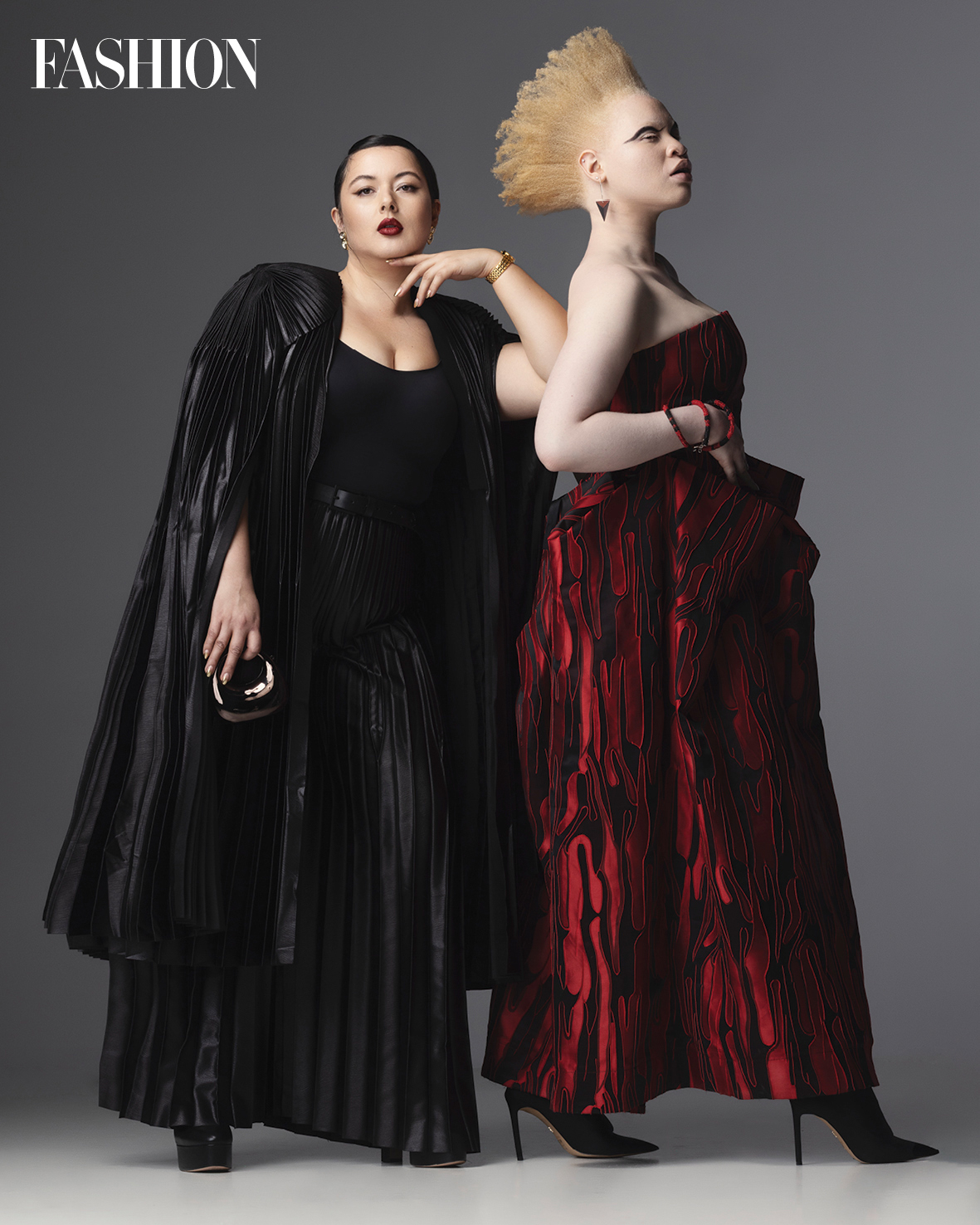
On Hampton: Jacket, top, pants, belt and bag, Lesley Hampton. Shoes, Malone Souliers. Earrings, Drae Collection. Watch, Citizen. On model: Dress, drop earrings and bracelet, Lesley Hampton. Boots, Aldo. Stud earrings, model’s own.
Lesley Hampton made a name for herself as a trail-blazing Indigenous designer, model and activist. Today that’s a niche she’s looking to mindfully break out of while remaining rooted in her Anishinabe heritage. “I don’t want to see only Indigenous people in the audiences of Indigenous fashion shows,” she says.
Hampton, who started her line while still in fashion school, just wrapped a pop-up at Holt Renfrew’s Mississauga location, but a more permanent presence inside luxury department stores is the goal. “There’s still a lot of education to be done,” she shares. “People are still asking ‘Wait, can I wear this?’” Hampton still classifies her brand as a small business and reveals that she needs to figure out how to pay herself a salary better. “Right now, it’s a building game,” she says.
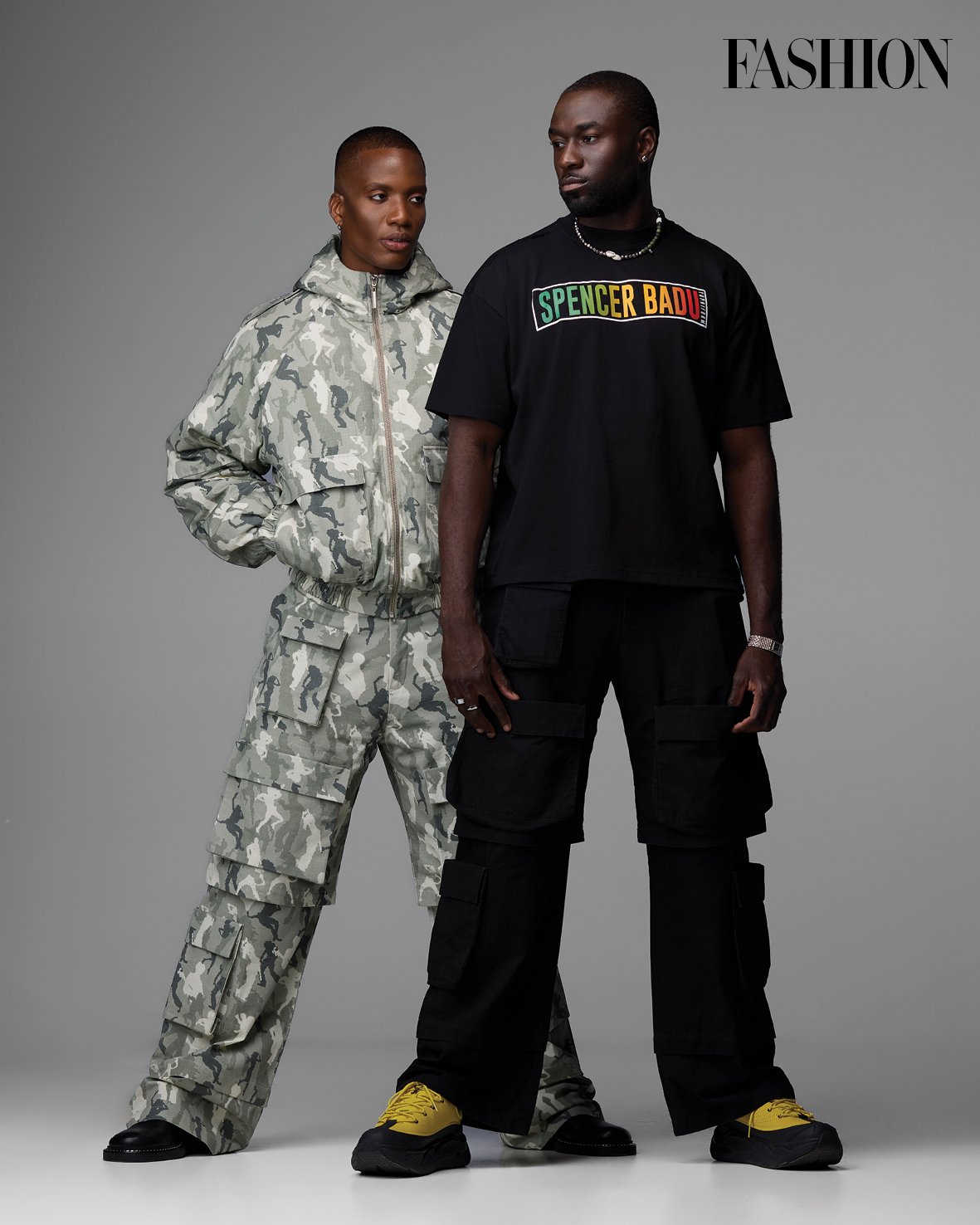
On Badu: Top and pants, Spencer Badu. Shoes, Hoka x Spencer Badu. Watch, Frédérique Constant. Earring, necklace and rings, Badu’s own. On model: Jacket and pants, Spencer Badu. Shoes, Jimmy Choo. Earring, model’s own.
Spencer Badu’s brand of wardrobe essentials rooted in utilitarian ease has been on a steady growth trajectory for 10 years. It’s profitable, though Badu does not share the exact figures. He credits this to a focus on his own direct-to-consumer e-commerce along with commercial collaborations that include a running shoe with Hoka and a custom Toronto Raptors jacket with Ruffles (yes, the potato chips).
These collaborations are important for Badu because they force him to challenge his own perceptions of his brand, pushing its evolution. Plus, he’s laser-focused on the kinds of clothes his customer actually wants to wear. “Then I feel like I’m doing my job and I’m not just wasting fabric,” he offers.
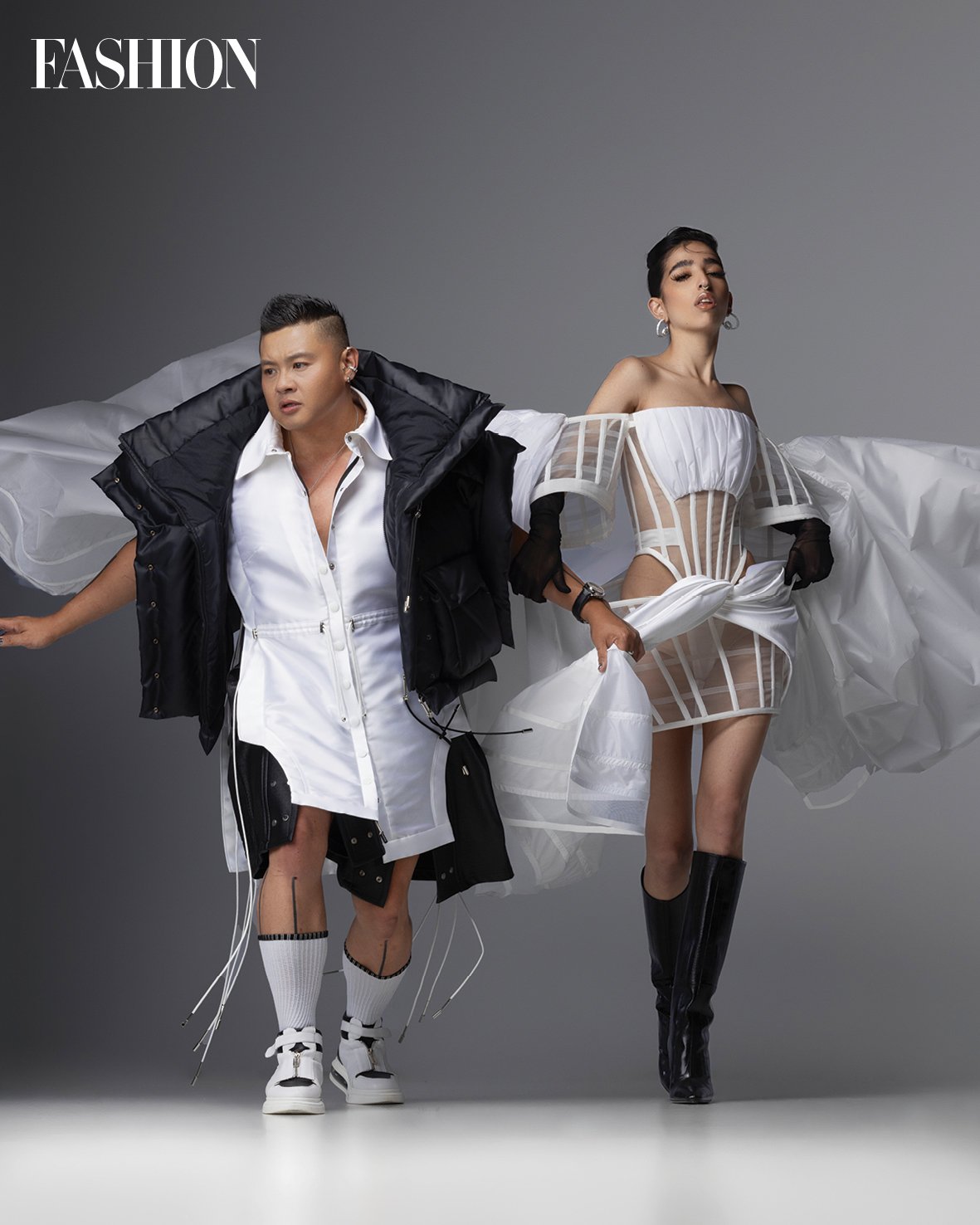
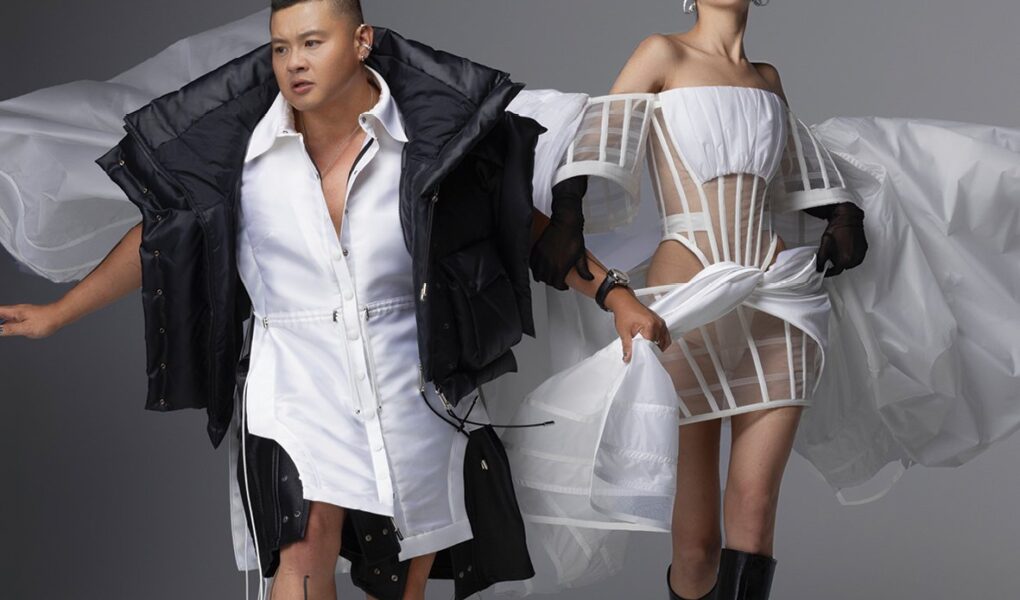
On Lu: Jacket, top and shorts, Charles Lu. Watch, Accutron. Earrings, necklace, ring, socks and shoes, Lu’s own. On model: Dress, Charles Lu. Boots, Fendi. Earrings, Swarovski. Gloves, stylist’s own.
This sentiment is shared by Charles Lu, the only Canadian designer to compete on Next in Fashion (Netflix’s answer to Project Runway), finishing in fifth place in the show’s debut season. “I’m sorry, but some designers just aren’t good enough,” says Lu, whose work exists at the intersection of casual streetwear and glamorous gowns, usually in a strict monochrome palette.
As much as we want to talk about fashion being so, so creative, it’s a business and a monster you have to feed.
Lu is planning a capsule collection that distills the avant-garde origins of his brand into a more sellable offering. “People think that’s a death sentence, but for me it’s exciting because I want to be making the kinds of clothes I’d actually want to wear,” he says, adding that “as much as we want to talk about fashion being so, so creative, it’s a business and a monster you have to feed.”
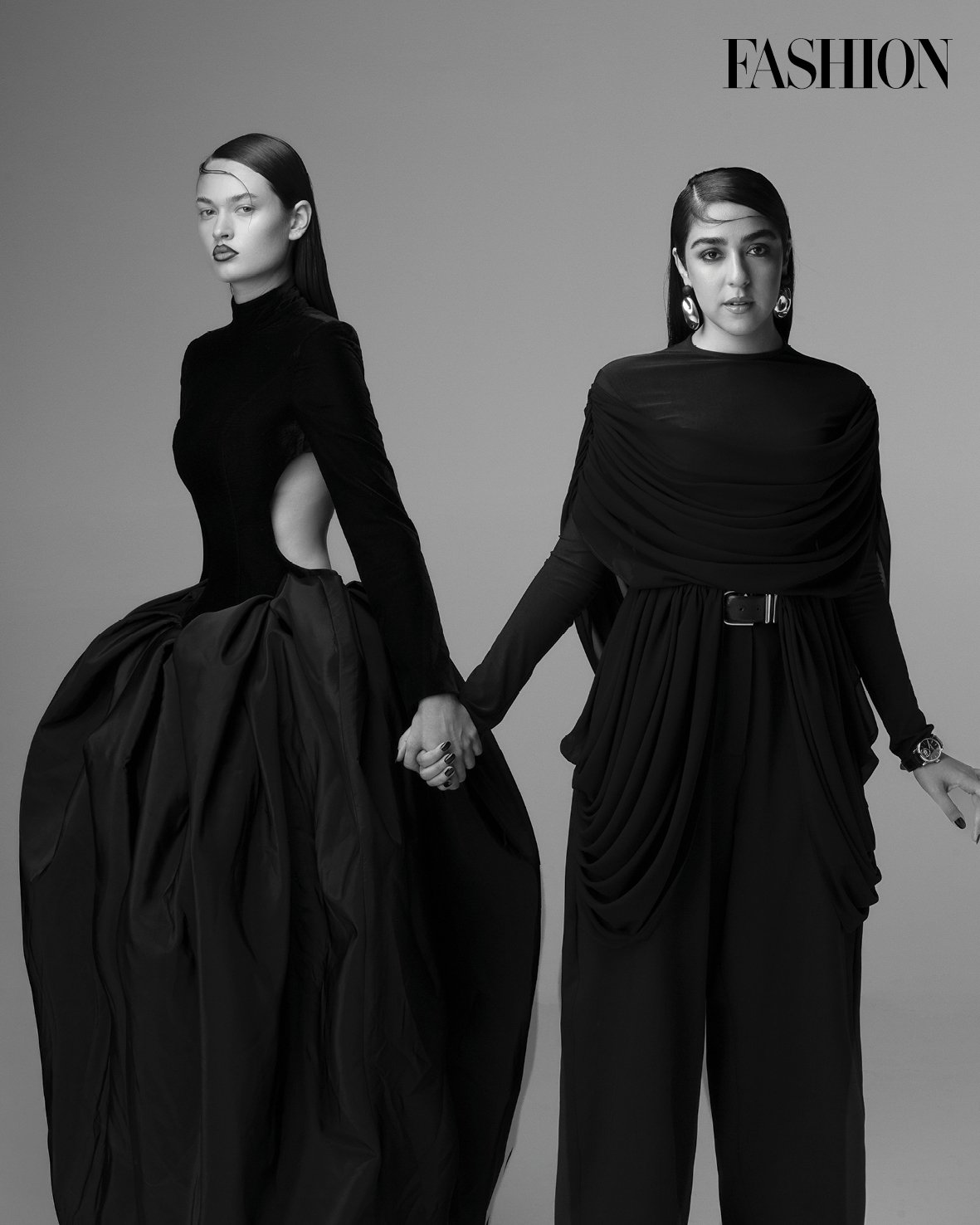
On Ahmadian: Top and pants, Golshaah. Earrings, Lo’bat. Watch, Frédérique Constant. Belt, Ahmadian’s own. On model: Dress, Golshaah.
It’s simple, really, but it bears repeating: No amount of support can prop up a brand that can’t engage a customer or come from a foundation of taste—not with so many clothes already in the world. And taste is something Golnar Ahmadian’s brand, Golshaah, is certainly cultivating.
When Ahmadian moved to Canada from Iran seven years ago, she launched a jewellery line, Lo’bat, which quickly took off. The success of that brand is what initially funded Golshaah, which Ahmadian prefers to call a lifestyle brand as it includes furniture as well as sculptural clothing that hearkens back to Ahmadian’s studies as an architect. Like her peers, Ahmadian has set her sights on international exposure. (Her clientele is already spread out across North America and the Middle East.)
Refreshingly, she’s in no hurry. “I don’t want to burn myself out,” Ahmadian says. To her, success is simply doing something she enjoys. Plus, “going slowly gives me a chance to learn and invest smartly,” she says. There are no shortcuts, not when there’s so little outside investment to be had.
While it’s clear that these designers all love what they do, a strange truth starts to emerge with every conversation: Maybe our misplaced, if well-intentioned, patriotism is limiting Canadian designers. Maybe they just want to be known as designers, period. And maybe “Canadian” is a label we should be proud to wear—and just as proud to transcend.
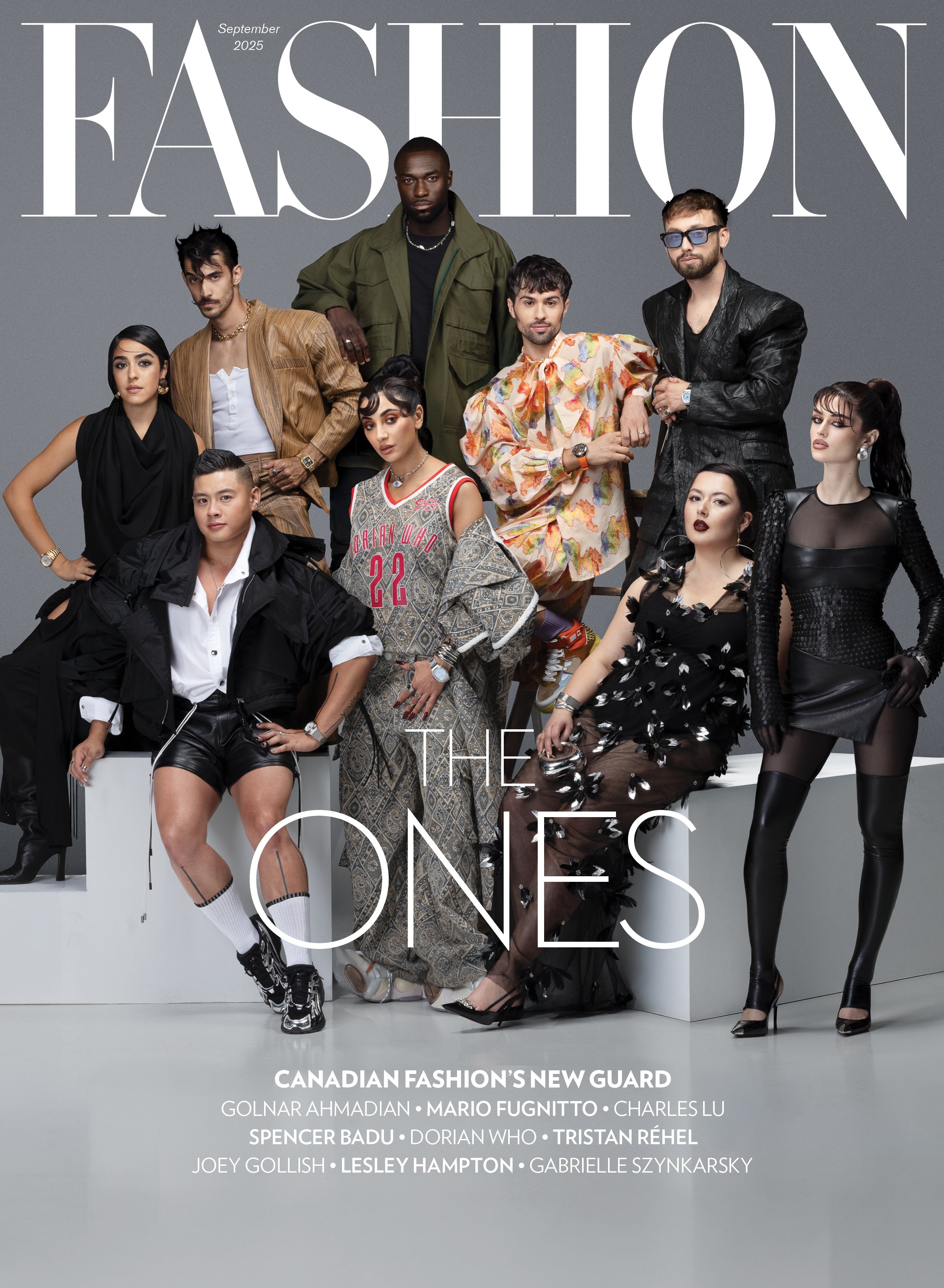
On Ahmadian: Dress, Golshaah. Boots, Giuseppe Zanotti. Earrings, Lo’bat. Watch, Bulova. On Fugnitto: Jacket, top and pants, Fugnitto. Necklace, Vimeria. Watch, Citizen. Ring, Fugnitto’s own. On Lu: Jacket, top and shorts, Charles Lu. Shoes, Puma. Watch, Alpina. Earrings, necklace, rings and socks, Lu’s own. On Badu: Jacket, top and pants, Spencer Badu. Earring, necklace and rings, Badu’s own. On Who: Jacket, top and pants, Dorian Who. Shoes, Grounds. Watch, Alpina. Necklace, bracelets and rings, Who’s own. On Réhel: Top and skirt, Tristan Réhel. Shoes, Christian Louboutin. Watch, Accutron. Ring and socks, Réhel’s own. On Gollish: Jacket and pants, Mr. Saturday. Watch, Alpina. Top, shoes, glasses and rings, Gollish’s own. On Hampton: Dress and bag, Lesley Hampton. Shoes, Giuseppe Zanotti. Earrings, Par Ici. Bracelets, Vimeria. Watch, Frédérique Constant. Bodysuit, Hampton’s own. On Szynkarsky: Catsuit, skirt and gloves, Brielle. Earrings, Drae Collection. Watch, Frédérique Constant. Shoes, Szynkarsky’s own.
Photography, Nick Merzetti. Styling, Ashley Galang. Creative direction, George Antonopoulos. Hair, Ashley Readings for Cadre Artist Management/Oribe. Makeup, Veronica Chu for Dior Beauty. Nails, Naomi Misu for P1M.ca. Lighting technician, Juan Diego Delgado. Photo assistant, Tyler Ribchester. Fashion assistants, Nada Bernaudo and Bea Chamberlain. Hair assistants, Neha Baig, Chiara Naccarata and Lani Starr. Makeup assistants, Natasha Apostolidis, Priya Kumari Bilkhu and Janine Holmes. Nail assistant, Ana Mae Villagracia for P1M.ca. Models, Ugo Agulefo for WANT Management, Julia Boncoddo for WANT Management, Chrisauntae Irons for WANT Management, Sophie Kubik for WANT Management, Wanqing Liu for ME. Model Management, Hunter McCain for Ciotti Models, Rashaud Renford for Ciotti Models, Rojin Sitoci for Ciotti Models and Valentina Turudic for Ciotti Models.