Views: 153
Fashion loves to say it’s for everyone, but look closer and that fantasy crumbles fast. For every Ashley Graham on a runway, a dozen size-zero models strut behind her. For every “made for all bodies” campaign, there’s a TikTok trend telling girls to eat 1,200 calories a day. And for every extended-size collection, there are countless more that quietly disappear from shelves. But hey, at least in womenswear, the fight for size inclusivity is still alive—albeit imperfect. Menswear, meanwhile, is still asking bigger guys to sit this one out. At the Spring 2026 menswear shows, plus-size male models were virtually invisible. Independent labels like Willy Chavarria, 3.Paradis, Louis-Gabriel Nouchi and Doublet sprinkled in larger-bodied men, but their appearances felt more like token gestures than signs of real change. Milan didn’t feature a single plus-size model this season, and in Paris, representation was barely noticeable. Across the industry, sample-size fantasies still ruled the runway, with extended sizing treated as an afterthought. The early momentum around body diversity now feels like a trend that came and went. Erasure, it seems, is easier than evolution. It wasn’t always this bleak. In the mid-20th century, “big and tall” shops began appearing across North America, serving men outside standard sizing. Though more functional than fashionable, they marked early steps toward inclusion. In the 1990s, streetwear labels like FUBU and Karl Kani offered rare size freedom, with oversized fits giving bigger-bodied men access to aspirational style. Even Ralph Lauren’s Polo line briefly embraced roomier cuts, bringing preppy fashion to a wider range of bodies. [tik-tok-video url=”https://vm.tiktok.com/ZMHboRbmmWUjD-21hwH/” /] But those moments didn’t last. The 2000s favoured slim tailoring and a “metrosexual” aesthetic, pushing plus-size menswear back to the margins. Athleisure offered a brief reprieve in the 2010s, but sizing often fell short of real inclusivity — and rarely appeared in glossy campaigns. While plus-size womenswear evolved alongside movements in body positivity and feminism, men’s fashion lacked a comparable cultural shift. So what’s stopping menswear from catching up? Turns out, the answer is equal parts fatphobia, fragile masculinity and an industry that still hasn’t decided whether men are allowed to care about how they look. [instagram-oembed url=”https://www.instagram.com/p/C6RXE43ONst/?igsh=NTNianFwbGQ3cXJ6″ /] “Fashion has always been about selling a fantasy,” says Mina Gerges, an Egyptian-Canadian content creator and designer who’s built a platform around body positivity and queer visibility. “But society still doesn’t see bigger male bodies as aspirational or even desirable.” For Gerges, working in fashion has been both empowering and maddening. “Whenever I’m in a campaign, I’m often the first bigger guy they’ve ever worked with. At first, I felt proud to open the door for others,” he says. “But then I realized: nothing changed. I wasn’t the first of many—I was the first and only.” [instagram-oembed url=”https://www.instagram.com/p/B4K6-IFnq32/?igsh=MXY5YnloOWg4b2pleg==” /] It’s a cycle we’ve seen before. The token plus-size model is celebrated for “breaking barriers,” but then the industry quietly returns to business as usual. “Look at Calvin Klein,” he says. “In 2020, I was in their Pride campaign alongside Jari Jones and Pabllo Vittar. This year’s campaign? Back to thin women and muscular men. It’s like size inclusivity never happened.” According to Dr. Ben Barry, Dean of Fashion at Parsons School of Design, the issue runs deeper than bad marketing decisions. “Traditional masculinity is defined through dominance, strength and control — qualities society believes are incompatible with fatness,” Barry explains. “Even thinness is read as masculine because it suggests discipline and restraint. Fatness disrupts those myths.” And when men’s bodies do become the focus in fashion, Barry says it triggers a kind of cultural panic. “Caring about how you look has historically been seen as feminine. That’s why mainstream menswear stays tethered to hyper-masculine ideals,” he says. “Size inclusion isn’t just unfashionable—it’s considered unmanly.” Even the language around men’s sizing reinforces that discomfort. Terms like “husky” and “big and tall” remain loaded with stereotypes, framing larger bodies as deviations rather than expressions of style. [instagram-oembed url=”https://www.instagram.com/p/DArvCV0NEka/?utm_source=ig_web_copy_link&igsh=MzRlODBiNWFlZA==” /] This discomfort isn’t just aesthetic. It’s ideological. The male body has long been treated as a tool: strong, useful, but not ornamental. When fashion asks men to embrace creativity and self-expression, larger bodies are often left out of the picture. After all, how can you sell the fantasy of power and control if a man’s body is coded, however unfairly, as “soft” or “undisciplined”? For Gerges, that double standard shows up in how bigger men are styled. “Look at how we’re dressed. Bigger guys are always smiling in a park or standing against a plain background, wearing plaid shirts or chinos,” he says. “But thin models? They get high-fashion, dreamy editorials shot in luxury hotels or museums. Why can’t we have that fantasy too?”
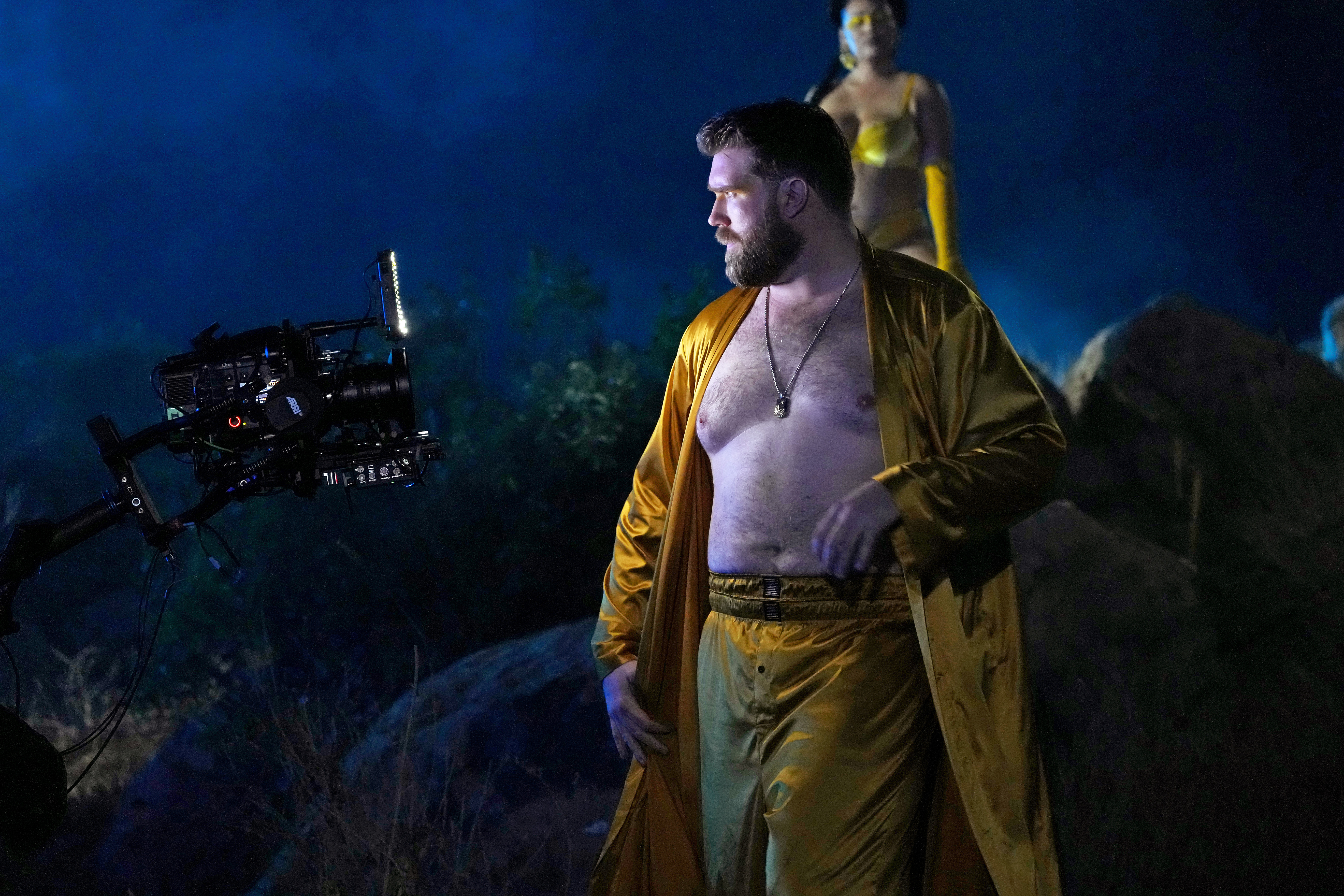
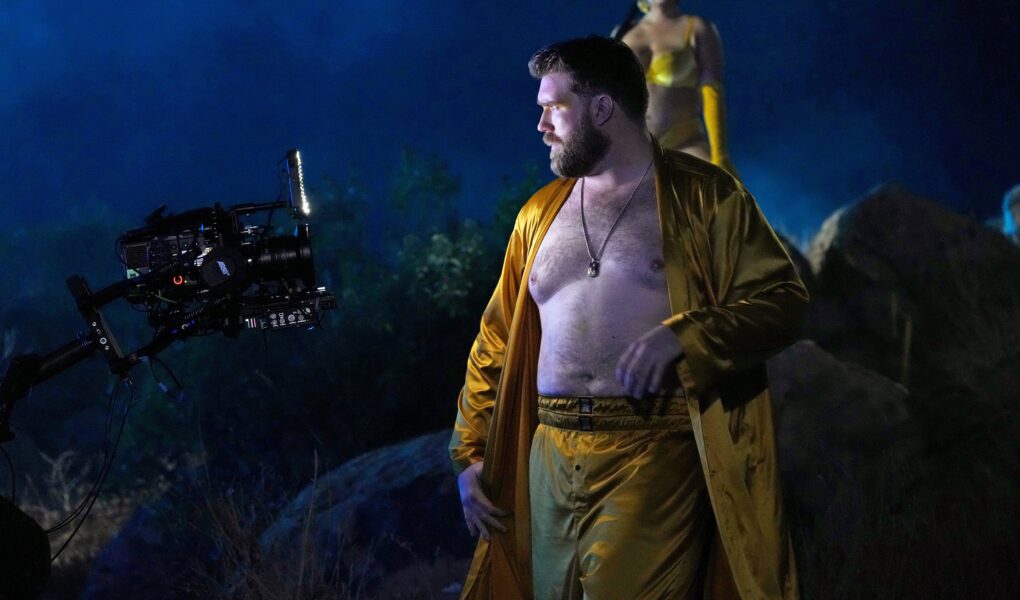
Savage X Fenty Show Vol. 4 / Photography by Getty Images
There are rare bright spots, like Rihanna’s Savage X Fenty shows, which have included larger-bodied male models—but those moments still feel like outliers. And while brands often blame a lack of demand for limited-size offerings, Barry rejects that excuse. “When you never see someone like you being stylish, confident and desired, it shapes what you believe is possible for your body and your life,” he says. Still, change is brewing outside the traditional industry. Fat content creators, home sewers and independent designers are reclaiming fashion on their own terms. “The most exciting shifts aren’t coming from luxury runways,” Barry says. “They’re coming from everyday wearers who are tired of waiting for permission to exist in style.” [tik-tok-video url=”https://vm.tiktok.com/ZMHbo1YWAJ6My-57HPm/” /] But permission shouldn’t be necessary. “Fashion capitalizes on insecurity,” Gerges says. “It’s easier to uphold one rigid ideal of masculinity than admit there are infinite ways to be a man—and infinite bodies worth celebrating.” Until menswear embraces that truth, fashion’s imagination—and its profits—will stay frustratingly small. “Fat menswear isn’t just about bigger sizes,” Barry says. “It’s about blowing open the industry’s idea of beauty, health and desire. It means designing with fat men in mind—not as an afterthought, but as part of the fashion fantasy.” Continue Reading