Views: 36
Paris Fashion Week is often considered the most glamorous event in the calendar, with major houses like Dior, Chanel and Schiaparelli showcasing their wares. It’s the playground for the ultra-wealthy and powerful — and therefore the perfect location for Matières Fécales, a Paris-based label by Fecal Matter (Hannah Rose Dalton and Steven Raj Bhaskaran) known for its imaginative distortions of the body and favoured by Lady Gaga and Tilda Swinton, to debut a collection called “The One Percent.”


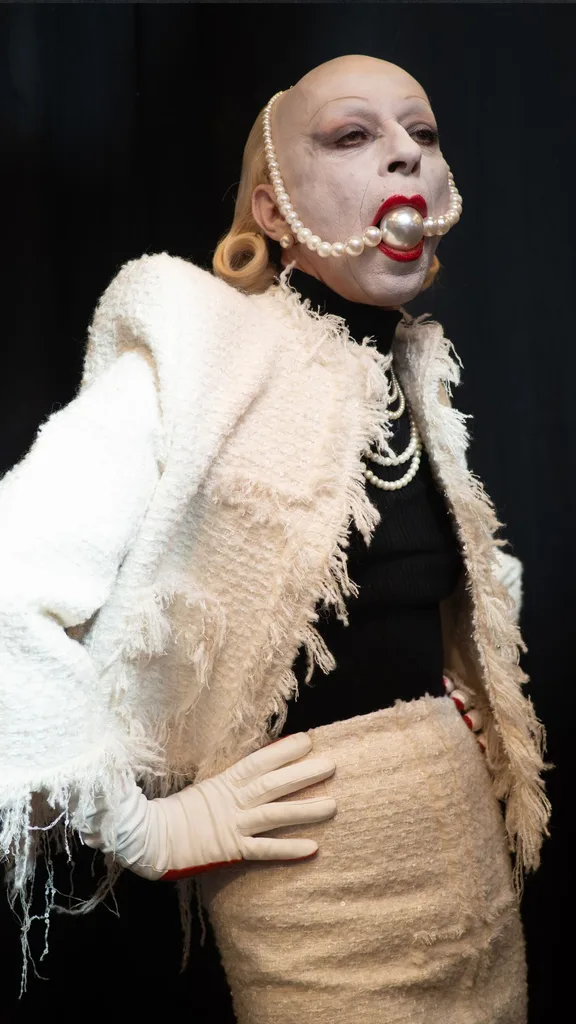
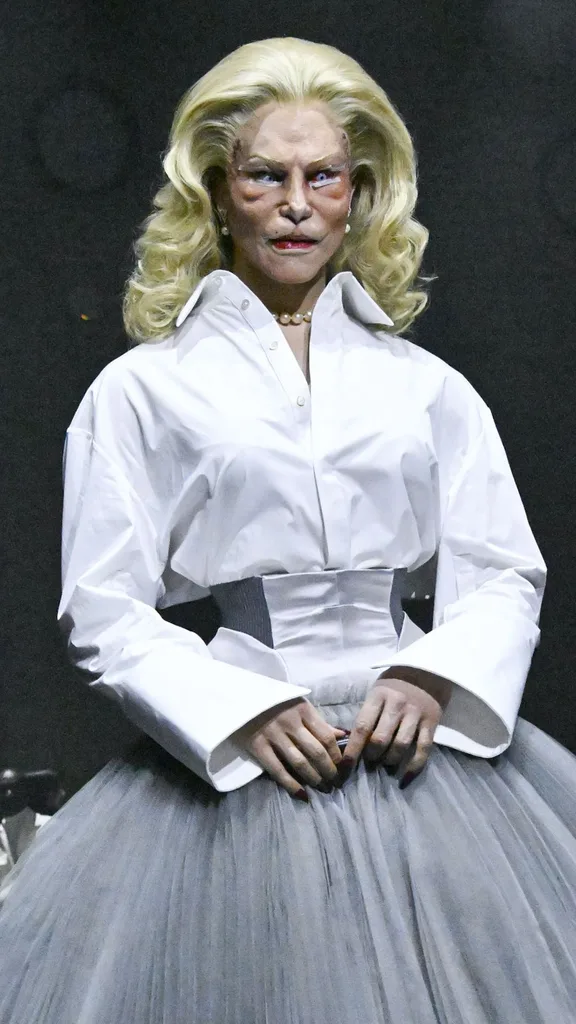
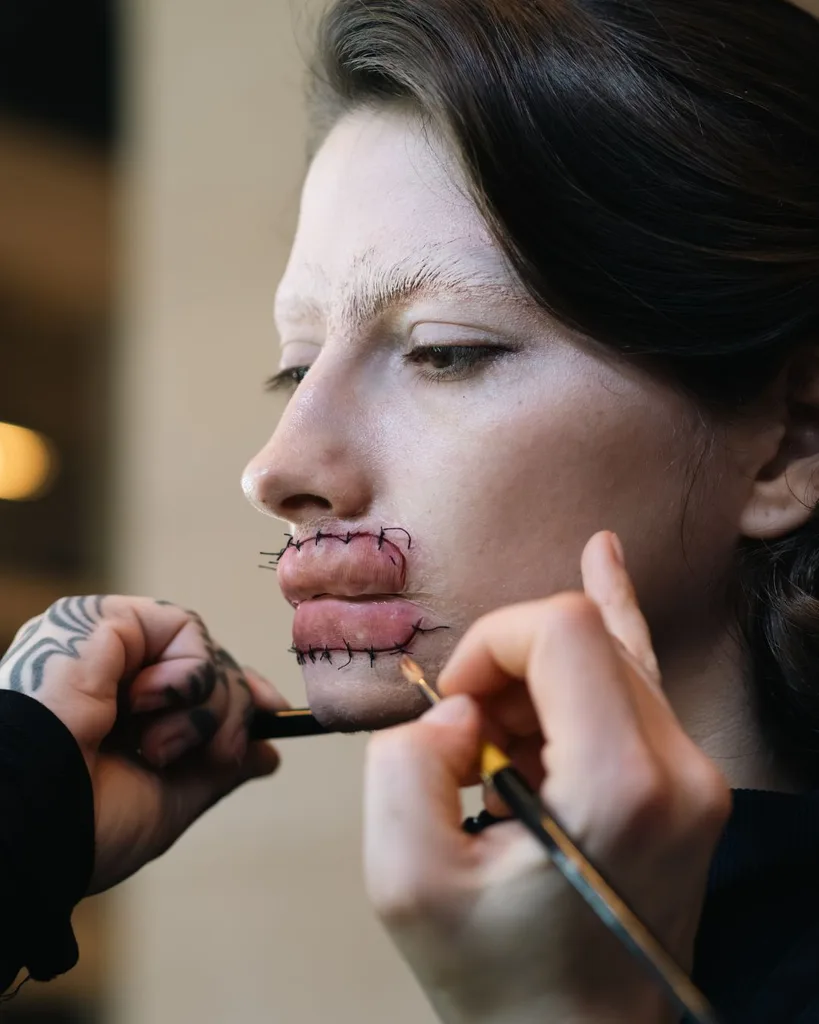
And beauty brought the concept to life through nightmarish SFX created by Alexis Stone. The looks featured post-surgical faces, some more freshly operated on than others. Lips were stitched, newly lifted features were swollen, and models wore sclera lenses recreating the bloodied eyes of rhinoplasty patients. Meanwhile, the collection featured evening gowns, opera gloves and pearls appropriate for a White House dinner, although they had their own sinister details.
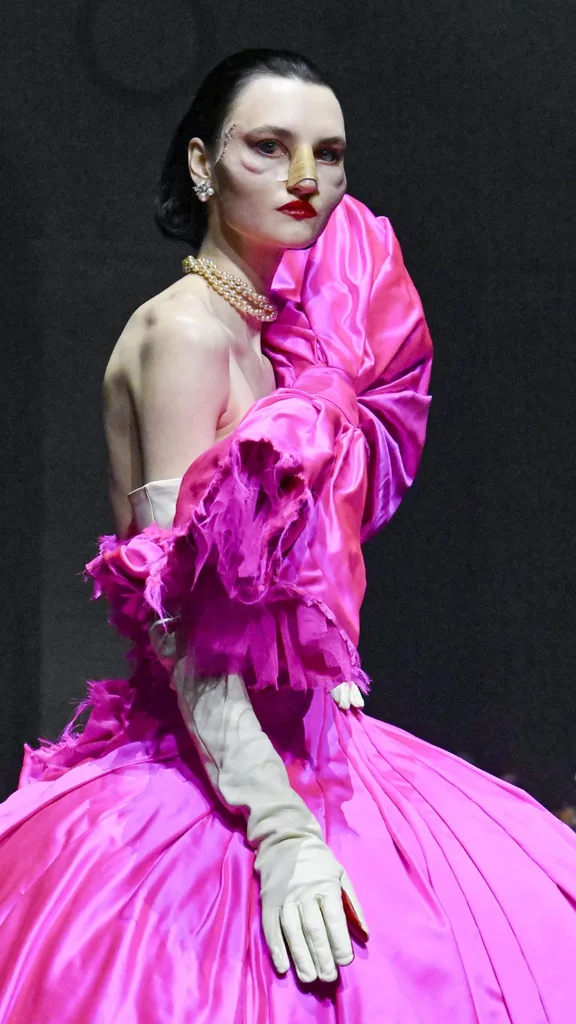
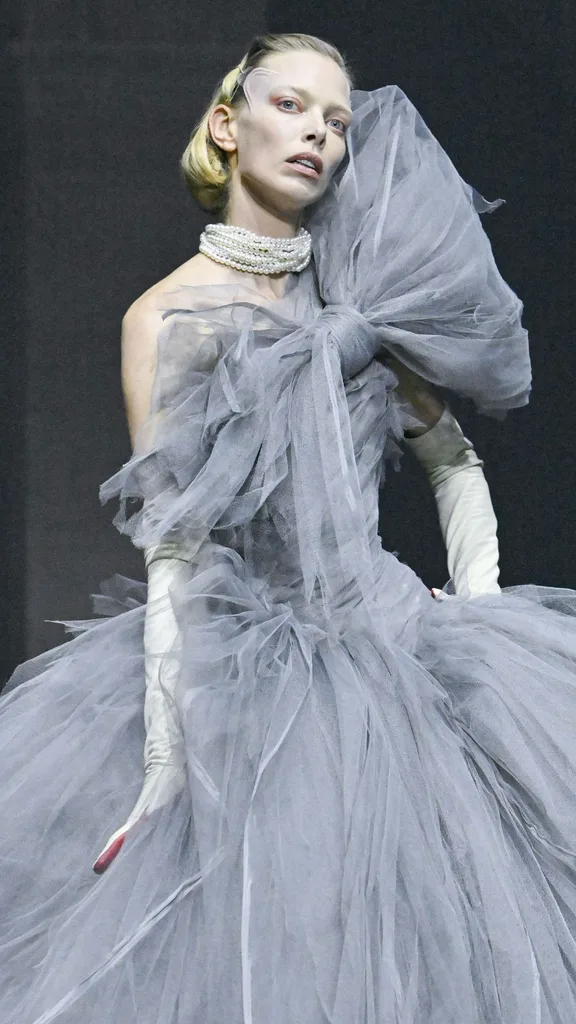
As the show progressed, these beauty looks became less and less human. Some models wore black sclera lenses, had alien-esque protruding cheeks, or blood-soaked skin. Others, with “healed,” perfectly made-up faces, wore dollar bills over their eyes or black sclera contacts with bloodied teeth.
Somewhere over the last two years, distorted faces have become de rigueur when tracking the machinations of the uber-rich.
What Matières Fécales communicated is that extreme wealth no longer needs to charm or seduce. The aesthetic of the one percent signals a distant that makes the cartoonish approach to “beauty” fitting. Alienesque, the stuff of nightmares. It is far from ordinary bodies, ordinary faces and ordinary lives.
When Trump became president again, a term called “Mar-a-Lago Face” was applied to the wealthy acolytes who surrounded him — individuals who, male or female, seemed to take pride in clownish makeup, poorly executed hair plugs and the kind of rubbery filler everyone left of the extreme right spends considerable energy trying to avoid.
And they seem indifferent to mockery. On TikTok, “Republican Makeup” — a genre skewering the lack of finesse with which Republican women approach their beauty looks — went viral. Vanity Fair published a breathtaking series of portraits by Christopher Anderson of Trump’s inner circle, zooming in on JD Vance’s confusing eyeliner, Press Secretary Karoline Leavitt’s bad lip filler and Marco Rubio’s hair plugs (the most commented-on detail was Leavitt’s age — people marvelling she was only 28 — which showed that even when we’re mocking the axis of evil, there’s a sexist slant).
But the far right seems impervious to criticism. If they weren’t driving the world towards global apocalypse, you’d say: good on them.
Beauty has never been more classist. As new technologies emerge to keep people looking naturally youthful, fortune favours those with stacked bank accounts. Last year, The Cut published a viral piece documenting women in their forties getting deep-plane facelifts to look “forever 35.” These trending invasive procedures are designed to appear undetectable and cost hundreds of thousands of dollars. And, there’s the avalanche of rejuvenating injectables promising a lit-from-within glow. That is, the opportunity to be one percent more beautiful without makeup for a couple of thousand dollars.
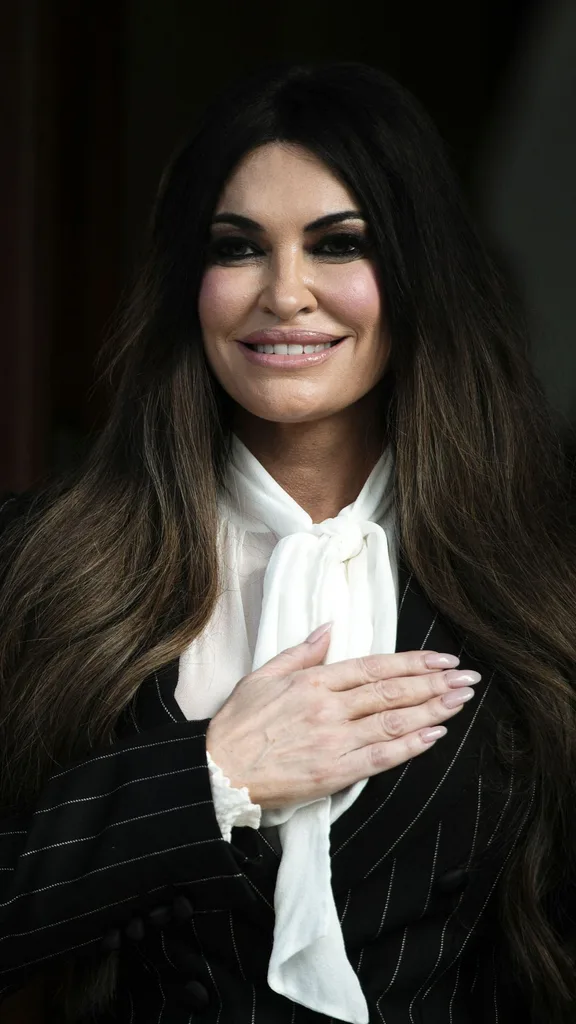
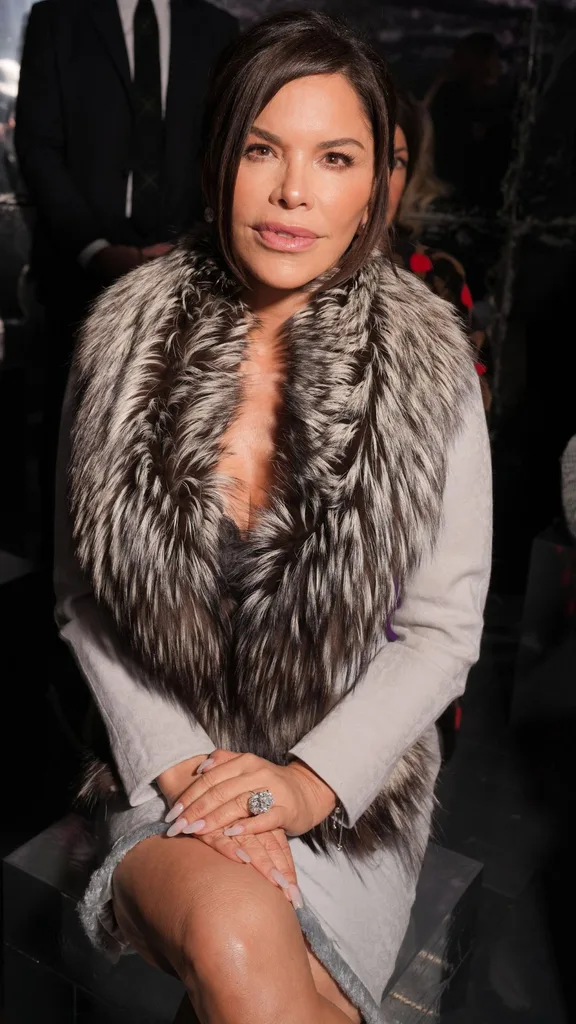
But if natural beauty and believable youth belong to the upper middle class, the one percenters aren’t interested. Instead, they seem to pursue physical transformation that removes anything resembling a human face. Recently, plastic surgeon Dr Anita Kulkarni told The Guardian she was finding herself having arguments with clients. She said that in pursuit of the aesthetics modelled by Jeff Bezos’s wife, Lauren Sanchez, and US diplomat Kimberly Guilfoyle, they were pushing the limits of what is surgically and aesthetically safe, like “never before.” “[W]hen you go outside the range of what a normal human face should look like, that’s not a place I’m willing to go,” she said. In the same article, a Washington DC surgeon said: “They come in and actually tell me that they like the artificial look. A couple of my patients have said those exact words to me.”
In the popular children’s book series A Series of Unfortunate Events, rich and powerful adults are often depicted in a distorted way. One such character is Esmé Squalor, who throws her lot in with the evil Count Olaf in pursuit of money and power, is consistently described in body-contorting clothes, her face obscured and warped in illustrations. The books were celebrated as charmingly gothic children’s fiction but they now read, in many ways, as an American fable on the ethical mutations caused by extreme wealth — and the desire for it.
Bhaskaran and Dalton drew on their own childhood memories for the collection, too. Bhaskaran was standing at a bus stop during a Canadian winter with his mother, clutching grocery bags, as a sports car drove by. Dalton, who grew up in a wealthy family, felt that life inside the sports car and the detached world of the wealthy was equally cold. Either way, they summoned a monstrous nightmare on the runway.
The post On The Matières Fécales Runway Botched Surgery Became A Status Symbol appeared first on ELLE.