Views: 110
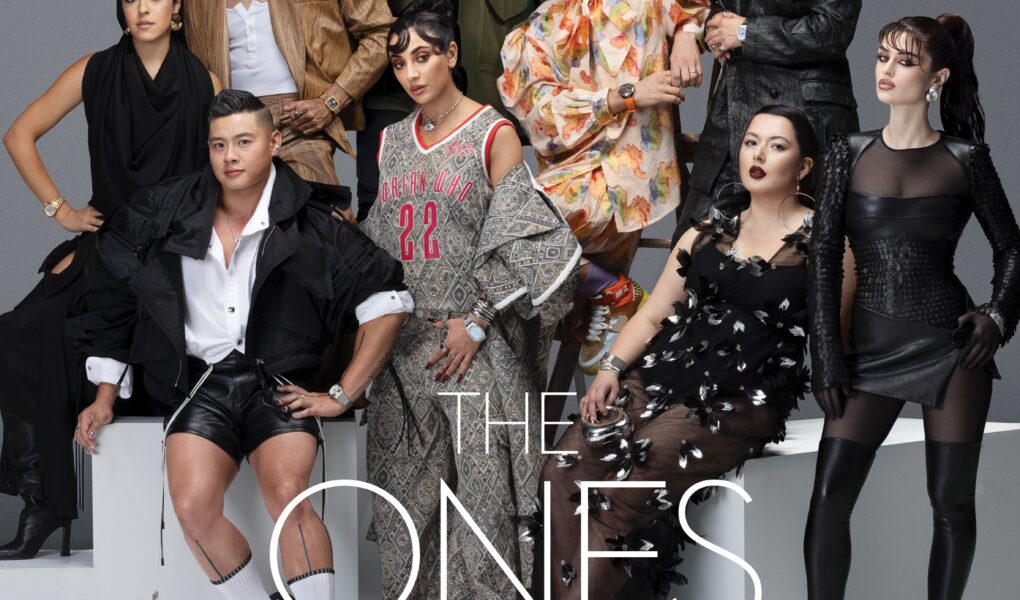
Vicky Milner is synonymous with Canadian fashion designers—after all, she’s been the president of the Canadian Arts and Fashion Awards (CAFA) for the past 13 years, since the organization’s founding. In that time, Milner has watched brands grow from unknown upstarts to homegrown superstars, secured crucial sponsorships that have led to tens of thousands in private-sector grant funding to rising talent in fashion and accessory design and helped countless designers find mentorship, resources and increased exposure. All of this makes Milner uniquely positioned to speak not only the importance of supporting the Canadian fashion industry, but also the challenges these designers are facing. When Milner and I connect on a sunny Friday afternoon, our September Issue cover featuring nine Canadian designers has just hit the newsstands. Milner calls the cover “a great moment,” noting that these designers are hustling every day. “We should all be proud of not only the designers on the cover, but also that we’re all in this moment where we want to celebrate our talent and give them love and support.” Our conversation then turns to Milner’s own friendships with many of our featured designers, the push-pull of international exposure and local pride as well as what happens when different industries all come together to support our talented Canadian creatives.
I’m sure you know many of the designers featured on the cover.
“Spencer Badu might be the longest-running designer, he’s 10 years in and it’s been great to see him get on SSENSE and other international boutiques. A lot of the designers on the cover are also quite thoughtful and particular in their aesthetic, like Golshaah. She’s very confident in her aesthetic and it’s great to see her play in other spaces like furniture and jewellery. Charles Lu I remember seeing at FAT (Fashion Art Toronto). He’s so talented, he can do anything. Joey Gollish won the CAFA for Menswear of the Year, and it’s great to see him at Roots.”
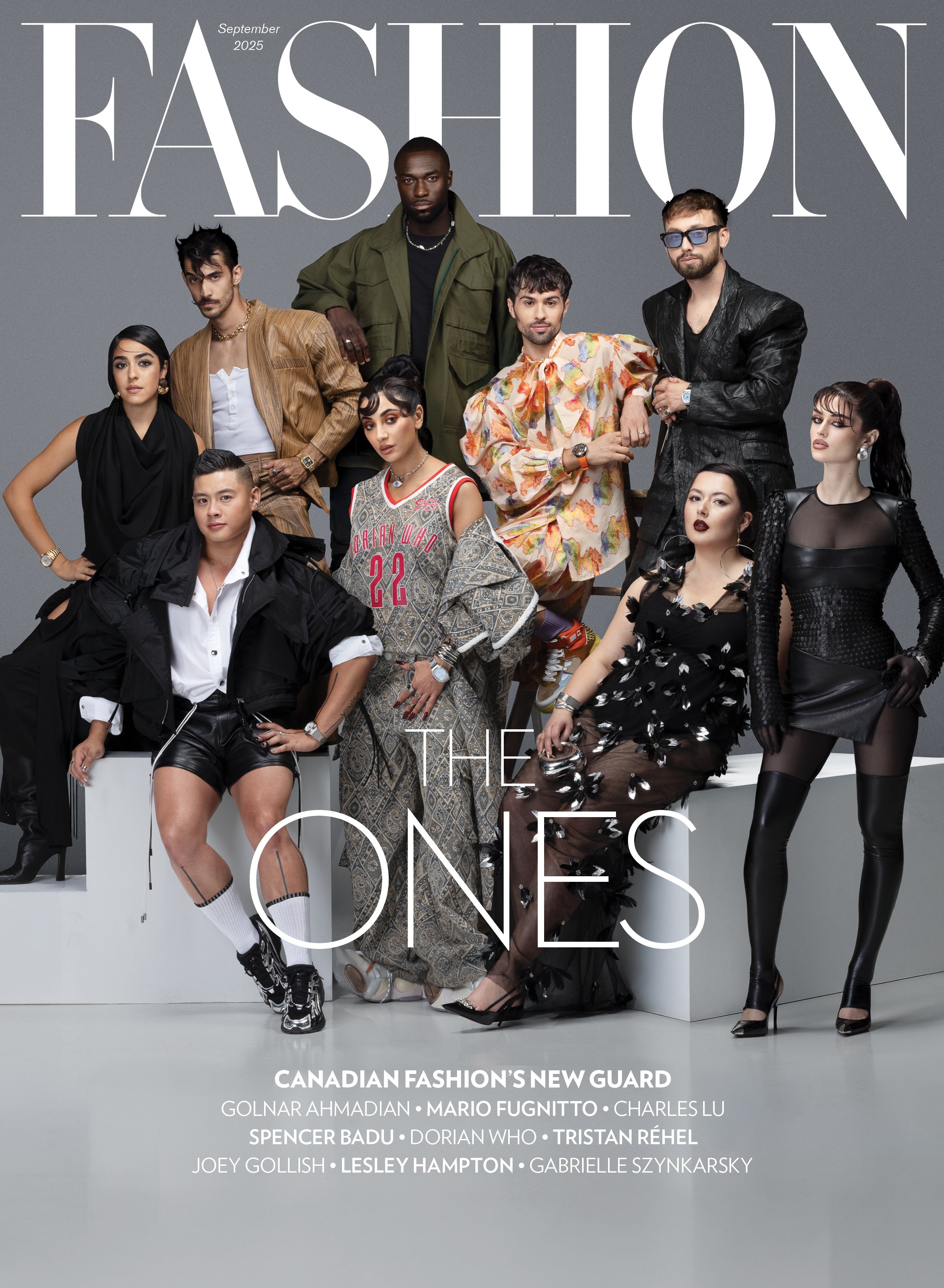
On Ahmadian: Dress, Golshaah. Boots, Giuseppe Zanotti. Earrings, Lo’bat. Watch, Bulova. On Fugnitto: Jacket, top and pants, Fugnitto. Necklace, Vimeria. Watch, Citizen. Ring, Fugnitto’s own. On Lu: Jacket, top and shorts, Charles Lu. Shoes, Puma. Watch, Alpina. Earrings, necklace, rings and socks, Lu’s own. On Badu: Jacket, top and pants, Spencer Badu. Earring, necklace and rings, Badu’s own. On Who: Jacket, top and pants, Dorian Who. Shoes, Grounds. Watch, Alpina. Necklace, bracelets and rings, Who’s own. On Réhel: Top and skirt, Tristan Réhel. Shoes, Christian Louboutin. Watch, Accutron. Ring and socks, Réhel’s own. On Gollish: Jacket and pants, Mr. Saturday. Watch, Alpina. Top, shoes, glasses and rings, Gollish’s own. On Hampton: Dress and bag, Lesley Hampton. Shoes, Giuseppe Zanotti. Earrings, Par Ici. Bracelets, Vimeria. Watch, Frédérique Constant. Bodysuit, Hampton’s own. On Szynkarsky: Catsuit, skirt and gloves, Brielle. Earrings, Drae Collection. Watch, Frédérique Constant. Shoes, Szynkarsky’s own.
Is there a unifying thread you can highlight between all of these designers?
“What’s great about them is that they’re all so different. But they all know what their aesthetic is and they’re not trying to be everything to everyone. Because that’s when people lose themselves.”
A recurring theme in all of my conversations with our cover stars was money. I’ve asked every designer, “What do you need?” They all said: funding. Do you agree?
“I agree with that. You need money to work in this industry, from production and manufacturing, all of the things that fashion touches, you need investment. Especially in Canada, it’s not new. That’s always been that question: “Where’s the government support?” And why isn’t fashion considered as part of the government’s art budget? At CAFA, we don’t get government funding, the grants that we are able to give are all through partnerships with the private sector. And while that’s still a pain point, for sure, the other one is mentorship and connections. Because through those, you can also find money. We did a partnership a few years ago called Stitch to Screen, where we brought in people from the film and TV industry, who would benefit from working with Canadian designers. That’s an example of the ways we provide opportunities.”
Now that CAFA is over a decade in, can you reflect a bit on the journey from year one to year 13?
“What’s been really encouraging is seeing more people discover Canadian brands and become more mindful about supporting local. There’s definitely more interest in buying “Made in Canada” products, which in turn supports our entire ecosystem of manufacturers. Around award shows especially, I get people reaching out saying they want to wear Canadian and asking for designer recommendations—which is great, because brands get busier, whether it’s for jewellery, outfits, or accessories. Even outside those events, I’ve noticed people are much more conscious about supporting Canadian talent, especially since COVID, when “shop local” became important, and now with all the tariff issues. Over the last 13 years, there’s clearly a growing desire to know what Canadian options are out there. If there’s a choice between a Canadian or non-Canadian product at the same price, many will choose Canadian.”
Fashion toes the line between creative and commercial. While the industry may warrant grant funding, it’s not just art for the sake of art. It’s a wearable commodity. How do you square that?
“I think with some designers, their work can be quite avant-garde—great for the runway or artists, but if they want to sell to everyday people like us, they need a subline that takes some of that aesthetic and makes it wearable and sellable. Unless you’re specifically creating for performers or doing fully custom pieces, the goal for most brands is to make a name for themselves and sell at places like SSENSE. You really need a balance: offer creative designs, but also have pieces people can actually buy and wear. For example, take Golshaah—her white blouse isn’t your typical blouse. It has a modern edge and a unique cut, but it’s still versatile enough to wear to the office or out for dinner. That’s what sets her apart. Some designers stick to purely conceptual pieces that are striking on the runway but not practical for everyday life. There’s a place for both, but if you want commercial success, you need that balance.”
Where do you want to see Canadian fashion go from here?
I’m really proud to see these brands thriving. What’s that saying? “A ten-year overnight success?” These designers have really put in the work. That’s why it’s so important for us to support one another, including by having more events and greater collaboration across Canada’s fashion industry. Ideally, every Canadian celebrity—whether in music, film, or TV—would wear Canadian designers on the red carpet. Whenever possible, we should all champion our own talent.” Continue Reading