Views: 42
Every few years, my parents give me a pyjama set for my birthday. In the past, aside from the rare bed-rot day or viral flu, I tended not to wear my favourite pair of Muji PJs outside of bed. But lately, when I’m working from home, I’ve been, let’s say, extending the look from night to day—rolling out of bed and right onto Zoom. The PJs in question are made of a soft, gauzy cotton that’s lightweight and breathable. They make me feel, all things considered, totally relaxed. Also—in the spirit of transparency—they drape in an extremely pleasing way and look awesome on me. So much so that I’ve sent friends a fit pic asking if I could wear them with Birkenstocks and a leather jacket to grab coffee or get groceries. The answer is always an emphatic “No.” Turns out, my sartorial instincts are dead on-trend. In menswear, duvet and pyjama dressing translates the style, ease and comfort of sleepwear into streetwear. Think quilted down coats, fluid PJ-inspired shirting and poplin drawstring pants.
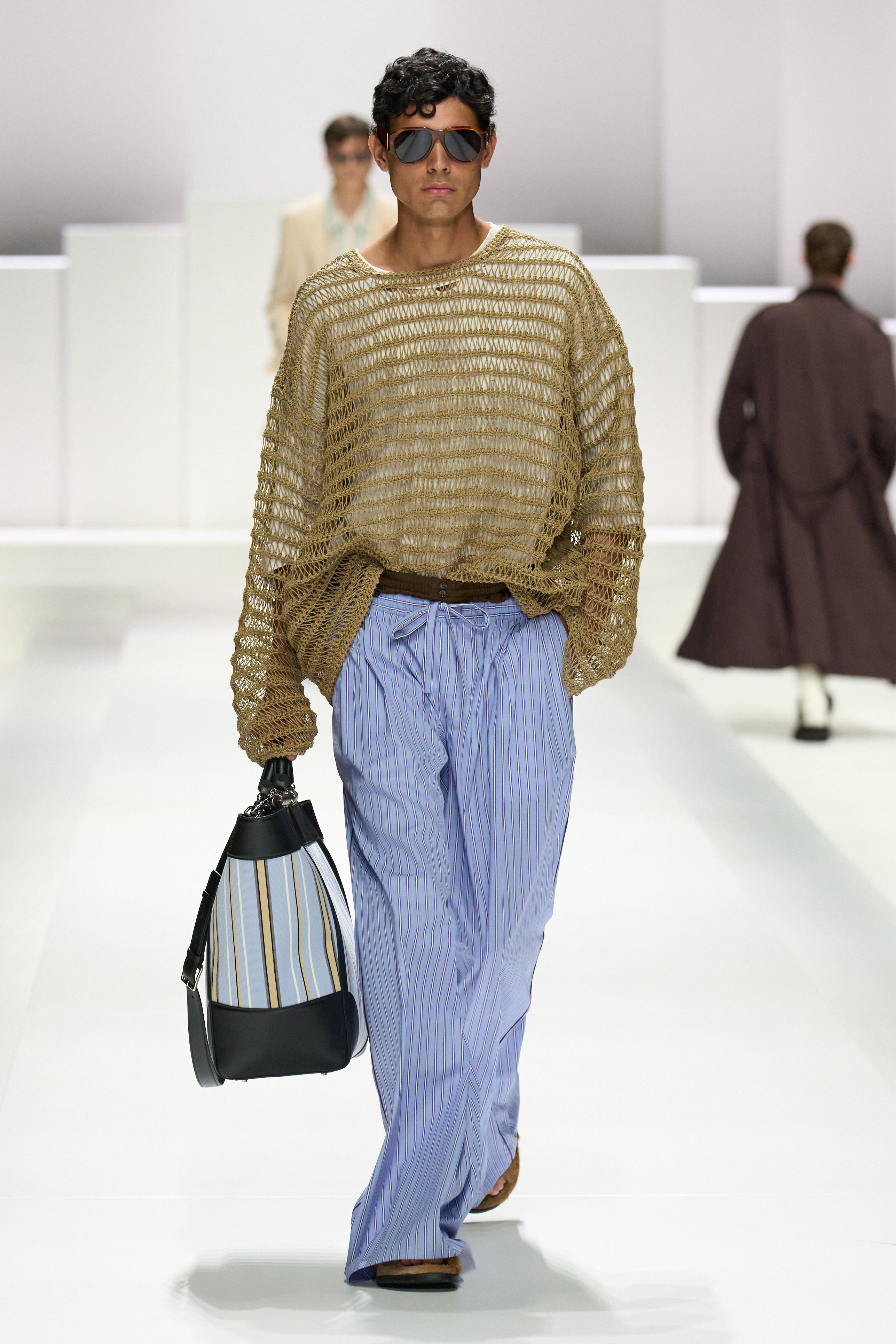
Dolce & Gabbana, Spring 2026. Photography via LAUNCHMETRICS.COM/SPOTLIGHT
While the exact origins of the trend are fuzzy, one could credibly trace the look’s resurgence to (who else?) Martin Margiela. In his Fall 1999 show, the conceptual Belgian designer debuted the brand’s now-iconic duvet coat: a cocooning garment made from real down bedding. There’s also Norma Kamali’s Sleeping Bag Coat, first developed in 1973, which was born from the designer’s desire to put sleeves on her sleeping bag following a particularly enlightening camping trip. In fashion, what goes around always comes around. Margiela’s ingenuity is echoed in Danish designer Nicklas Skovgaard’s Spring 2026 collection of sculptural sleep-inspired clothes. Luxury brands such as Bottega Veneta and Acne Studios, as well as designers like Jonathan Anderson, have all put pyjama- and bedding-inspired pieces on the runway. And status-y textile brand Tekla’s collaborations with fashion labels Auralee and Stüssy have made stripey interior fabrics and poplin PJ sets into genuine fashion statements.
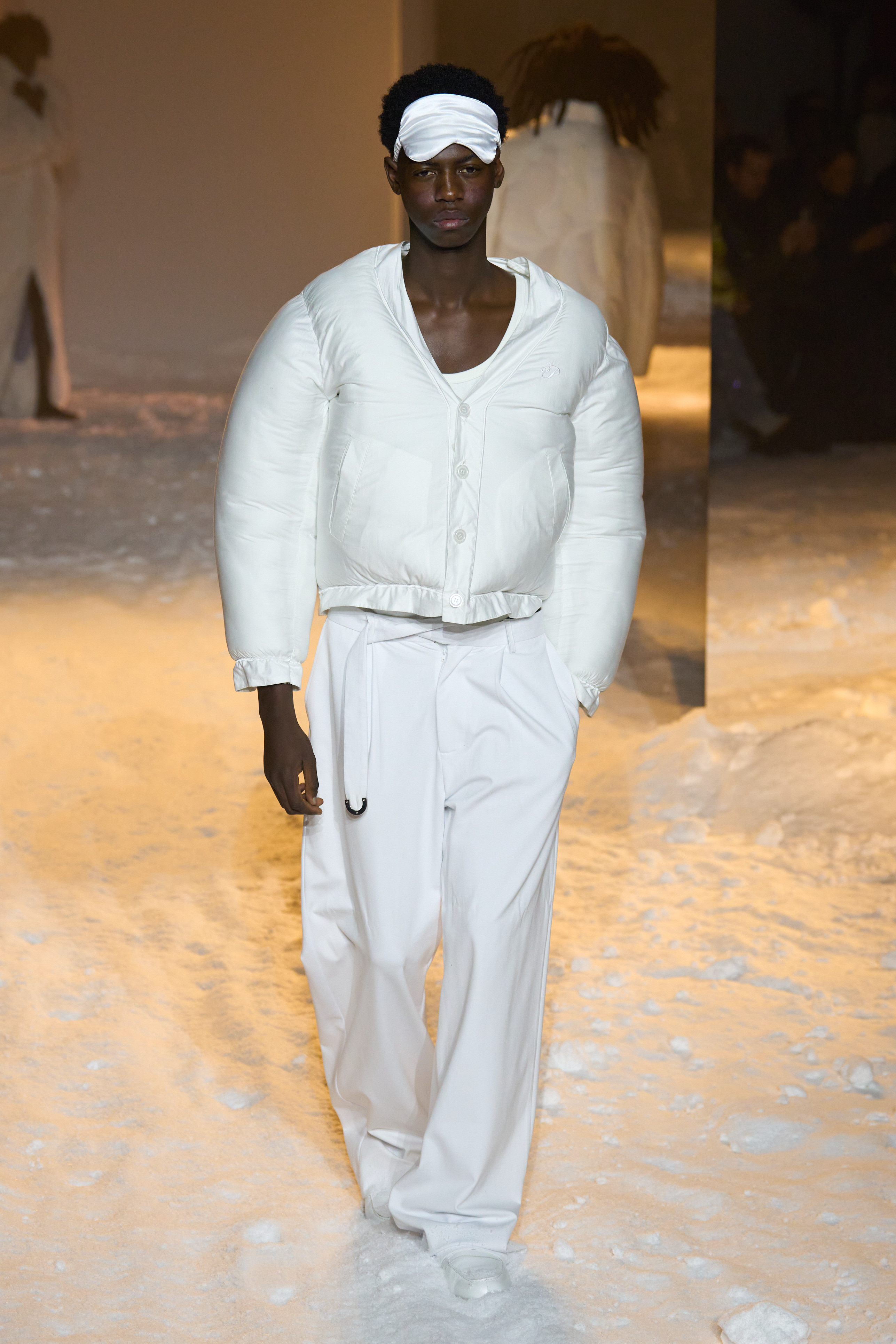
3. Paradis, Fall 2025. Photography via LAUNCHMETRICS.COM/SPOTLIGHT
Looking at the A-list, musicians including A$AP Rocky, Harry Styles and the BTS boys have all worn comfy pyjama-inspired fits. While it’s tempting to chalk up the trend’s appeal to a desire for comfort and safety in tumultuous times, is there more going on beneath the sheets? J’Nae Phillips, a trend analyst and cultural researcher, suggests that the trend is an expression of a softer, more vulnerable masculinity. “Duvet- and pyjama-inspired silhouettes push against rigid tailoring by celebrating ease, intimacy and even domesticity,” she says. More men are also participating in wellness culture, prioritizing self-care rituals, rest and an ethos of conscious consumption. Here, the aesthetic of comfort takes on an almost moral dimension. “It’s an aspirational lifestyle marker,” says Phillips.
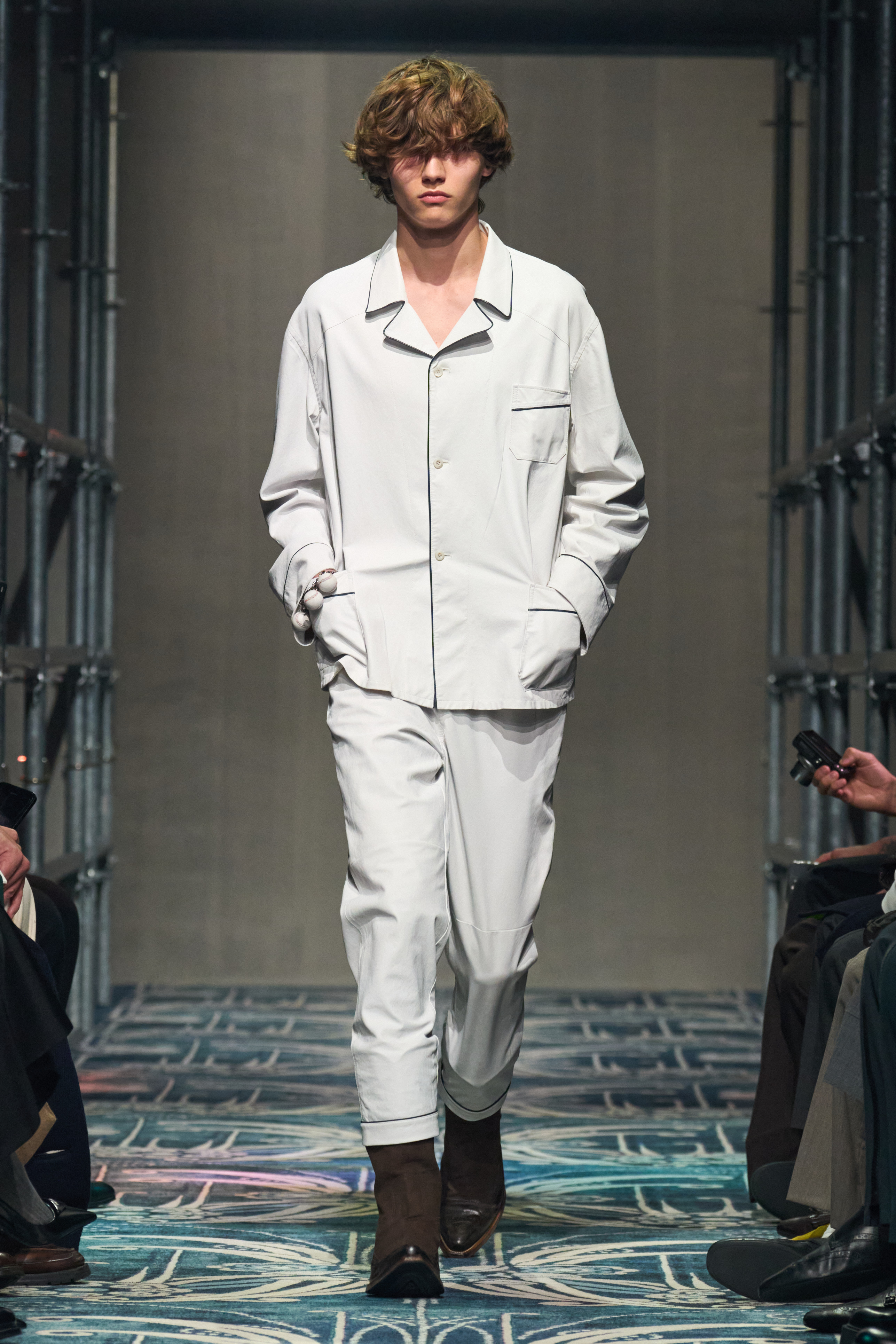
Prada Menswear, Fall 2025. Photography via LAUNCHMETRICS.COM/SPOTLIGHT
While crisp cotton boxer shorts and airy drawstring pants are trending among stylish men, they’ve been an It-girl uniform for years. “Menswear trends usually take much longer to catch on, so it was only a matter of time before we started seeing it off the runway,” writes CAFA-winning stylist Nadia Pizzimenti over email. She cites The Row, Lemaire and Armani as the arbiters of a languid elegance in menswear that take their style cues from pyjama dressing. “They are taking the most luxurious fabrics, pairing them with relaxed silhouettes and styling them in a way that looks chic yet comfortable,” she says. Now, a few pro tips. “Contrast is key,” notes Pizzimenti. She recommends adding loafers, a collared shirt or a tailored jacket to smarten up your PJ party and opting for silk and high-quality cotton.
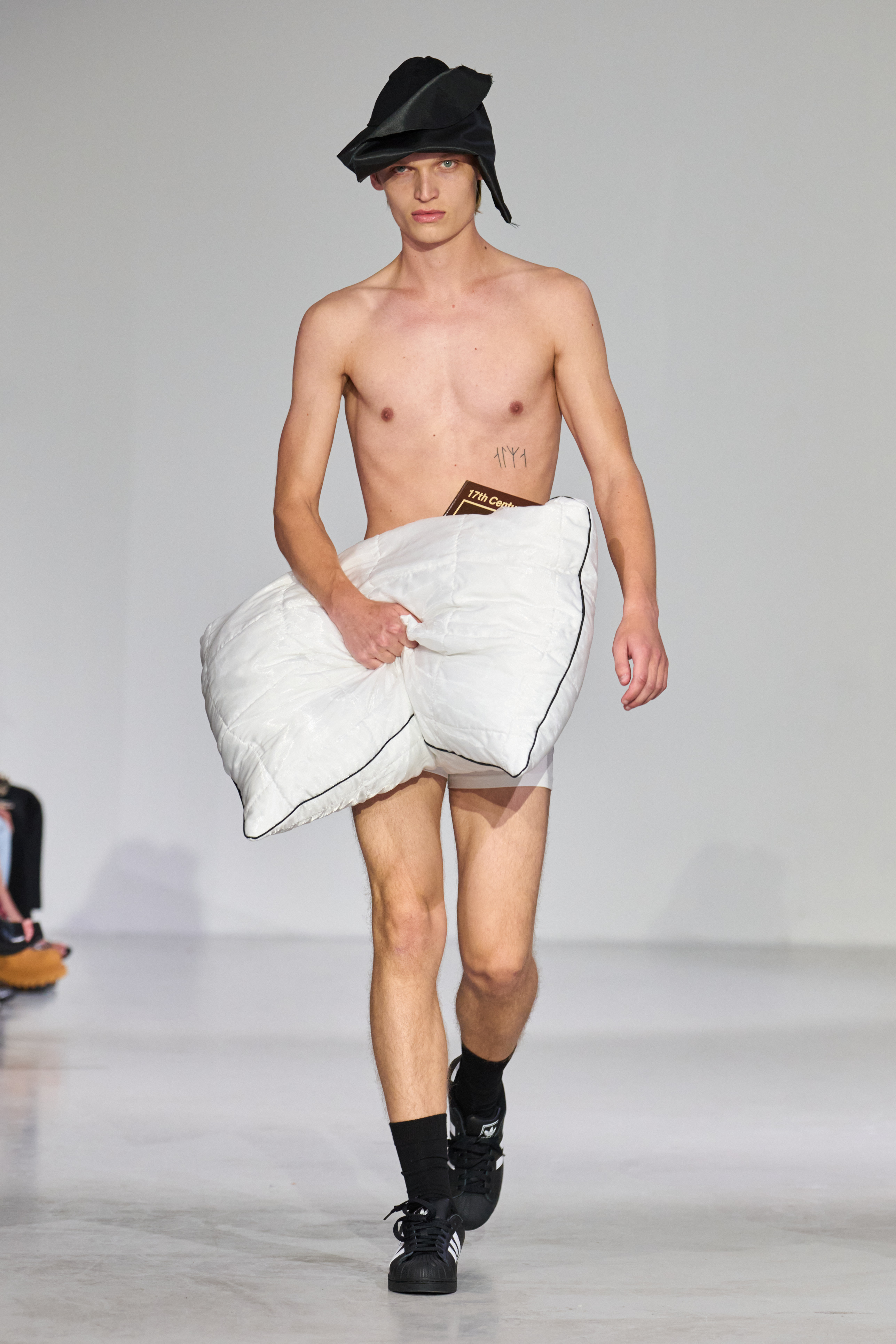
Skovgaard, Spring 2025. Photography via LAUNCHMETRICS.COM/SPOTLIGHT
Phillips sees sleepy style as an evolution of the “comfort-first dressing” that defined our pandemic style. “That ethos hasn’t gone away,” she says. “It’s simply evolved into more stylized, intentional forms.” In other words, we’ve moved on from a closetful of monochromatic sweatsuits and into freakier fashion territory. In the work-from-wherever era, we’re “renegotiating the boundaries between our private and public selves. Clothes that once belonged strictly in the home are now being reimagined as statements of identity and self-expression,” says Phillips. This reflects a larger urge to blur the boundaries between work and life, masculine and feminine and private and public. Fashion is a mirror to the times, so it makes sense that a desire for safety and comfort would emerge from the psychic rubble of this cultural moment. “It speaks to fashion’s current preoccupation with emotional resonance—garments that don’t just look good but feel protective, cozy and grounding during times of uncertainty,” says Phillips. So, while some will preach the importance of changing your clothes the minute you wake up, I propose the opposite: Bed rot—but make it fashion. This article first appeared in FASHION’s November 2025 issue. Find out more here. Continue Reading