
Views: 84
THE RUNDOWN
- On December 6, a geomagnetic storm triggered a full-halo solar eruption.
- In response, the NOAA Space Weather Station and the Bureau of Meteorology will set aurora alerts for December 9.
- Aurora australis, or Southern Lights, causes the sky to glow pink, green, and violet and is a rare solar event.
- The BOM have indicated aurora activity could last from Tuesday through to Thursday and be visible in the Southern parts of Australia.
It feels like we just enjoyed an aurora spectacle, but sky‑watchers could be in for another treat. The NOAA Space Weather Prediction Centre (NOAA SWPC) has issued a G3 (strong) geomagnetic storm watch valid for 9 December 2025, after a full‑halo solar eruption on 6 December.
This means there’s a high chance of seeing the southern lights on display for large parts of Southern Australia, as far north as Perth and Sydney.
If the planets align (literally), Australia could be in for vivid sparkling ribbons of pink and green lighting up the skies.
The celestial display, typically reserved for polar regions, is considered a once-in-a-lifetime sight for many Australians. If you missed November’s aurora showing, you could still catch one before the year is out. Here is everything you need to know.


Where Will The Aurora Australis Be Visible In Australia
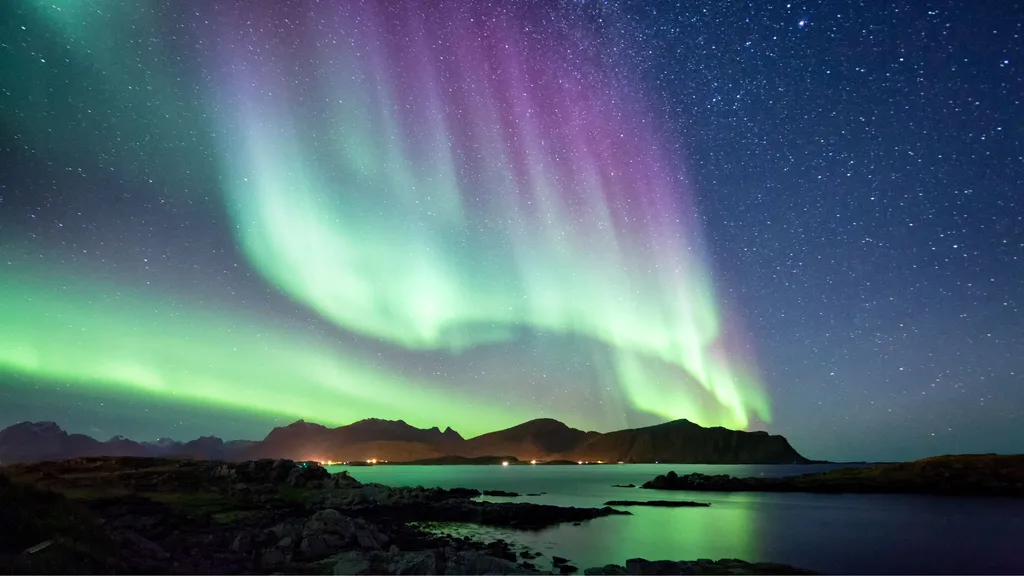
At present, the Bureau of Meteorology has set an aurora alert for Tuesday afternoon, December 9. While nothing is sure sky watchers have been told that if visibility conditions (clear skies, low light pollution and the solar magnetic field aligned with the earth’s magnetic field) align, southern states have the best chance of an aurora sighting. This means Tasmania, Southern Victoria, Southern South Australia, and possibly Southern New South Wales, at any time during local night hours.
And in thrilling news for aurora chasers, geomagnetic storm conditions could reach G5 levels (the highest possible rating), meaning this state of affairs could last until Thursday. It’s like all our aurora Christmases have come at once.
The location and intensity of an Aurora are not known until a few hours before it explodes in the skies. Matt Woods of the Perth Observatory told the ABC that there is a “good chance” auroras would be seen across southern Australia at nightfall and that they could reach as far as Sydney and Perth.
When Is The Best Time To See The Aurora Australis?
The solar storm is expected to hit Earth early to midday UTC on 9 December, which translates to nightfall in Australian cities when the sky is dark.
| City | Day(s) | Time |
| Sydney | Tues-Thurs | 8:45 p.m. |
| Melbourne | Tues-Thurs | 8:45 p.m. |
| Adelaide | Tues-Thurs | 8:30 p.m. |
| Perth | Tues-Thurs | 7:30 p.m. |
| Canberra | Tues-Thurs | 9:00 p.m. |
| Brisbane | Tues-Thurs | 7:00 p.m. |
| Darwin | Tues-Thurs | 7:15 p.m. |
| Hobart | Tues-Thurs | 7:30 p.m. |
While nothing is guaranteed, this is the kind of solar activity that, under optimal conditions, can push auroras farther from the poles than usual.
If you want to give it a shot: wait until after sunset, find a dark spot with a clear view of the southern horizon, and stay alert. Much like a full moon, city lights and cloud cover are the enemy. There’s no guarantee — but there’s more scientific backing for a chance tomorrow night than usual.
You can keep tabs on live aurora forecasts from the Space Weather Prediction Centre, which adjusts readings every 30 minutes.
Auroras occur when charged particles from the sun—usually released during a solar flare or coronal mass ejection—collide with gases in Earth’s atmosphere. These collisions excite oxygen and nitrogen molecules, causing them to emit light in different colours. Oxygen typically produces green or red light, while nitrogen can result in blue or purple hues.
“The radiation from the Sun is coming into our atmosphere and interacting and exciting the oxygen and nitrogen molecules,” Dr Stuart Webb of the Bureau of Meteorology explained. “That’s causing them to glow.”
Unlike meteor showers and supermoons, auroras are tricky to forecast far in advance, but we are currently experiencing a peak aurora period. Matt Woods from the Perth Observatory has explained that the sun is currently in a particularly active phase of its 11-year cycle, known as a solar maximum.
This cycle — characterised by increased solar flares and sunspots — reached its official peak in October 2024. It’s why aurora activity has spiked in recent years, including during the powerful G5 geomagnetic storm in May 2024, the most intense in two decades, according to NASA.
In November, during another aurora eruption, Dr Andrew Grace told the ABC that while solar activity has been quieter lately, “We’re definitely still in a period of high activity… We could see another peak in this cycle, or we might not.”
Still, with the sun in a heightened phase of activity, there’s every chance we’ll see more aurora sightings over the coming months. To stay informed, monitor updates from NASA, the Australian Bureau of Meteorology’s Space Weather Service, or aurora-tracking apps and websites.
For now, all eyes are on the skies.
The post The Aurora Australis Is Back Tonight — Here’s How To See It appeared first on ELLE.