Views: 107
Warning; Spoilers ahead for season 3
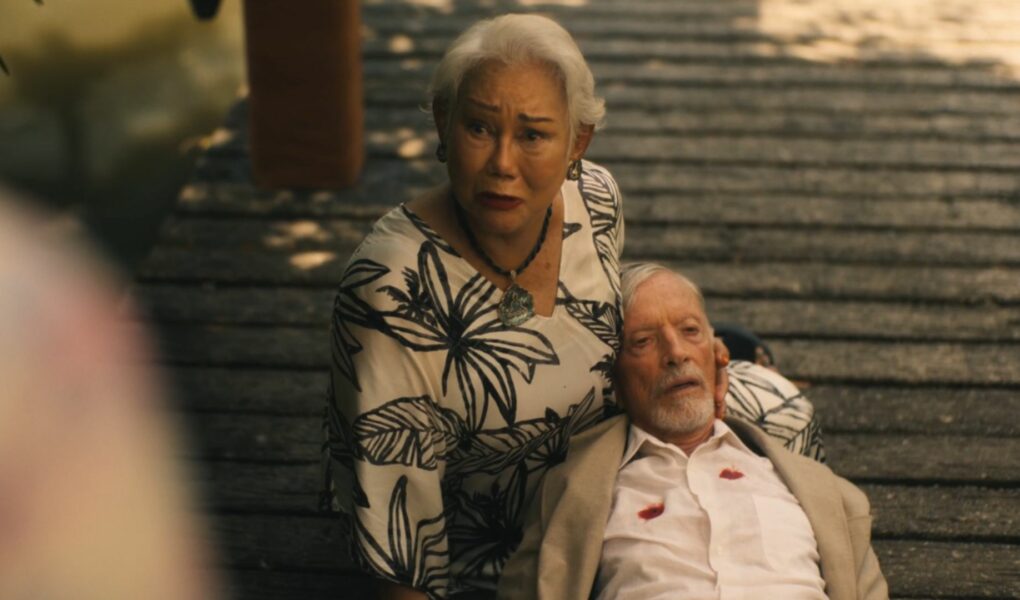
The White Lotus always ends with a body in a bag and since we saw one floating in a hotel pond in series 3’s opening scene, we’ve been wondering who the unlucky individual might be and feeling nervous as we grow more attached to our favourite characters. This season, director Mike White unleashed full-scale chaos and the series wrapped with two of our favourite characters returning home wrapped in black plastic and three dearly departed souls remaining on the island. While Mike White was merciless, the season finale was full of layered meaning. Below, find The White Lotus season 3 ending explained including several shocking deaths.
The Meaning Of The White Lotus Season 3
Season 3 has been the darkest instalment of the show since Mike White started the satirical series in 2021, finishing with five deaths and one harrowing near-death. While previous seasons of The White Lotus have been satirical, this season had an existential flavour. The season finale opens with Luang Por Teera delivering a sermon. “Sometimes we wake with anxiety, what will happen today, what is in store… We take life into our own hands, we take action, Our solutions are temporary, they are a quick fix.” In the season 3 finale, characters like Walton Goggins’ Rick and Jason Isaac’s Timothy Ratliff fall victim to “quick fixes” as they attempt to grab the reigns of their unruly existences. But woven throughout the storyline are several other messages that come to a moving crescendo in the season finale.
Rick And Chelsea Ending Explained: Amor Fati
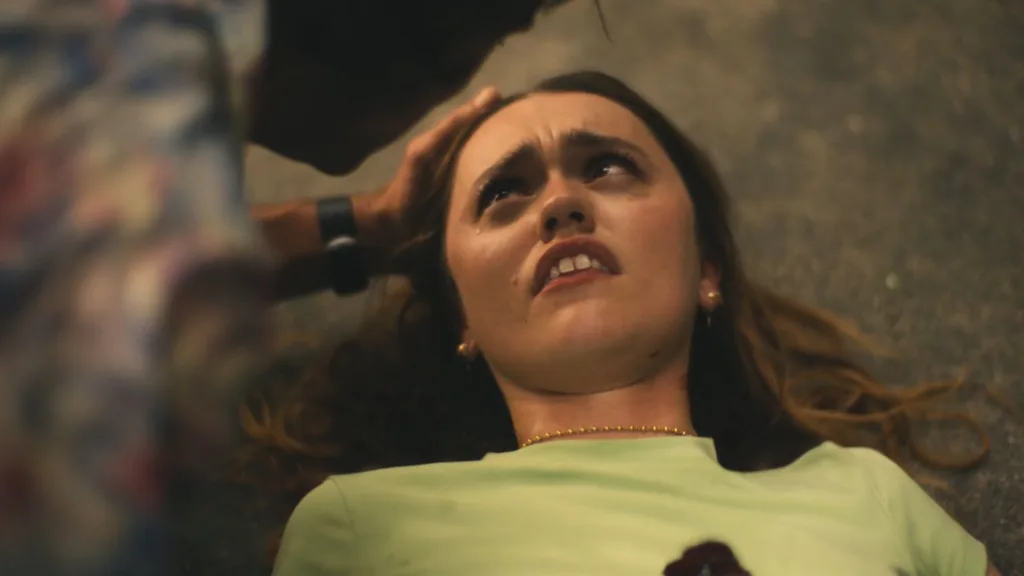
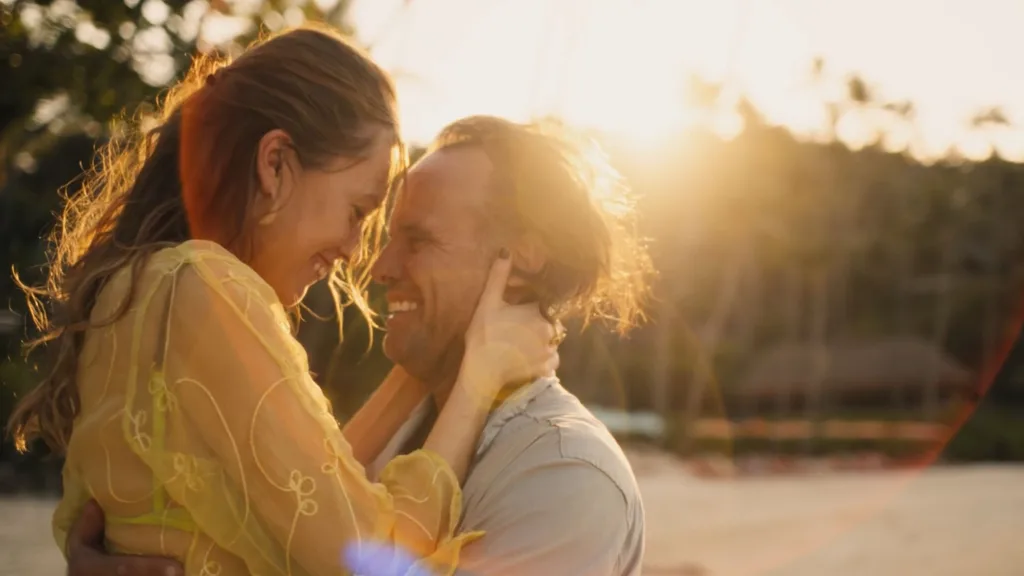
Amor fati is the title of episode eight, and Chelsea helpfully explains the term’s meaning to Rick over breakfast. “It means you have to embrace your fate, good or bad, whatever will be will be. At this point we’re linked so whatever happens to you, happens to me.” Amor fati holds a tragic truth for Chelsea and Rick, and Chelsea’s death has been foreshadowed throughout the season. In the third episode, Rick, in a stoned fugue state, releases snakes at a snake park. Chelsea is bitten and rushed to the hospital. While her life is saved it’s made clear that Rick’s erratic hot-headedness and her dedication to him is placing her in harm’s way.
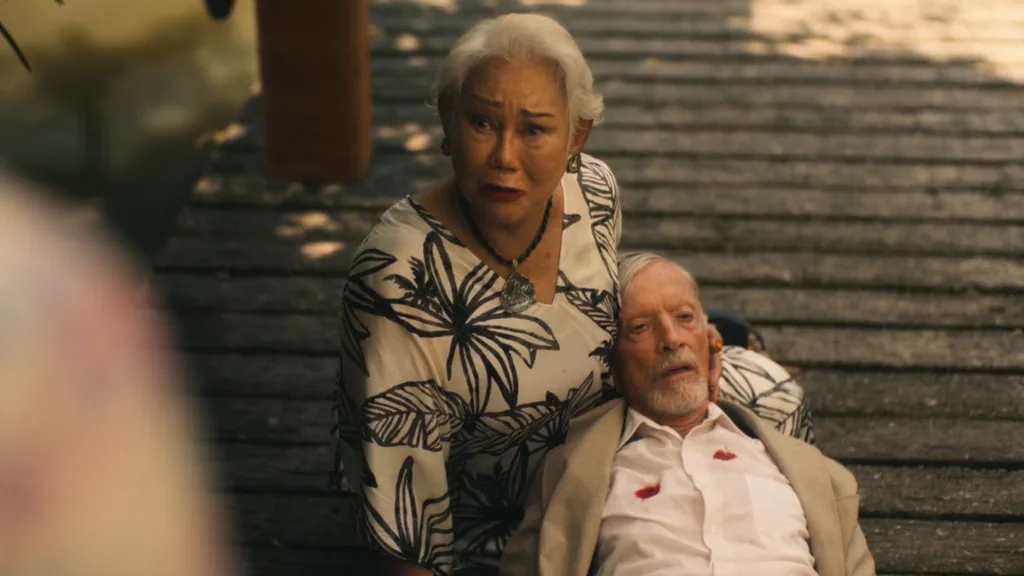
While Rick tells Chelsea that after returning from Bangkok, he’s made peace with his demons and – even better – avoided killing anyone when hotel owner Jim Hollinger taunts him, his barely healed wounds are ripped open. Chelsea urges Rick to “stop worrying about the love you didn’t get, think about the love you have” but Rick is unable to. He shoots Hollinger down, only to find out he’s his father.
When Hollinger said, “I didn’t know [your mother] was a liar too. Wanted you to think your father was some kind of great man. She told you a fairy tale. Your father was no saint, you didn’t miss out on much that’s the fucking truth,” he was referring to himself.
Rick, despite his personal growth and commitment to Chelsea on his return can’t give up on a fantasy that’s given his life meaning. In the ensuing shoot out, Chelsea dies and, as he promised her, he stays with her to the end.
The Ratliffs Ending Explained: Suicide Tree

With the end of his holiday approaching Timothy Ratliff decides to avoid the consequences of his money laundering scheme going awry by taking his own life by consuming the seeds of the “suicide tree” or Pong Pong tree. And, he’s saving his family the pain of living without wealth by taking them with him. This is something that has been foreshadowed throughout the season with Ratliff fantasising about his own death, urging his daughter to take up life in a monastery and probing his wife about what life would be like without money (short answer from Parkey Posies’ Victoria Ratliff? She’d rather not live).
Ratliff’s crisis reaches a crescendo when his daughter Piper accepts she’s not cut out for a life of asceticism and, shock, loves being rich. After a night at the monastery bemoaning the food that is “vegetarian” but “not organic,” stained mattresses and lack of aircon she confesses to her parents she’s a princess. Victoria Ratliff is delighted and responds: “No one in the history of the world has lived better than we have, even the old kings and queens,” to not enjoy it, she explains, would be an offence to all the “billions of people who can only dream that one day they can live like we do.”
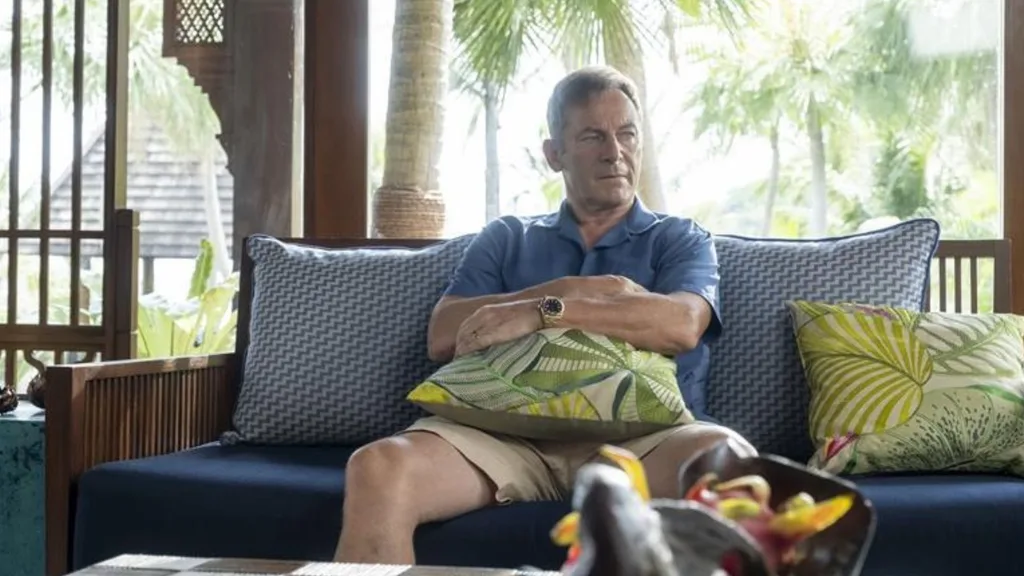
In America, of course, the wealthy one percent have replaced the kings and queens of old. But her statement also foreshadows Timothy Ratliff’s next move – echoing the Pharaohs who were buried with their wives. He’s just planning on burying them with a round of deadly piña coladas.
But there’s a secondary meaning in Timothy’s gravitation towards the Pong Pong fruit. Series creator Mike White named the fictional “White Lotus” hotel after the Lotus Eater of Greek mythology. Discovered by the hero Odysseus they were described as a community of people who lived on a remote island, gorging themselves on the fruit of the lotus which induced a state of blissful apathy. They forget their worldly concerns and any urge to return home. While parallels between the lotus fruit and the Temazepam the Ratliff parent’s chew on all season could be drawn the fact that Ratliff turns to another fruit (not, for example, a gun) feels like a loaded allusion.
Turns out, the worries of a man caught in an international money laundering scheme ‘can’t be so easily soothed, at the last minute Ratliff backflips and saves his children. His son, the only child he had planned to save because he assessed he could live without money, almost dies and Ratliff is forced to admit the truth to his family on the boat ride home and test just how well his three children have absorbed Luang Por Teera’s teachings.
And, Lochlan Ratliff’s Death
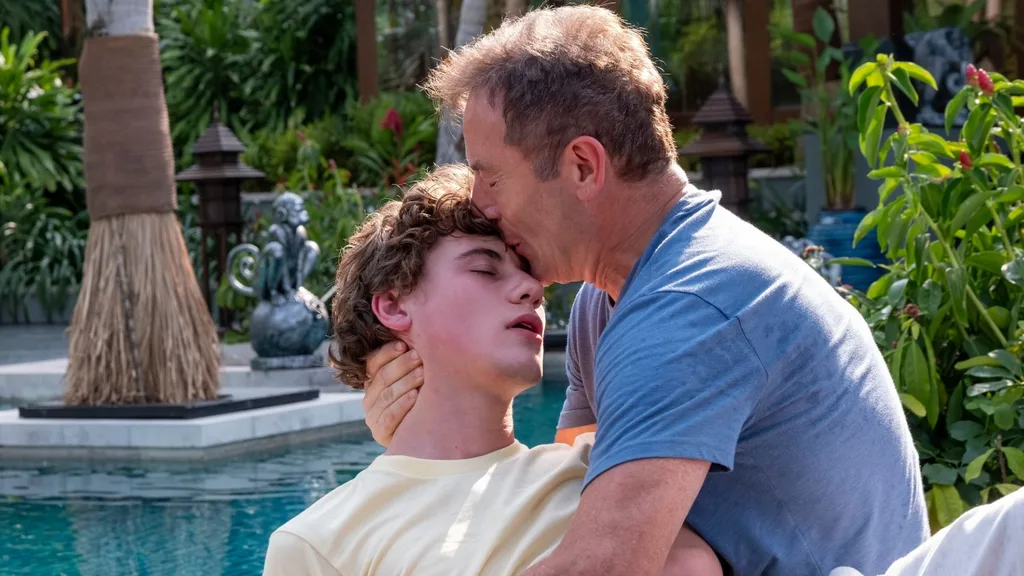
The first “death” of the finale, Lochlan’s poisoning is arguably the most shocking. Drawn out, we can see it before it happens. Lachlan tries to broach the subject of that boat incident with his brother Saxon, only to be snapped at and told that nobody else is going to make him a man. What’s a people pleaser to do? Make himself the protein shake his brother loves. For reasons unknown, Lochlan doesn’t wash out the blender and downs the poison his father had knocked out of Saxon’s hand the night before. His slow poolside suffocation is unbearable to watch, as is his hallucination, in which he struggles to reach the surface of a body of water as four figures we assume are his family look down on him. As he draws closer, we realise they aren’t people but stone figures. Some would argue it’s an inversion of the Narcissus narrative. Just hours before, Lochlan desperately exclaims to Saxon, “I’m a pleaser in a family full of narcissists,” when trying to explain why he… er, jerked him off. In Greek myth, Narcissus fell in love with his own reflection in a pond and became so enchanted he couldn’t look away. Eventually, he died there. Lost in a self-absorbed family Lochlan’s desperate attempts to forge a connection, whether that’s trailing after his sister to a monastery or trying to sexually satisfy his brother, erode his sense of self. While his family gaze at their own reflections in the water, he’s trapped beneath it, drowning.
Belinda, Zion and Greg Ending Explained: Dreams Deferred
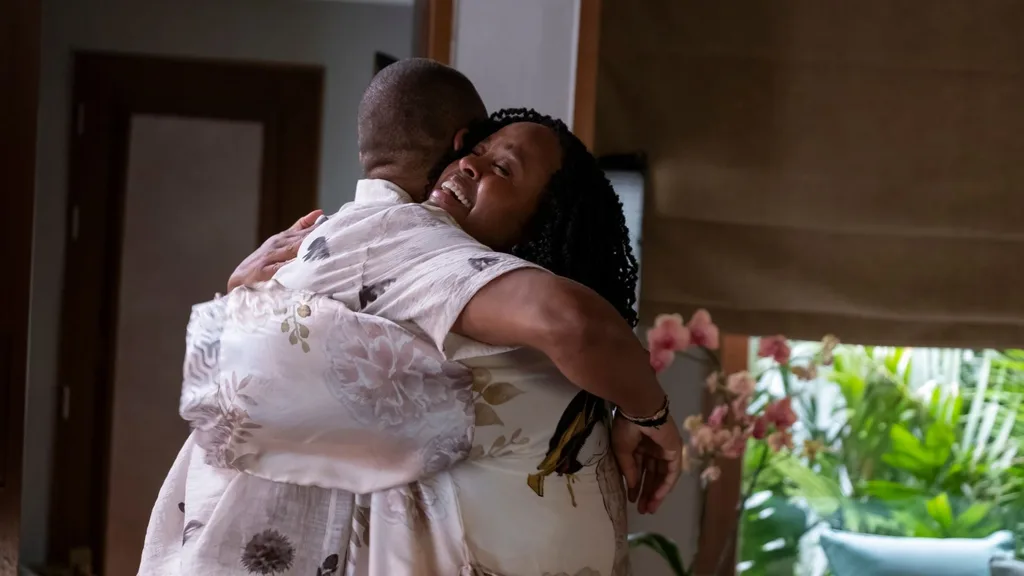
Belinda left season 1 bitterly disappointed after Tanya, played by Jennifer Coolidge, broke her promise to start a wellness business with her. In season 3 Belinda becomes convinced that Tanya’s husband Greg killed her and is at the resort, a suspicion that’s confirmed when Greg offers her $100,000 to keep her silence.
Belinda was the moral centre of season 1 providing grounding and guidance to the characters around her. And, in season 3 when Greg shows up we naturally assume she’ll avenge her friend and right some wrongs. Not so.
Instead, Belinda’s son Zion a business major at the University of Hawai’i convinces her to squeeze Greg for even more money. “Maybe this is the one good thing that’s meant to come out of all of it,” he counsels her. Reminding Greg that Tanya was worth at least half a billion dollars he says bro-ishly “What we’re asking is a mere one percent of your total haul.”
During the negotiation, Zion quotes poet Langston Hughes’ “Harlem”, asking, “What happens to a dream deferred?” The poem reads: “What happens to a dream deferred/does it dry up like a raisin in the sun? Or fester like a sore – And then run?”
Langston Hughes was a poet preoccupied with the American dream and its inaccessibility to the many marginalised in America, including African Americans and the working class. Harlem was a poem that reflected on the harm caused by the continued delay of racial equality in America and the frustrated dreams of a swath of the population. Harlem was published in 1951, and Belinda’s plight in The White Lotus, endlessly catering to the needs of wealthy white guests on a quest for self-actualisation while her own talents go unrealised, illustrates just how little has changed in the lapsed 74 years.
It seems that Belinda’s dream has been festering, her frustration with Tanya’s betrayal ultimately outweighs her sympathy for her and she successfully extorts Gary for a cool $5 million.
Unfortunately for her friend and lover Pornchai a Thai spa manager who she’d entertained opening a wellness centre with, her $5 million windfall enables her to abandon him in the same way Tanya abandoned her. When her son asks if she’ll include him in the deal she asks “Can’t I just be rich for five fucking minutes?” As Zion surmises shortly before the resort explodes in gunfire: “We’re too blessed to be stressed.”
Laurie, Jaclyn and Kate Ending Explained: Time Creates Meaning
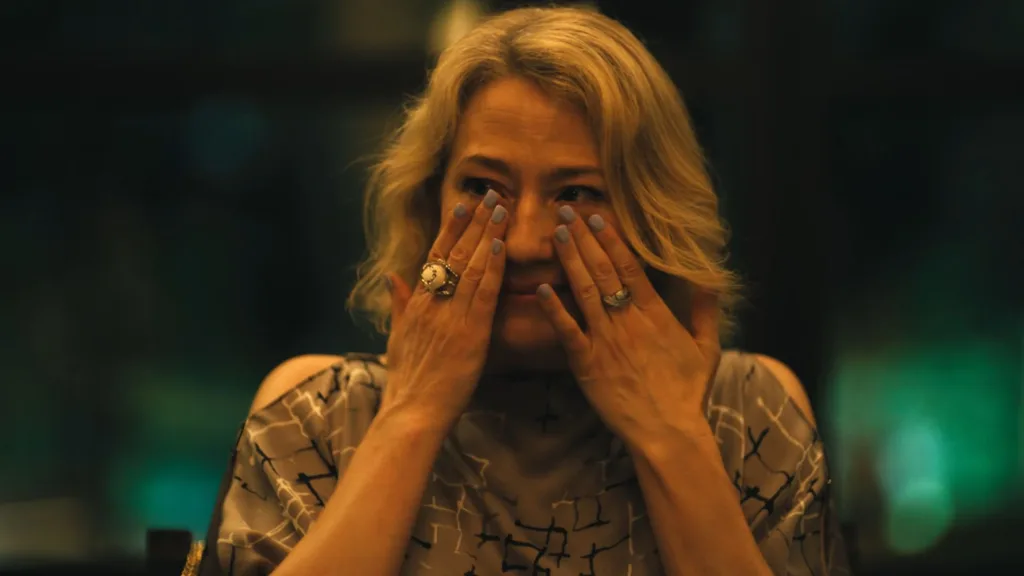
The trio on the girls’ trip from hell—dubbed “the three women” by fans—were, according to Mike White, written to inject levity into a dark script.
“It wasn’t about some scathing critique of female friendships,” he said on The White Lotus podcast. “It was really just more how we have these touchstones in our lives… because they went a different way and you went one way and you always sort of feel like you’re defending your choices.” And, the girls had a surprisingly uplifting end to their stories, not just because they escaped unscathed.
At their final dinner, after much bickering, something shifts. Jaclyn, ever the actress, claims she’s been in “the best mood” all week, though anyone who has seen her staring into the middle distance in her empty master suite will know better. She makes a shy gesture to her fight with Laurie. “People judge you for your superficial defects, but you guys judge me for my profound defects.”
Laurie responds: “If I’m being honest, all week, I’ve just been so sad.” Being with her friends made her feel like she had to justify her life, but she’s not blaming them. Instead, she recognises that despite seeking meaning in work, love, and motherhood, she feels she’s left with no “belief system.”
At the end of the trip she’s realised she doesn’t need one. “I don’t need religion or god to give my life meaning because time gives it meaning… We started this life together and we’ve lived our lives apart. When we’re talking about inane shit it feels so fucking deep.”
Laurie, burdened by her “real job,” a troubled daughter, and a deadbeat ex-husband, finally finds peace in embracing her admittedly superficial friendship: “I’m glad you have a beautiful face,” she says to Jaclyn. “And I’m glad you have a beautiful life,” she says to Kate. “And I’m just happy to be at the table.”
White said the speech was about the value of maintaining connectedness, even in relationships that feel superficial or strained by distance. “Those relationships, at least for me [are] where I find deep meaning in my life. Just like that, it’s time to check in with those people and see how life has turned out for them… And it just feels deep. They’re not always the deepest friendships, but there’s something deep about reconnecting with those people… time creates meaning.”
In a world were we’re increasingly defensive of our “alone” time, and subsequently lonelier than ever the message that we should value even our most imperfect relationships is a timely one.
Gaitok And Mook Ending Explained

Gaitok and Mook’s love story should be sweet, but like everything in The White Lotus season 3, there’s a moral ambiguity to it. The hapless security guard continuously tries to impress Mook, a girl who is looking for a man with ambition. Unfortunately, Gaitok is wedded to his Buddhist principles of non-violence and frequently leaves Mook less than impressed with his lack of ruthlessness. In episode 7, Mook explains to him that fighting is a part of life and when Gaitok shares that he knows Valentine was involved in the robbery, Mook urges him to take the opportunity and come forward.
“He likes this girl, and that ultimately for him to get the girl and get the job, he’s got to like, be a killer. And the happy ending is on the backs of, we know he killed a guy that we love, and that he went against his morals. It’s something that feels very human. In order to get ahead – this is obviously an extreme version of it… you have to suck up your idealism, step up and like push yourself to the front of the line or push someone you know, down the stairs or whatever it is.”
Ultimately, Gaitok doesn’t sell out Valentine but he commits the larger crime in Buddhism by murdering Rick. He gets the girl and gets the job, but as White says, “in some way that he can’t go back.”
The post The White Lotus Season 3 Ending Was Chaos, So Let Us Explain appeared first on ELLE.