Views: 68
I’m no stranger to Vegas—hello, alcohol-fuelled vacays, bachelorettes and a little good old-fashioned chaos—but my most recent visit to Sin City marked my debut at the Consumer Electronics Show. And while Magic Mike Live didn’t fit in the schedule (it’s so good, don’t sleep on it), I flew in with L’Oréal Groupe to preview what beauty might look like in the not-too-distant future. With 4,100+ exhibitors (including 1,200 startups) and almost 150,000 attendees, CES doesn’t just feel vast—it is. Stepping onto one of the (many) show floors for the first time, I was immediately swallowed by a sea of people. I saw everything from AI-powered cars to smart mattresses that actively monitor your body and adjust for a better sleep. But those were mere distractions from my true goal: to check out the latest and greatest in beauty tech. No beauty brand is perhaps more synonymous with CES than L’Oreal, which has shown at the convention for 11 years in a row, helping carve out beauty tech as a category. What began with a virtual try-on tool (developed in partnership with Toronto-based Modiface) over a decade ago has evolved into full-blown hardware innovation, backed by serious science and a growing trophy case. This year alone, the group took home eight CES Innovation Awards across diagnostics, devices and sustainability-forward tech.
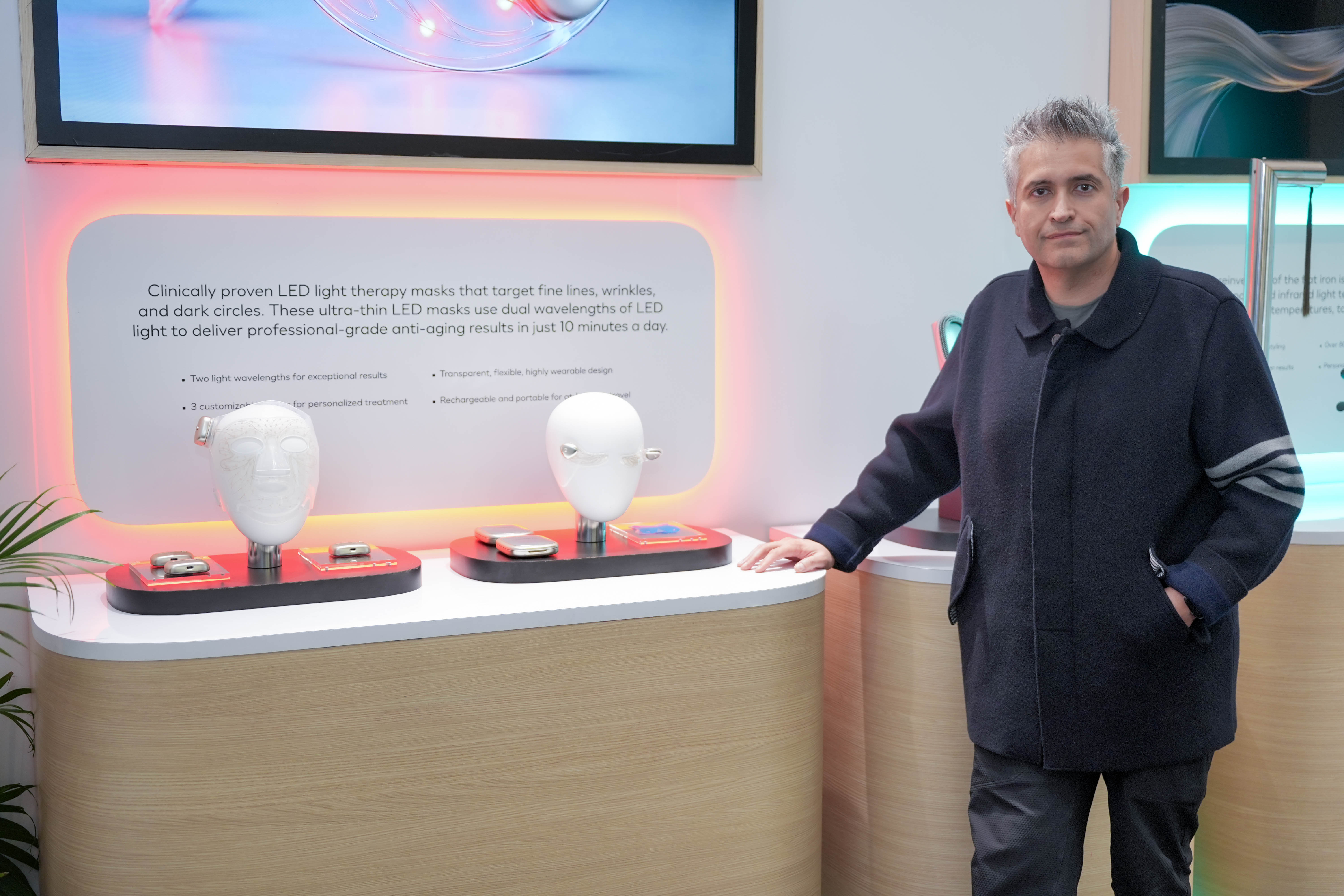
Guive Balooch, Global VP of Tech & Open Innovation at L’Oréal Groupe at CES
At the Venetian Hotel, inside L’Oréal’s suite, I met Guive Balooch, global vice president of L’Oréal’s technology incubator, who has spent 15 of his 20 years at the company building its tech arm from scratch. “When I started, there was nothing happening in beauty tech,” he told me. “Now things are very different.” In the last three or four years, he says, innovation has shifted into overdrive. Recent breakthroughs from his team include the light-powered AirLight Pro Blowdryer, the Cell BioPrint in-store skin diagnostic device and Color Sonic, an at-home hair-colour application device—just a few highlights from L’Oréal’s rapidly expanding beauty-tech portfolio.
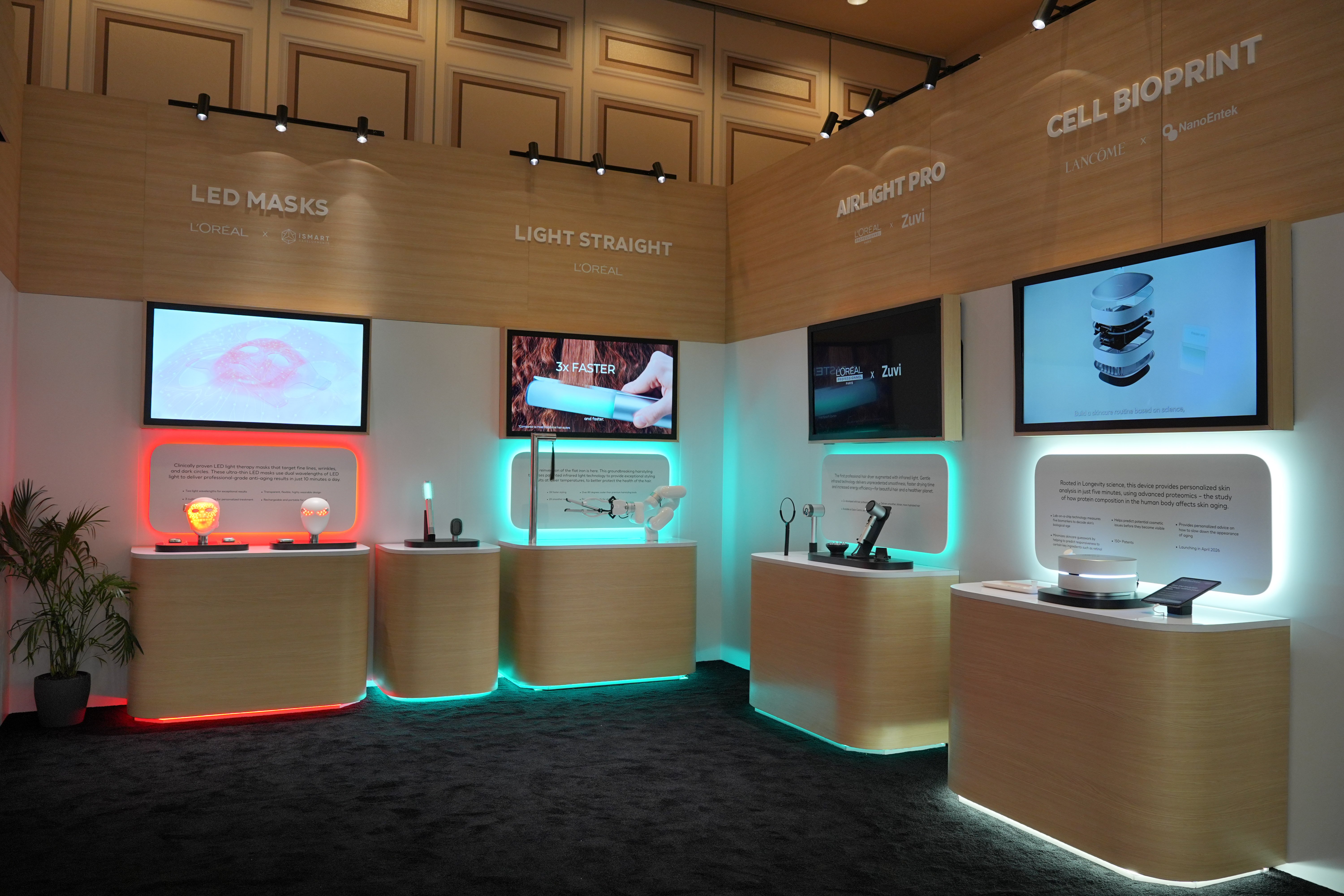
L’Oréal Groupe CES Booth at the Venetian
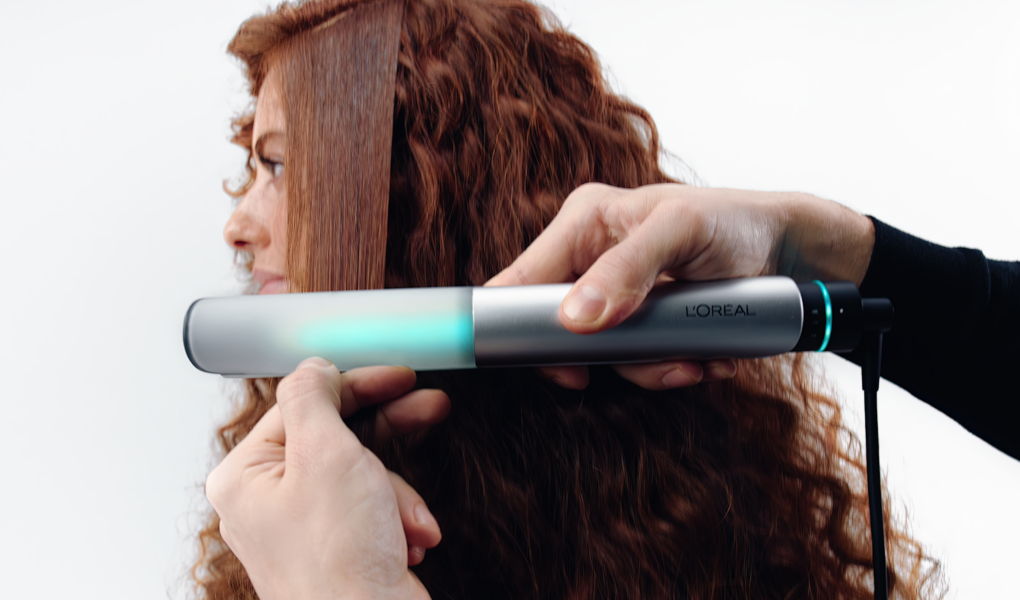
It’s worth noting that what I previewed at CES were early-stage prototypes—concept technologies slated for release in 2027, though exactly which L’Oréal brands they’ll ultimately live under is still being decided. Exhibit A: hair tools powered by light. This year’s CES Innovation Awards spotlighted L’Oréal’s Light Straight + Multi-styler—a flat iron that swaps traditional heating coils for infrared technology, allowing hair to be styled at lower temperatures while delivering smoother results in fewer passes. For Balooch, the breakthrough is about modernizing a century-old category. Invented in 1909, flat irons have relied on the same coil-based heat ever since. “We thought—what if we could completely reinvent how straighteners work?” By combining infrared light with airflow, Light Straight + Multi-styler styles hair faster while minimizing protein damage, marking a rethink of tools that have historically depended on brute-force heat. The innovation builds on the same infrared platform behind L’Oréal’s AirLight Pro dryer (which dries hair 30 per cent faster while using 30 per cent less energy).
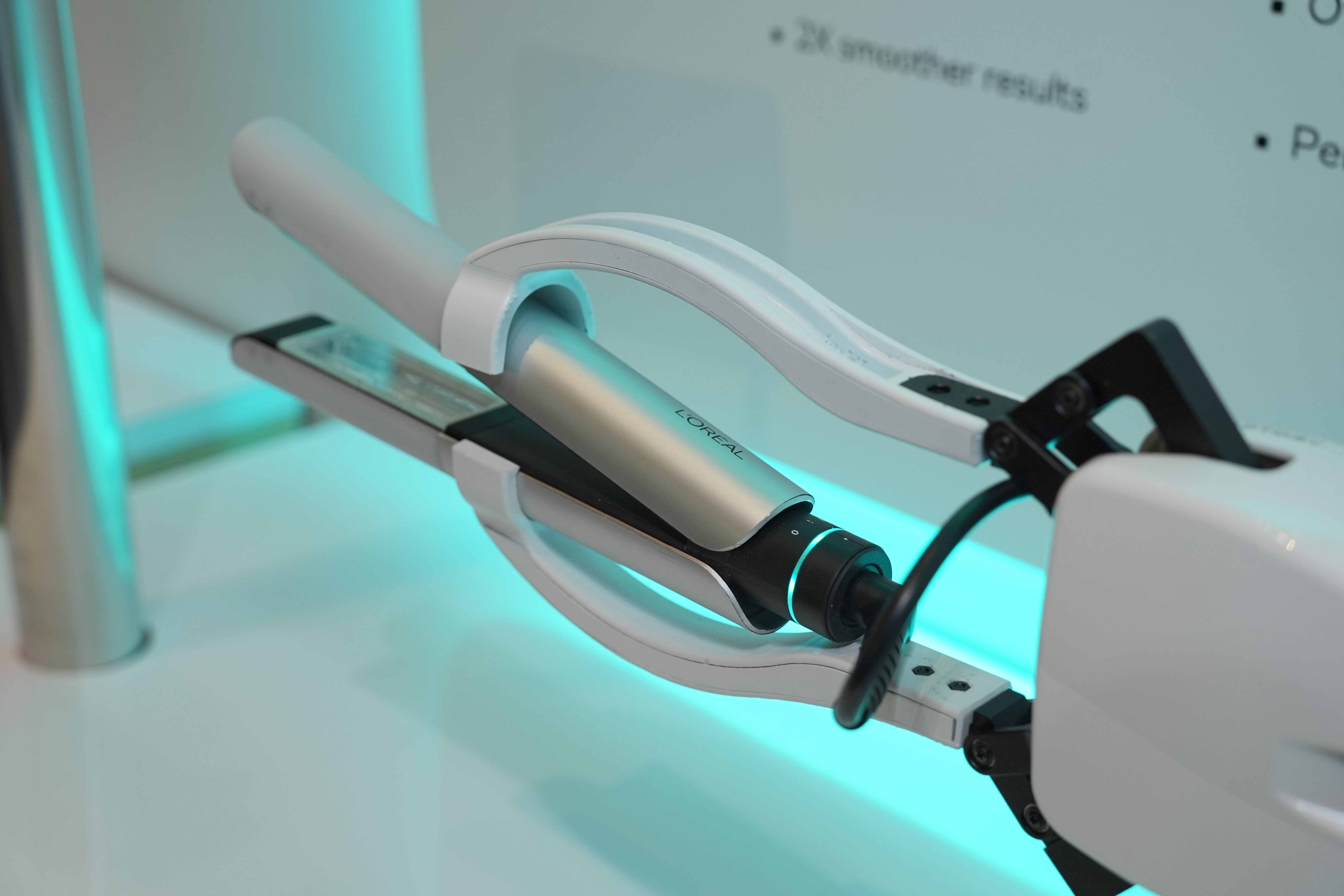
L’Oréal Light Straight
Then there’s LED—arguably the buzziest at-home category right now. Instead of bulky hockey-mask designs, L’Oréal is introducing a flexible, one-millimetre-thin LED mask (inspired by sheet masks) and under-eye patches that sit directly on skin, maximizing light absorption at clinically validated wavelengths (630nm red for cell renewal and 830nm near-infrared for collagen). “Proximity matters,” Balooch explained. “Even a few millimetres of distance means losing up to 40 per cent of the light into the air.”
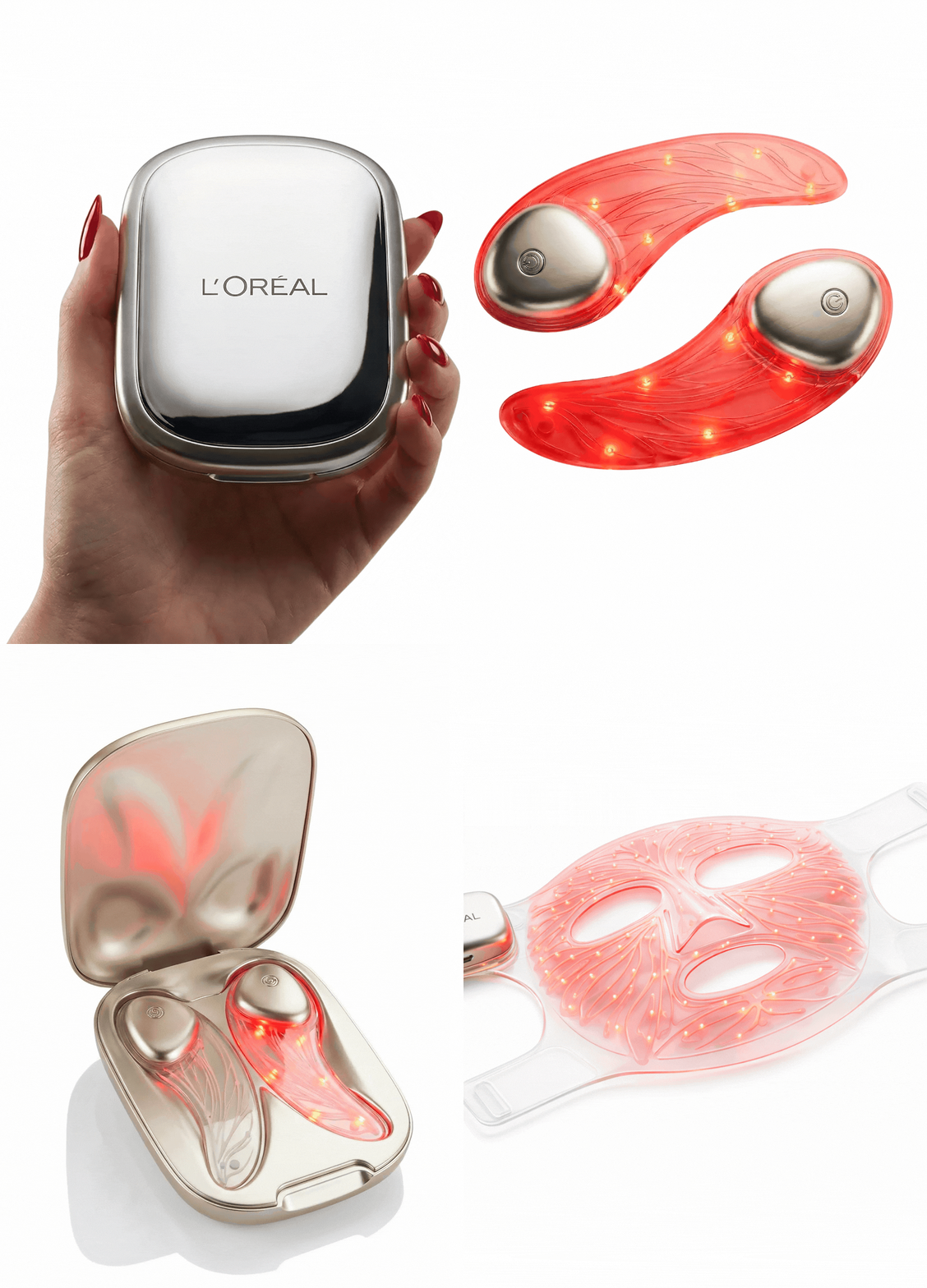
L’Oréal LED Eye and Face Mask
The timing couldn’t be better. Globally, at-home beauty devices now represent $14.5 billion, growing 13 per cent year-over-year, with LED masks alone up 35 per cent. Nearly half of consumers—including me—have already tried facial devices, proof that routines are becoming toolkits. For L’Oréal, devices are no longer side projects; they’re core pillars, alongside skincare and haircare, with upcoming launches like LED masks. “These aren’t accessories to beauty anymore,” he told me. “They are beauty.” Looking ahead, Balooch envisions fully integrated ecosystems: diagnostics that read your biology, formulas tailored to your needs and smart devices that amplify results. “In five to ten years,” he says, “people won’t think about devices. They’ll just think about great skin and hair.” Because when innovation works, you don’t notice the technology—but you will notice the glow. Continue Reading