Views: 41
If you’re a Canadian who loves consignment shopping, thrifting, pre-loved luxury or scoring a secondhand gem, there’s something you may not have realized. That “great deal” you just snagged? It often carries the same HST as something brand new, meaning your pristine vintage Issey Miyake top may have been taxed multiple times as it was passed from one owner to the next. Read on for everything you need to know.
Canadian taxes on vintage shopping: the breakdown
With the resale market booming, your pre-loved Prada or perfectly broken-in Levi’s may have accumulated layers of tax along the way. This isn’t a glitch; it’s just typical for the high taxes Canadians pay. While many shoppers assume used goods are either lightly taxed or exempt, Canada actually double dips—meaning HST is re-applied to most secondhand clothing, even though it was already taxed during its original sale. As secondhand shopping grows in popularity and sustainability becomes a high priority, the same garment can quietly generate multiple HST charges every time it re-enters the market. Essentially, what should be good for the planet and our wallets ends up carrying an unexpected tax burden—one that chips away at budgets instead of rewarding our sustainability efforts. [instagram-oembed url=”https://www.instagram.com/p/DRFZmXNEclU/?hl=en” /]
How one skirt gets taxed more than once
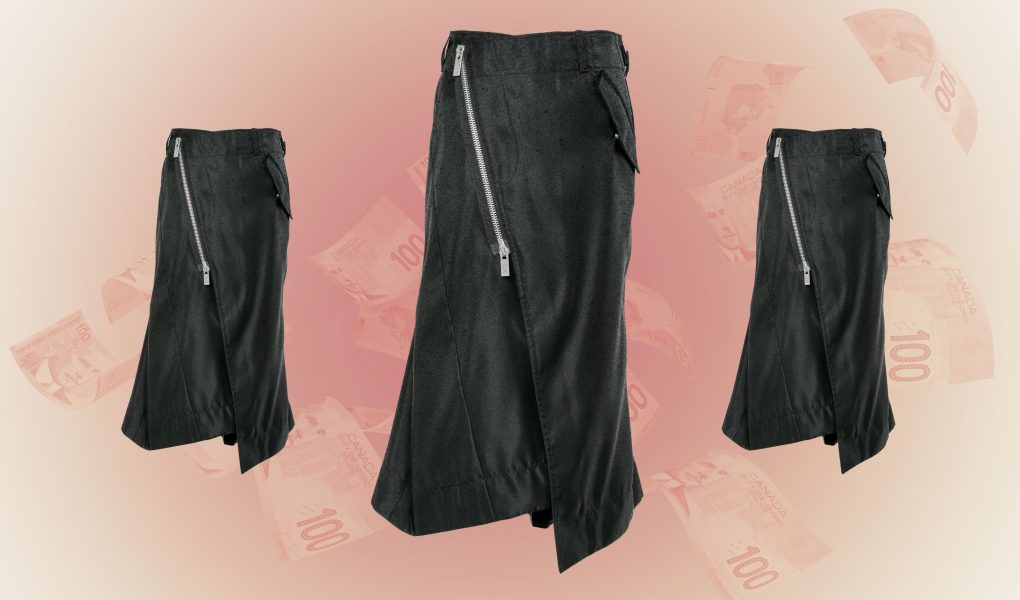
To illustrate my point, here’s the story behind my very real, very travelled Sacai skirt.
1. First purchase:
The skirt is bought brand new from a Canadian retailer. HST is charged—standard.
2. First resale:
It gets dropped off at a Toronto consignment store. Because the store is a business registered to collect HST, it charges tax when the skirt sells.
3. Second purchase:
I buy the skirt (still with the original tags) and pay HST again at checkout.
4. Second resale:
It doesn’t work for me, so I consign it at another resale boutique. When it sells next, HST will be charged yet again. So even though we’re keeping garments in circulation and out of landfill, each stop on this circular journey triggers a new tax event.
What’s actually being taxed here?
In Canada, the new-versus-used factor of the garment plays no role. HST is tied to the seller. If the seller is registered to collect GST/HST, whether they’re a consignment store, curated vintage shop, luxury resale boutique or online platform running a business, they’re required to charge it. So your thrift-store leather jacket from the ’90s would have been taxed when it was first purchased decades ago, and then taxed again each time it changed hands.
Why do Canadian taxes work this way?
Simply put, the tax system hasn’t caught up to the new circular shopping economy. There’s no reduced rate, no exemption and no consideration for secondhand goods. That means a vintage boutique selling archive Ralph Lauren is treated the exact same way as a mall retailer selling this season’s Ralph Lauren. Same garment category, same tax rules—completely different economic and environmental impact.
Why it matters to shoppers
Secondhand fashion is thriving in Canada for good reasons: sustainability, affordability and individuality. But the tax structure can make things feel a bit counterintuitive. A few things to keep in mind:
- Consignment stores almost always charge HST because they are fully registered businesses.
- Most curated vintage sellers charge HST too, especially those with storefronts, pop-ups, or large online operations.
- Peer-to-peer thrift (someone selling on Instagram or Marketplace) usually does not charge HST, unless they’re operating as a legitimate business.
- Registered charities like Salvation Army or Goodwill generally do not charge HST.
This explains why two nearly identical secondhand purchases, like a cashmere sweater from a secondhand boutique versus one from a casual seller online, can have different price outcomes. Again, it has nothing to do with the sweater, only with who is selling it.
The future of circular fashion
With voices rallying to buy secondhand, extend the life of garments and support circular fashion, our tax policy needs to evolve. Repeatedly taxing garments that reduce waste, support small businesses and offer affordable alternatives feels out of sync with sustainability goals. Lowering the tax rate on secondhand goods (even to a single-digit percentage) would encourage more Canadians to shop sustainably without feeling penalized. It doesn’t necessarily need to be eliminated, but a reduction alone would make secondhand shopping feel more rewarding. Until policy catches up, being aware of how HST moves through the resale ecosystem empowers shoppers and nudges the industry toward a much-needed dialogue about how to future-proof Canada’s circular fashion economy. Hopefully, one day it will support a truly sustainable system. Continue Reading