Views: 45
Last year, a series of literary pop-ups appeared across cities like Milan, Paris, London, New York and Seoul. Bow-adorned attendees snagged literary classics from authors like Alba de Céspedes, Sibilla Aleramo and Jane Austen, which were similarly tied with ribbons around their branded book jackets. Aside from igniting a wave of FOMO from excluded cities, the public event aimed to spark thought and community through the written word. And the humble host? Miu Miu. There were no Miu Miu products sold on-site, just free books. A similar event is Aesop’s Queer Library initiative, an annual happening during Pride Month where stores are temporarily transformed into curated libraries featuring books by LGBTQIA2S+ authors and allies. Again, no purchase is required. In both of these cases, the brands are stepping outside their typical territory, adding a calculated new layer to the customer experience. Emerging indie labels like Lucila Safdie and Ablondi are also carving out cultural niches of their own. The kinds of events they host stem from their founders’ personal interests and hobbies. For Safdie, it’s a film club spotlighting movies by female directors, which feels more like an authentic It-girl hangout than a brand activation. Meanwhile, Ablondi’s feminist lecture series channels the radical spirit of the 1960s and ’70s. Together, these projects suggest that something bigger is unfolding: Labels are increasingly evolving into cultural curators, building adjacent spaces that complement their brand universes and give their chronically online customers a break from endless scrolling.
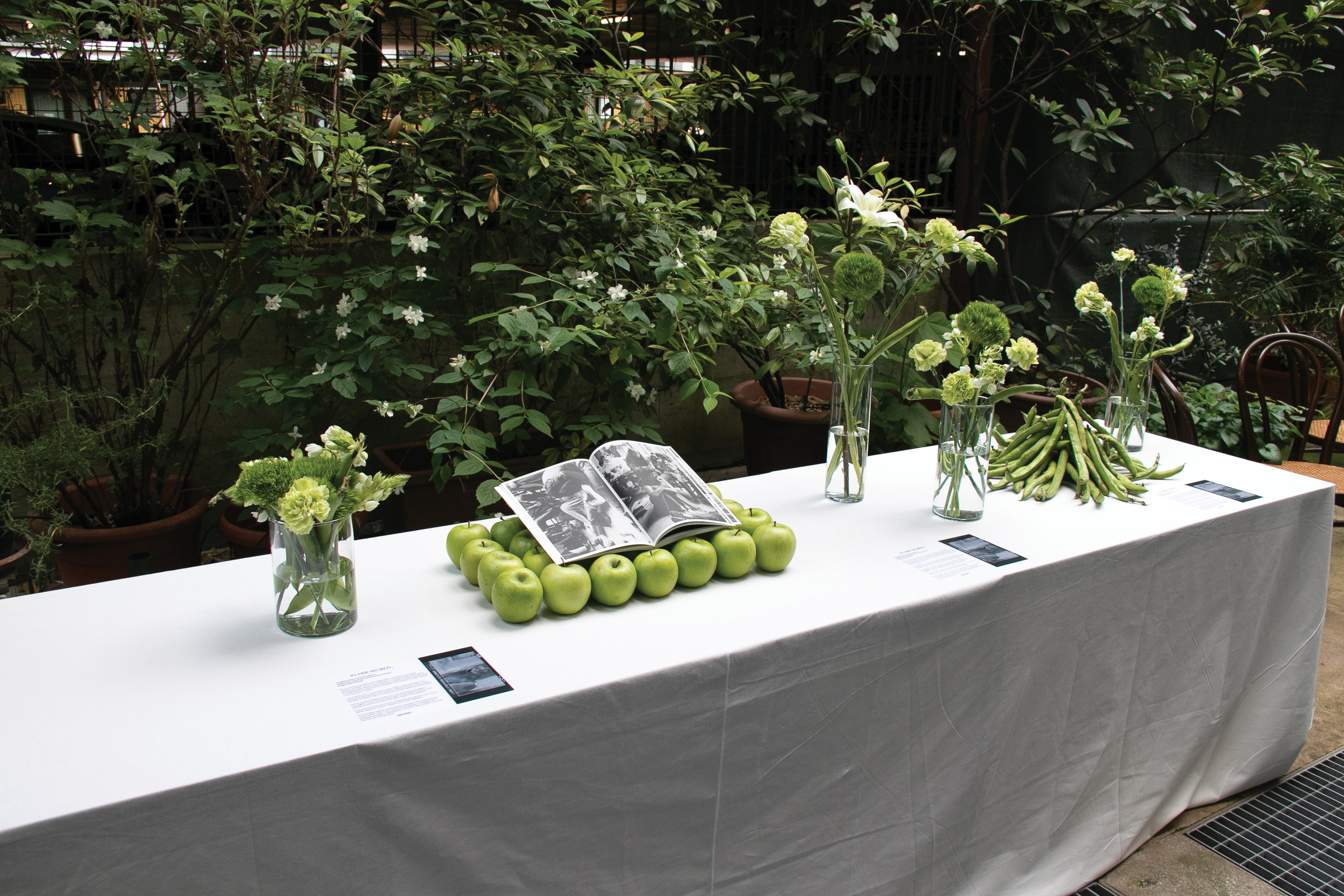
Photography courtesy of Ablondi
With this, the concept of the “third space” enters the conversation. It can be traced back to sociologist Ray Oldenburg, who examined environments that fall outside the home (the first space) and work (the second space) and create opportunities for socializing and connections. Think coffee shops, libraries and gyms. But during the pandemic, that sense of place was redefined and digital platforms stepped in to serve as a makeshift third space. Today, “we are all collectively tired of online spaces,” says Arianna Ablondi Pedretti, the founder of Ablondi, who notes a growing itch for increased face-to-face connections after years of digital isolation and Zoom fatigue. “The conference, to me, needs to become something that goes beyond the brand,” she says. “It’s a way to spark conversations that can then continue elsewhere and, hopefully, bring change.” Clara Feldman, the chair of Blank Rome’s luxury law practice and an attorney for high-end brands like Baccarat and Rick Owens, shares that this sort of brand evolution is becoming increasingly common. “Brands, especially niche ones, are trying to attract a multi-faceted type of audience,” she says. Meanwhile, Viv Chen, the founder of style and culture Substack The Molehill, sees the move as strategic. “It’s a way to get their target customer engaged in the brand universe beyond just buying a product,” she says. But she cautions against it being used as a replacement for traditional public programming and spaces. “A Miu Miu literary club isn’t, and shouldn’t be treated as, a replacement for public-library programming.”
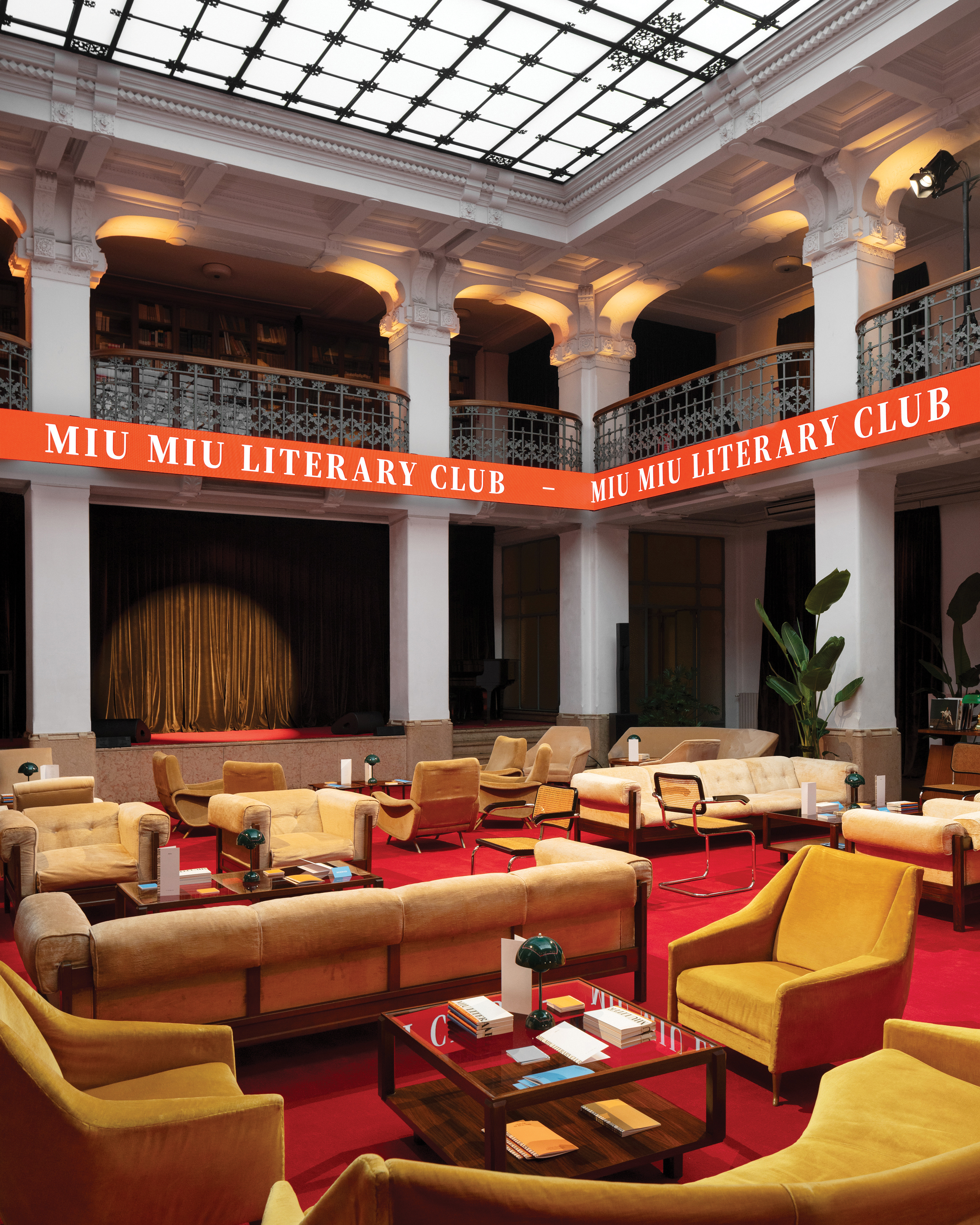
Photography courtesy of Miu Miu
Chen also notes the United States’s growing lack of public investment and infrastructure for community gatherings, which has led to brands stepping in and feeding on people’s desire for in-person socialization. Plus, “these ‘community gatherings’ will be filmed and posted as ‘content’ online, which bolsters brand exposure,” she adds. “It’s attractive because it’s a way to socialize with people in a glamorized environment.” Simultaneously, there’s also been a return to hobbyism at play. For instance, Safdie notes that she doesn’t see her film club as a marketing move but more as a way to satisfy her need to see the films she wanted to see on the big screen, and she realized she had the platform to deliver this. “It made sense to connect it to the brand since so many of my followers share this interest,” she says, describing the club as attracting “the best girls in London.” Even on a mass scale, the trend holds. Lululemon’s 60+ weekly running clubs and community fitness events are part of what Kara Schlosser, vice-president of North America Community, describes as “a cultural shift.” This aligns with the idea of an experience economy, where the experience itself is the product. “Over the past few years, we’ve seen an uptick in participation across our programming and community events,” Schlosser says, signalling that creating memorable and engaging experiences is what encourages people to keep coming back. After all, when there are dozens of brands hoping to sell you leggings, why not go with the one that gives you a (literal) runner’s high? It’s clear that for many brands, a rack of clothes or a row of perfume bottles is no longer enough. Whether that’s a bread-baking workshop hosted by your favourite makeup brand or a poetry night staged by a heritage leather-goods maison, cultural currency goes to those who sell not just stuff but a whole universe. This article first appeared in FASHION’s Winter 2026 issue. Find out more here. Continue Reading