Views: 104
At the heart of Jonathan Anderson’s eighth collection for Dior was an unexpected muse: the wénwán nut. Distinct from the edible variety, these traditional Chinese walnuts are rotated in the palm to improve dexterity and ease tension. The original fidget spinner, if you will. Pairs of wénwán nuts are rotated in the hand, and over decades of use develop a glossy red patina making them rare and highly prized. It was this evolution, from imperfect kernel to thing of beauty, that underpinned Jonathan Anderson’s eighth presentation for Dior.


Before guests even laid eyes on the first look in Paris’ Jardin des Tuileries, Anderson had been trailing breadcrumbs. A pair of walnuts accompanied the invitation, while the show notes — less of a spiel, more kernels of ideas — were arranged on the page in the shape of a wénwán nut. Seemingly unconnected statements and questions wound their way across the page: Does lace hold air? How light can a garment be? Where is true symmetry? Reading it required you to move your head in one direction then another to follow the words.
It was only when you held the page at a distance – letting the optical illusion of the walnut take its form and reading its words in concert – that Anderson’s message became clear: the beauty of the slight asymmetries found in nature. Like the great naturalist painters of Paris who translated the beauty of the living world in paint and canvas, Anderson explores the intricacies of the wild with a Dior collection rooted in romance, organic poetry and a lightness of touch.
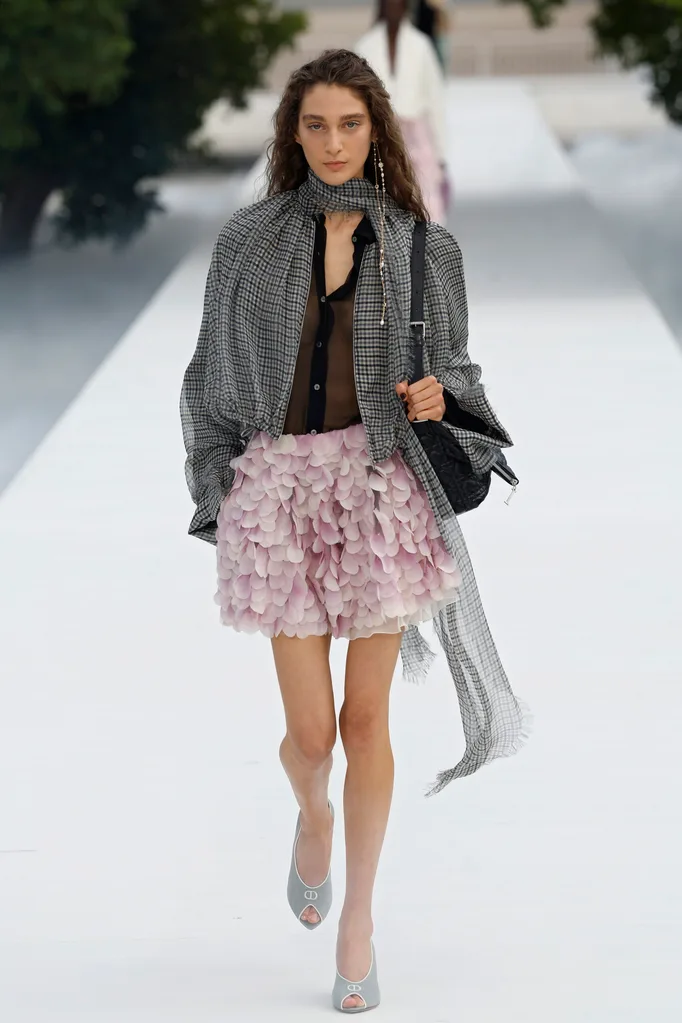
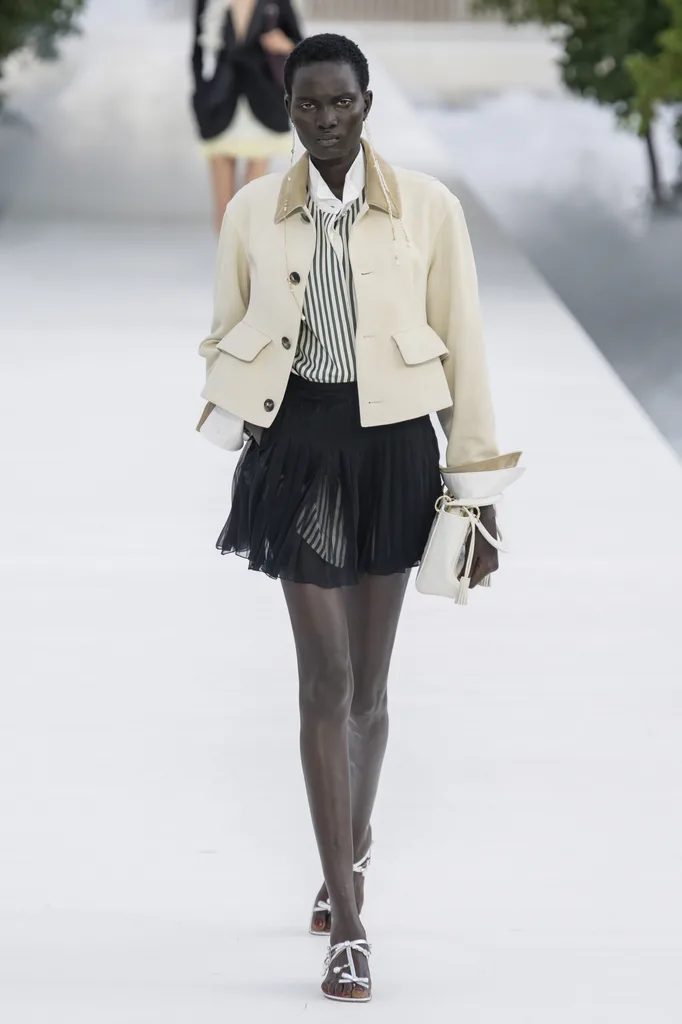
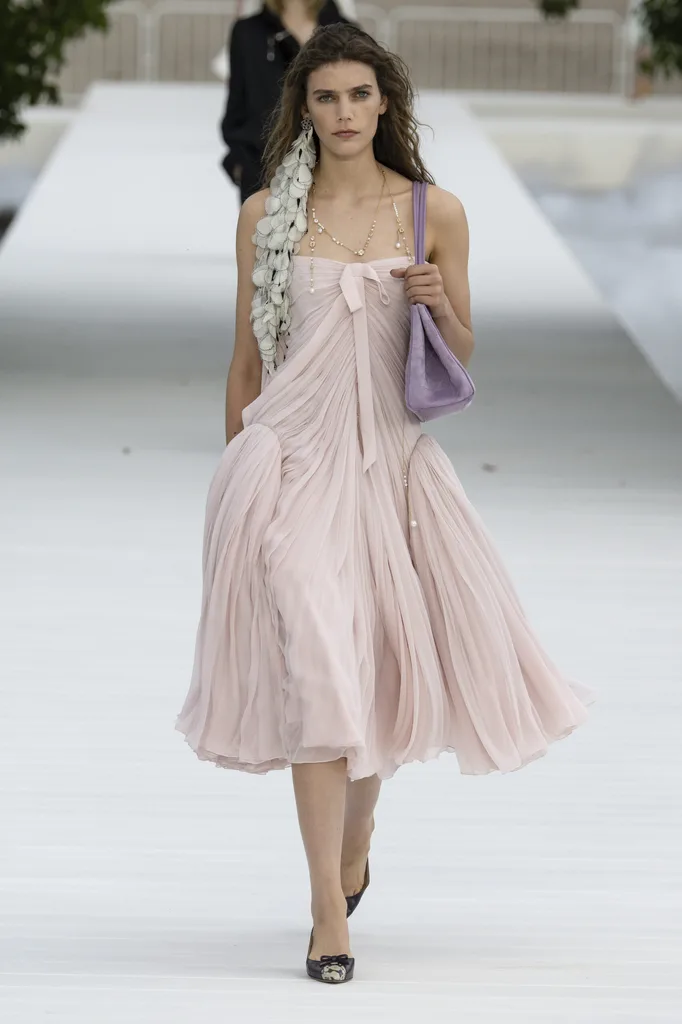
The first look set the tone for the entire show: a sheer striped shirt worn beneath a similarly transparent white blazer, with wide butter yellow mini shorts blooming from beneath the blazer’s hem. The clothes, feather-light, floated around the models as they traipsed the runway, moving as if the pieces were breathing themselves. Accompanying the third look was a single earring draped in a boa of silk mousseline petals – an arrangement that spilled over onto jackets in gradated shades of pink as well as skirts with scalloped edges.
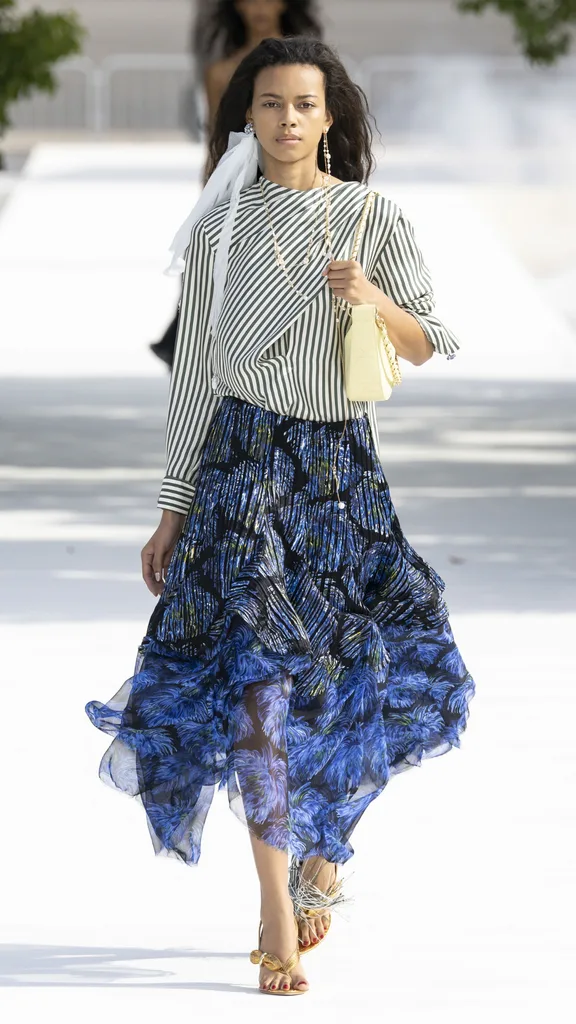
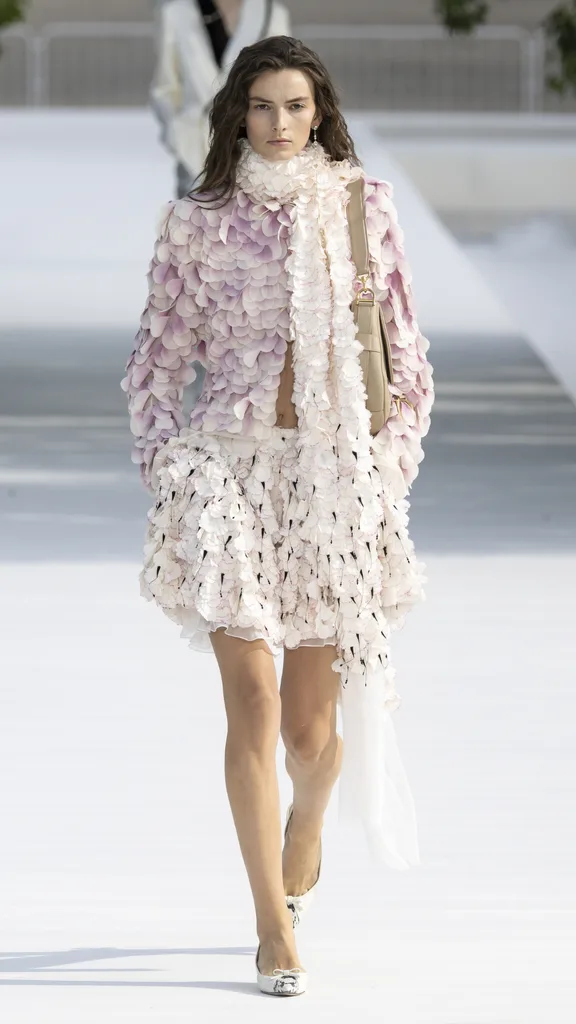
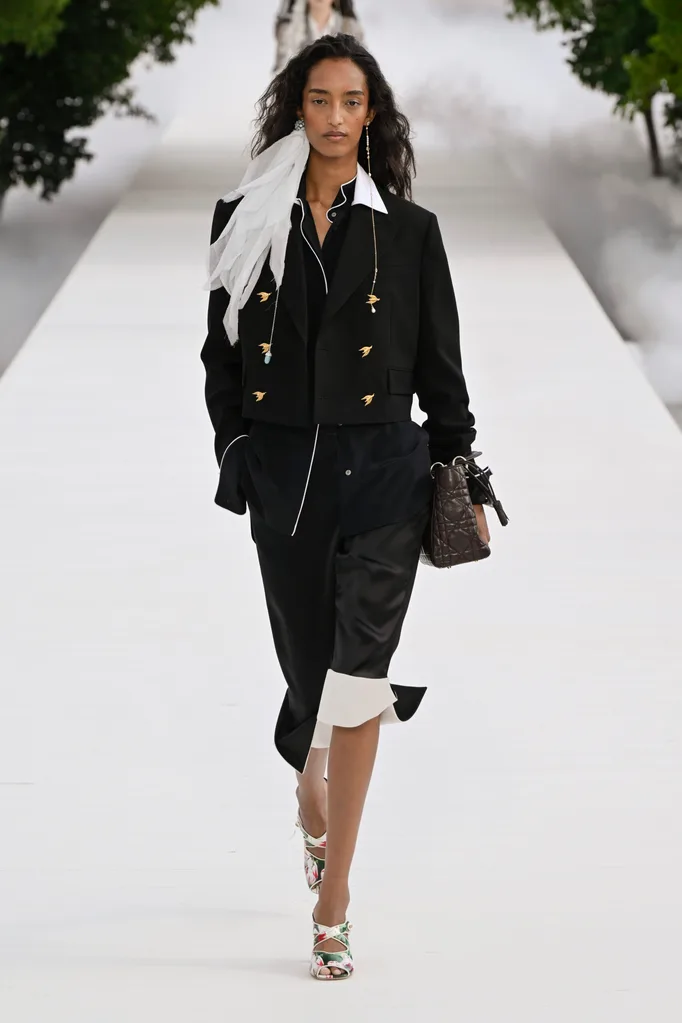
Every look in the collection kept this element of asymmetry as a thread: ruffled hems on dresses hanging longer on one side than the other; sheer blouses with strips of airy chiffon affixed at random; a blazer with one lapel popped and the other flattened; a symmetrical shirt and trouser ensemble thrown off-kilter by a plume of chiffon hanging from a single earring. Where tailoring was a fixture of Anderson’s previous collections, most of this season’s versions were gauzy and diaphanous, save for a handful of opaque blazers in the presentation’s latter half. And even with that, they retained their fluid construction.
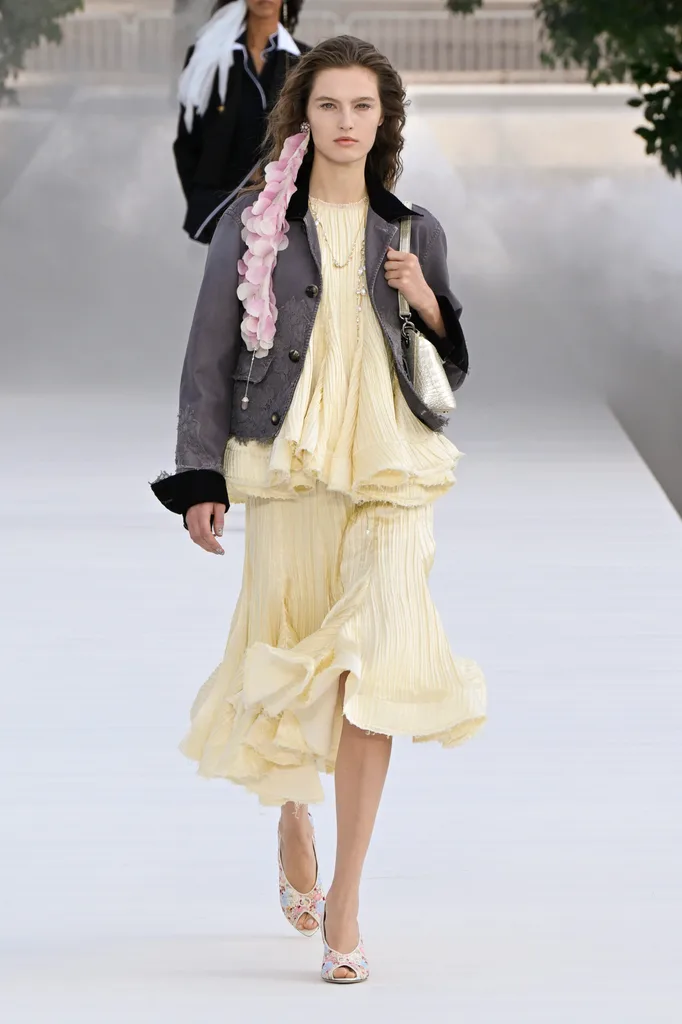
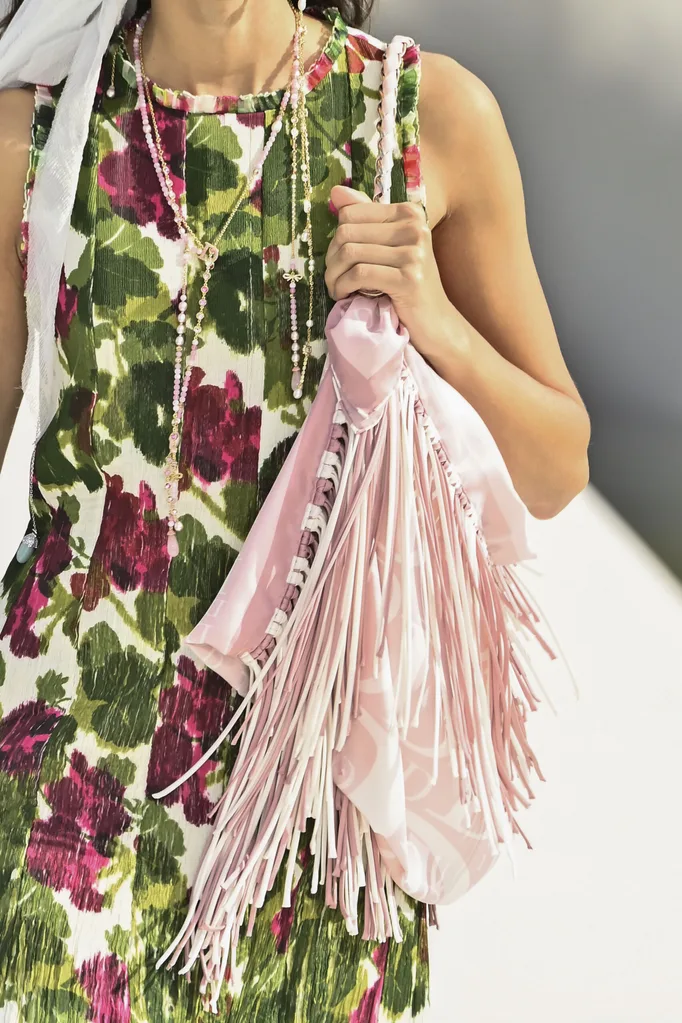
The collection was undeniably pretty – feminine and enchanting in its pastel-heavy colour palette, leaning whimsical with petal-covered pieces fluttering in the breeze – but Anderson’s signature penchant for “weird” still peaked through in surreal details. A blouse with a trompe-l’œil beaded scarf or a couple of pairs of metallic snakeskin-effect pants, for instance, nodded to his Surrealist proclivities. In many ways, that was the collection’s throughline: discovering the beauty in the obscure.
If Anderson was speaking through his clothes, he wasn’t mincing his words — there’s magic everywhere, you just have to look at things from a different angle. Much like reading the show notes.
The post For Dior Spring/Summer 2027 Jonathan Anderson Found Romance In The Wilds Of Les Jardins appeared first on ELLE.