Views: 89
In Florence, beauty is so abundant that it’s a documented health hazard. It was in the Tuscan city that these symptoms were first studied and given a name, Stendhal syndrome, a psychosomatic response to being overwhelmed by intense beauty. A rush of vertigo, a racing heart, a moment of true disorientation.
Florence, the birthplace of the Renaissance, is a masterpiece in and of itself. Within a 30 minute walking radius, you can see the monuments that changed the course of Western civilisation. From the shadows of the Medici family’s palaces to Brunelleschi’s terracotta-tiled Duomo, a short walk in Florence reveals the works of Da Vinci, Giotto, and Donatello in the very corners they were conceived. At the Uffizi, Botticelli’s Venus and Caravaggio’s Medusa keep watch over millions, as does Michelangelo’s statue of David a stone’s throw away.
Yet, for all its art, the city keeps its feet on the ground — mostly. After all, this is the home of calcio storico, a brutal, ancient brand of football and bare-knuckle fighting, and whimsical wine windows tucked into stone walls (a 17th century invention to allow wine merchants to sell their wares without exposing themselves to the plague). There’s joy in knocking on a tiny, Spritz-sized door and having a chilled glass passed through by a lone, perfectly manicured hand.
Whether crossing the picturesque bridges over the Arno river, or standing before an ancient work of art, Florence sets the goal standard for the soul — just remember to breathe.
What To See
Florence is at her best for those willing to climb. For a different perspective, head to Piazzale Michelangelo. High above the bustle, where the air whips across the ridge, you’ll find a panoramic view of the Arno river and the duomo. On your way up, pause at Giardino Bardini, where the terraced gardens offer a sun-drenched spot to enjoy a panini and a pause.
Back in the centre, the Giunti Odeon, a cinema house within a Renaissance palace, has been reimagined as a bookshop that still screens original-language films. For the fashion-forward, (think: the Pucci-girl trend TikTok obsessives) the Pucci Museum offers a glimpse into the private archives of the Emilio Pucci family, who have called the palace home since 1480 and outfitted the likes of Sophia Loren, Naomi Campbell, Alex Consani, and Hailey Bieber in their kaleidoscopic designs.
Then, to the Michelangelo-painted ceilings of the Medici Chapel in the Basilica of San Lorenzo, and curiously, the “secret room” only recently opened to the public, featuring charcoal sketches by the artist only recently rediscovered. Finally, skip the crowds on the Ponte Vecchio to see it and its iconic goldsmith shops from the Ponte Santa Trinita, the most cinematic way to see the city’s oldest bridge.
Where To Stay
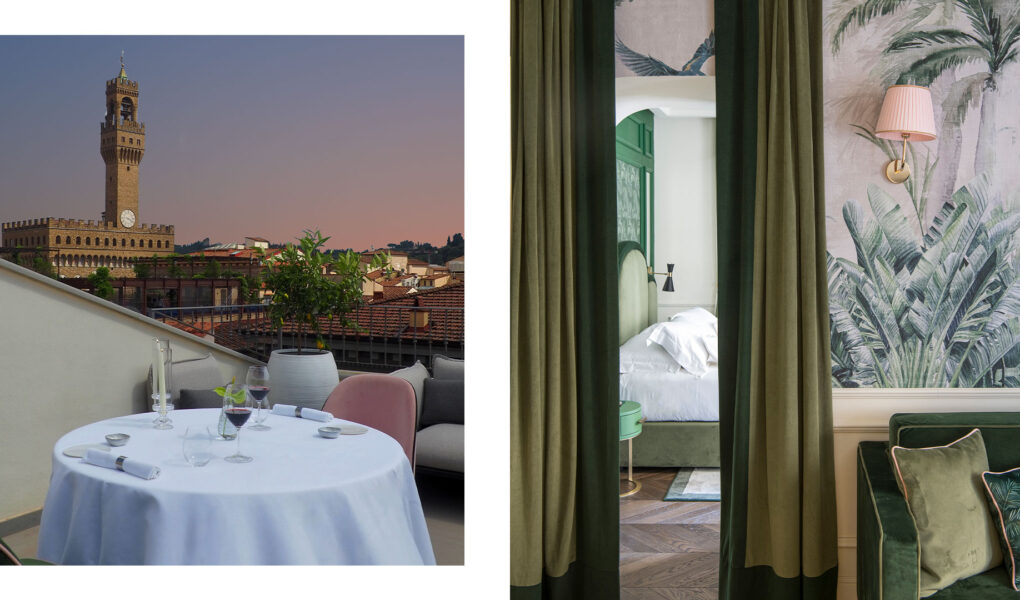
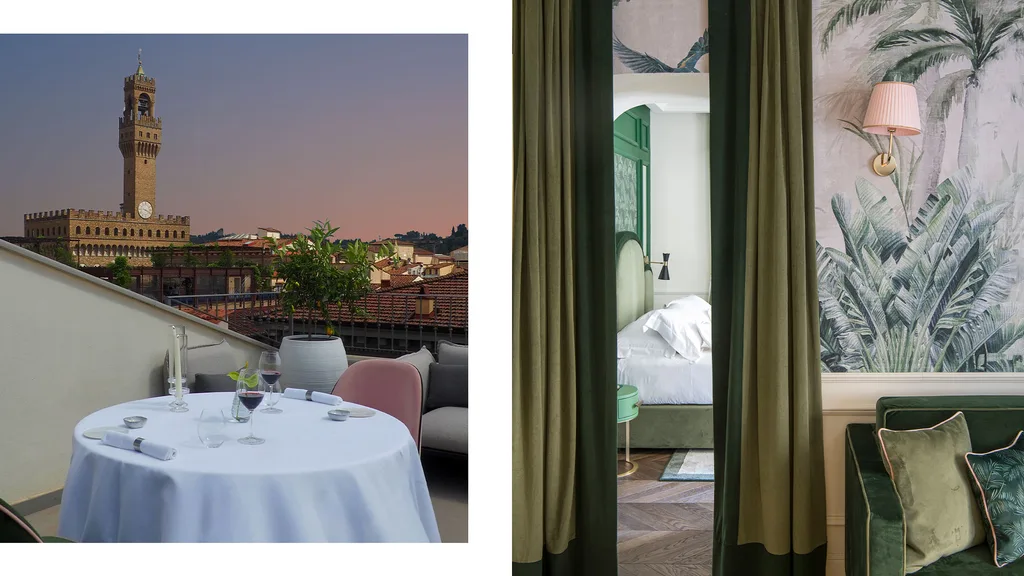
ELLE stayed at La Gemma, owned by the Cecchi family who describe the hotel as a “love letter to Florence”. Rooms are generous, with free-standing bathtubs in sweeping living spaces, with an almost residential feel. Gastronomy is Michelin-starred and the spa is revitalising (the Cryo Eye Massage is perfect to remove any signs of jet lag). The aesthetic is bold, defined by a palette of green, dusty pink, and ivory, a chic nod to the marble of the nearby Duomo.
Elena Sella, one half of Design by Gemini, an interiors outfit she runs with her twin sister Giulia for clients like Bulgari and Lancôme, notes that the goal was to “dress” the space. “[We wanted to] create an atmosphere that is carefully detailed, eclectic, and at the same time welcoming.” You can see it in the silk velvets, brass accents, and the mirrored ceilings of the lounge. For Mariasole Cecchi, the bridge between her fashion background and the hotel is seamless. As co-founder of La Gemma, Cecchi also has an accessories label called Les Petits Joueurs with fans in Bella Hadid, Nelly Furtado and Huh Yunjin of Sserafim. “Each [creative choice] makes a statement using bold, elegant geometry and each material was handpicked to convey a sense of striking — but timeless — luxury.”
Where To Eat And Drink
Beneath white tablecloths and sketch-lined walls, Trattoria Cammillo (a favourite of Dua Lipa) has perfected the fiore de zucca (stuffed zucchini flowers), the frittata with artichoke and mushroom, and the legendary chicken curry. Leave room for a slice of all of the desserts.
In the Sant’Ambrogio neighbourhood, visit the city’s oldest market (established in 1873) for fresh baked bread, cheeses, and local condiments before stopping at iconic Cibreo Caffé to sink into the red velvet opera chairs with an espresso. If you’re craving the famous focaccias of All’Antico Vinaio, skip the downtown crowds and head to the outpost in Santa Maria Novella station for La Paradiso, loaded with mortadella and pistachio cream — and no waiting.
For a more intimate, local experience, Alimentari Uffizi offers wine and hand-carved cold cuts in a tiny, 10-seater shop in a tinier alleyway and if you’re dining family-style, Trattoria Marione serves generous plates of classic cacio e pepe. Finally, for natural wine enthusiasts, Enoteca Spontaneau offers slow-cooked plates like beef cheek and wild boar, alongside all the elements for a Florentine feast.
Where To Shop
Florence’s shopping scene is a mix of heritage and avant-garde cool. In the Oltrarno district is Recollection by Albrici, an Aladdin’s cave of curated vintage finds. For the full experience, ask to see their showroom located just across the street. For more eclectic — and admittedly, affordable hunting — the city’s covered antique market offers a sprawl of mid-century furniture, clothing gems, vinyls and collectables. Also, while not quite unique to Florence, Humana Vintage — the Italian second-hand stores pop up in several cities — in the centre of the city never disappoints, (nor its price tags).
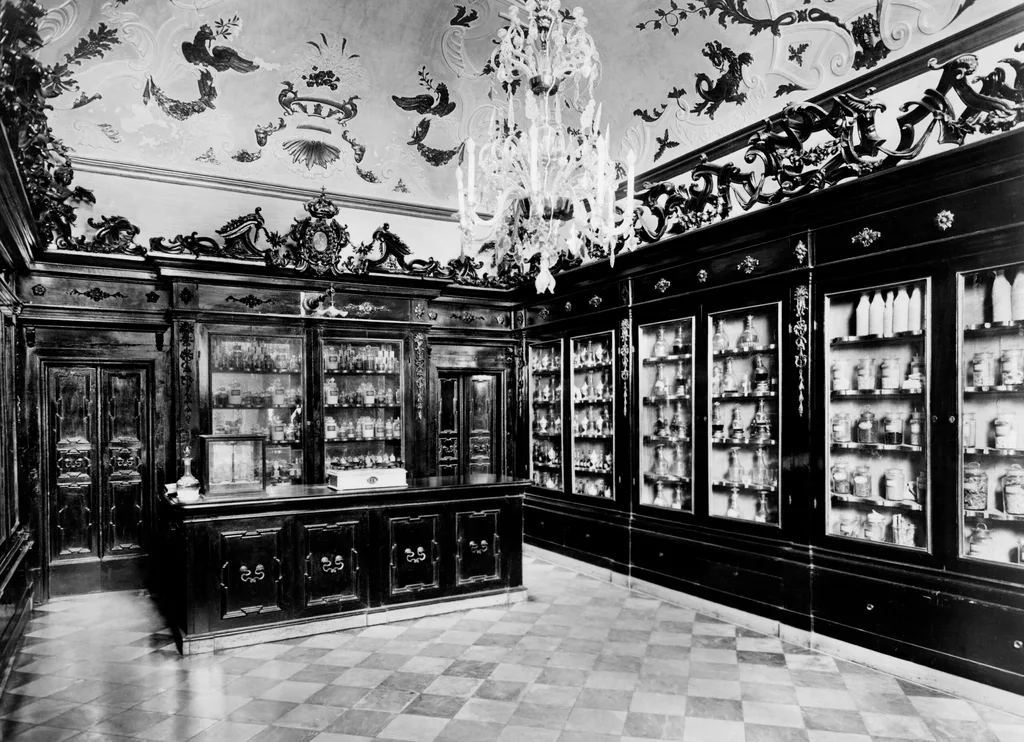
Be sure to visit the Officina Profumo-Farmaceutica di Santa Maria Novella, a stunning 1221 apothecary founded by Dominican friars. Walking through its vaulted halls feels like a step back in time, as you browse exquisitely-packaged soaps and elixirs (perfect for gifts for others, or for yourself) that are still crafted from 800-year-old recipes created by the monks formerly in residence there.
For a more personalised olfactory experience, Profumoir in San Niccolò is a witchy-cool atelier set within a private palazzo designed to feel like a living home, (board is possible there, to a lucky few, with only one room available). Featuring an aromatic garden and an on-site extraction chamber, it invites you to experiment with raw essential oils from the workshop’s olfactory organ to create your own bespoke fragrance. Because scent is the most evocative of the senses, it’s the ultimate souvenir, a bottled essence of the city to be revisited long after you’ve left its streets.
The post From Wine Windows To Vintage Finds: How to Experience Florence Like A Local appeared first on ELLE.