Views: 72
Everyone has a sliding-doors moment; a decision or event that switches the trajectory of your life. For Shabana Azeez, it came in 2018 when she was studying arts and media at the University of Adelaide and working in administration at a filmmaking non-profit. On an unassuming day, her boss asked her a simple question: “What do you actually want to do?” After she confessed her longheld ambition to be an actor, an audition for a short film was secured within the hour. Azeez won the role, and, in many ways, she’s been winning ever since.
“I feel like my life started that day,” the 29-year-old says over a video call from Los Angeles, where she’s currently shooting season three of award-winning medical drama The Pitt. “I spent my whole life building a life I knew I did not want to live. I was cosplaying a person because I knew all of my interests were unacceptable to my parents and I didn’t want to lose them. But that day, [my boss] gave me permission to do the thing I wanted to do. I came alive. So it actually feels like a moment of birth, not a moment of choice.”
The daughter of Fijian Indian parents who immigrated to Australia, Azeez has had to contend with parental, and societal, expectations. Telling her mother and father the truth about her profession was difficult but had to be done, especially as her role in short film Crush was submitted to Tropfest 2019 (she would go on to win the award for Best Female Actor) and a “massive” photo of her appeared in South Australian newspaper The Advertiser. “There was no way they would have missed it,” she says, laughing. “So I told them via the paper. It was bad; a mess.”
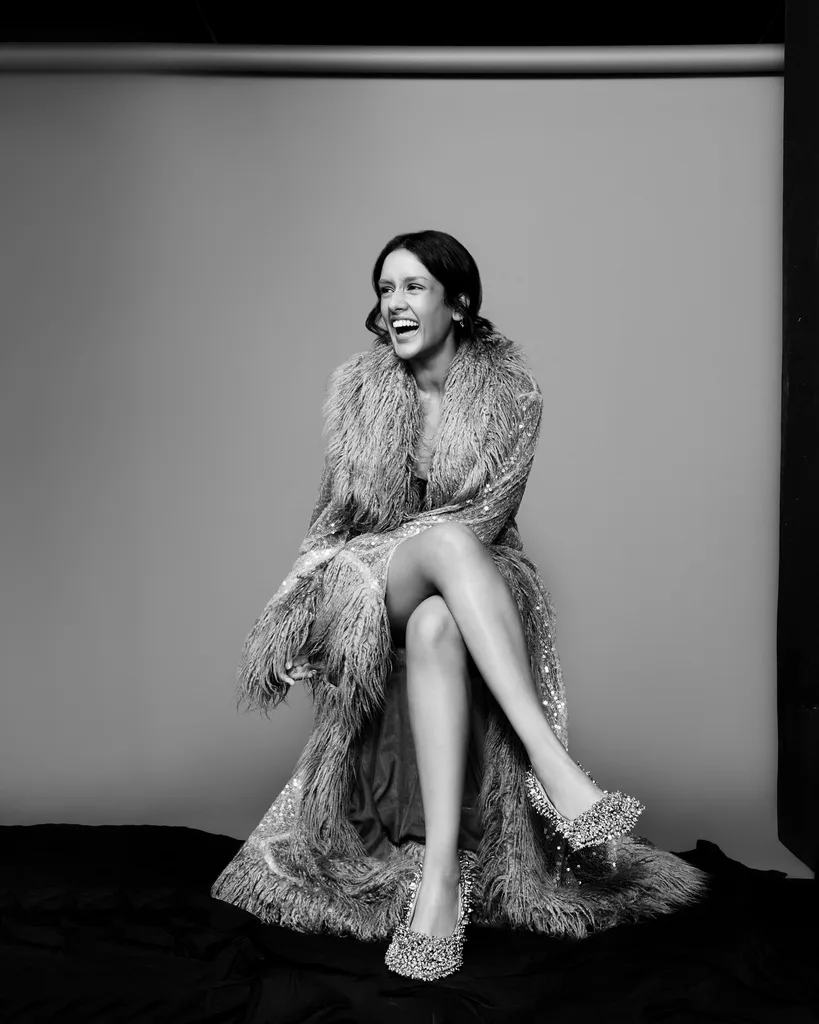
Migrant stories are often reduced to tropes, but Azeez adds nuance as she discusses her parents’ initial reluctance to support her acting. “They sacrificed a lot to create a context in which I could be financially stable and have a soft place to land in terms of my security,” she says. “That’s not a privilege they had growing up. They worked their asses off to give me that gift, then I went, ‘What if I became an actor?’ They do so much so you can have a different life to them, but in that, you grab the gift they gave you and you run with it. And you are running away from them, too, because you’re having all these experiences they can’t relate to. It’s foreign to my mother, this idea that I had a dream and I went after it. My dream serves nobody in my community but myself.”
Azeez also acknowledges how hard it is to be “taken seriously” as immigrants like her parents. “Status is really important when you’re a migrant who experiences racism every day and people belittle you for the colour of your skin,” she says. “You have to always work so much harder to prove yourself. Your kid going in the direction that takes some of that ‘street cred’ away when you’re so marginalised as it is — it’s a struggle. I don’t know that I can sit here and judge them for not supporting me when I’ve never been hungry.”
While they would perhaps prefer for her to be a doctor in real life rather than playing one on television, the phenomenal success of The Pitt has provided some comfort for Azeez’s parents. The US show, which won a prestigious Peabody Award and leads the Emmys pack at 25 nominations this year, takes place in a hospital’s emergency department over a 15-hour shift, with an episode per hour. Azeez, who plays medical student Dr Victoria Javadi, recently confirmed her character would be undertaking a psychiatry rotation and thus no longer stationed within the ER. She can’t reveal much else because “it’s very lock and key, even to me sometimes”, but she does note that the extreme success of The Pitt presents a unique set of challenges.
“When we were making season one, nobody knew who I was, nobody knew what the show was, nobody cared,” Azeez says. “Now, I feel very observed. It’s less freedom, for sure. People who are active on the internet, you often can’t escape it. It’s so lovely to have people watching the show and have that audience respond positively with passion, but you can’t help but absorb some of it. I’m an artist; I’m porous. That’s not the safest quality when you’re dealing with hundreds of thousands of people, literally at scale. A lot of season one was my acting process that I started my career with, and then season two and three, I’ve had to be like, How do you turn off the voices in your head?”
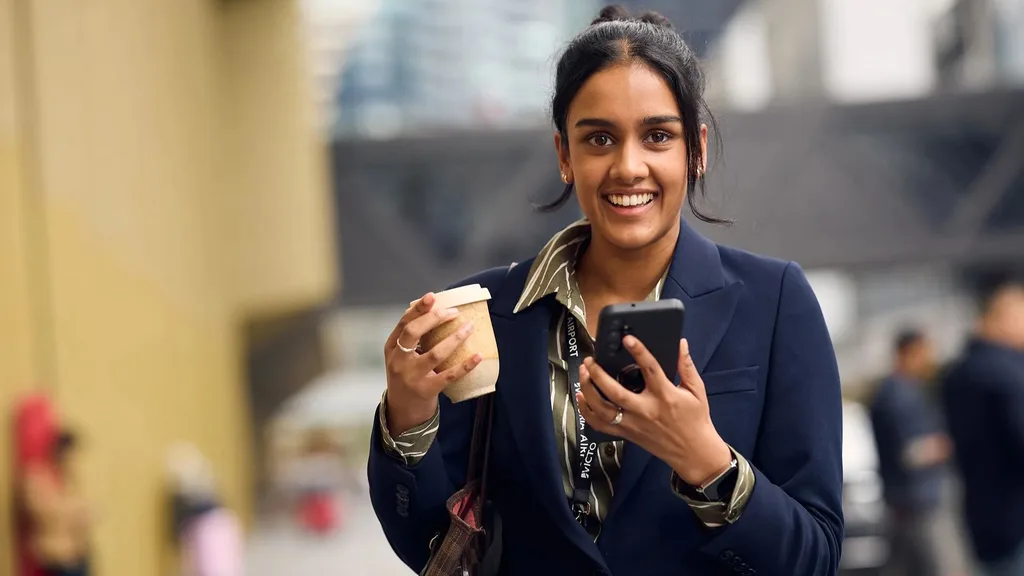
One of the most celebrated aspects of the series is how diverse the cast, and subsequently their characters, are. Lead actor Noah Wyle, who’s also an executive producer, writer and director, has woven elements of his Jewish heritage into his character, chief of emergency Dr Michael ‘Robby’ Robinavitch. Sepideh Moafi (as new attending physician Dr Baran Al-Hashimi) made history as the first Iranian woman to receive an Emmy nomination for Outstanding Supporting Actress. Isa Briones (resident doctor Trinity Santos) and Amielynn Abellera and Kristin Villanueva (nurses Perlah Alawi and Princess Dela Cruz, respectively) are Filipino, and their characters gossip hilariously in Tagalog. Taylor Dearden identifies as neurodivergent in real life, as does her character, medical resident Dr Mel King. And Azeez and Supriya Ganesh (senior ER resident Dr Samira Mohan) are South Asian.
“It’s important that diversity doesn’t hit you over the head, unless it’s camp and that’s the point,” Azeez says. “Oftentimes, when we start with representing marginalised groups, we have to be really obvious about it. Over time, it doesn’t have to be the whole point and tokenistic. I think we’ve really reached that in terms of race, but I’d love to see more body diversity and women ageing in film and TV.”
Like many actors, Azeez lives nomadically. Where the work goes, so does she. When asked where she resides, she adheres to the advice given to her by fellow Australian actor Sarah Snook when they saw each other at the AACTA Awards in February. “[Sarah] was like, ‘You live in LA. People ask you, where do you live? LA. When you’re in Melbourne and they ask, where do you live? What do you say?’ I said, ‘Melbourne.’ And she goes, ‘Yep.’”
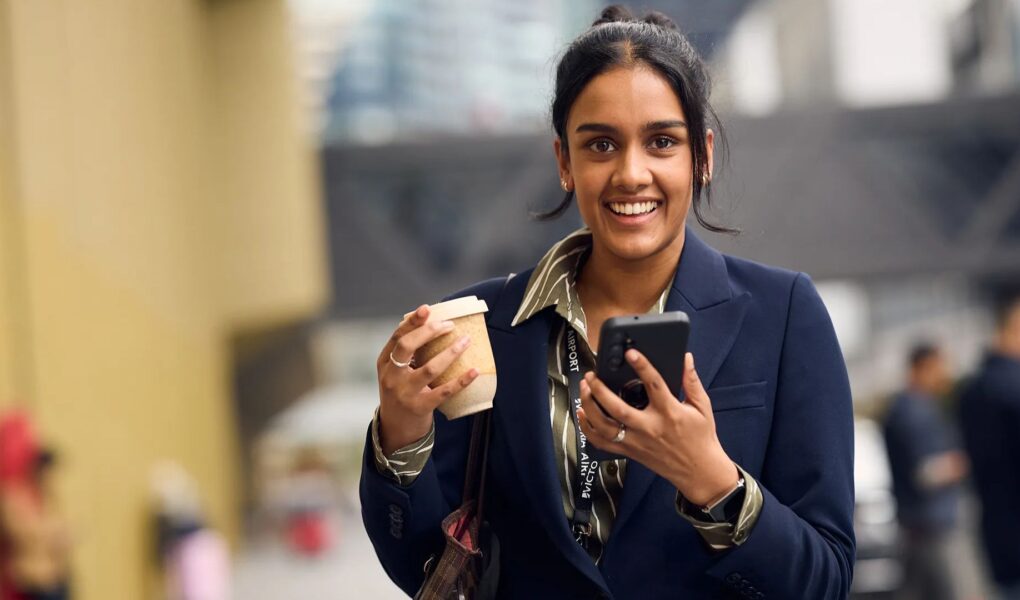
Melbourne was indeed the actor’s base earlier this year when she shot SBS drama series The Airport Chaplain alongside Hugo Weaving. The show, in which Azeez plays airport manager Mira, who clashes with Weaving’s character, Tobias, first screened at the Melbourne International Film Festival in August. “Hugo was very welcoming, very open, very giving,” she says. “I learnt so much from him.”
The role is a departure from 21-year-old Dr Javadi. Mira is British, 34 and a mother. “I’m really grateful that I’ve never been put in a box I didn’t enjoy,” Azeez says. “I look at so many female friends who are so beautiful and they get put in these boxes of ‘pretty girl in movie’, and they play the idea of a woman as opposed to a messy, real character. Acting is walking a mile in somebody else’s shoes. If you’re putting yourself in the same person’s shoes time and time again … which you can’t control — you can’t control what work you get as an actor — it’s just not as big a life as the one I’m getting to live right now.”
Despite how much she’s achieved in a short period, Azeez remains grounded. “I’m very grateful to be working on a show that I like, with writing I like, with people I like. But I think it’s a very self-congratulatory industry, and that’s a dangerous headspace to be in,” she says. “It’s a privilege to go to these amazing awards shows and meet these artists and have these experiences … but I could take them or leave them. I want to be intentional with my career. I really want to work for 40, 50 years. I want to build something that’s meaningful over time, not something that’s a flash in the pan. I never want to just be the girl of the summer.”
Watch The Airport Chaplain on SBS and SBS On Demand.
This article originally appeared in the September 2026 issue of ELLE Australia.
The post ‘I Never Wanted To Just Be The Girl Of The Summer’ Shabana Azeez’s Career Is Ready To Take Flight appeared first on ELLE.