Views: 87
THE RUNDOWN
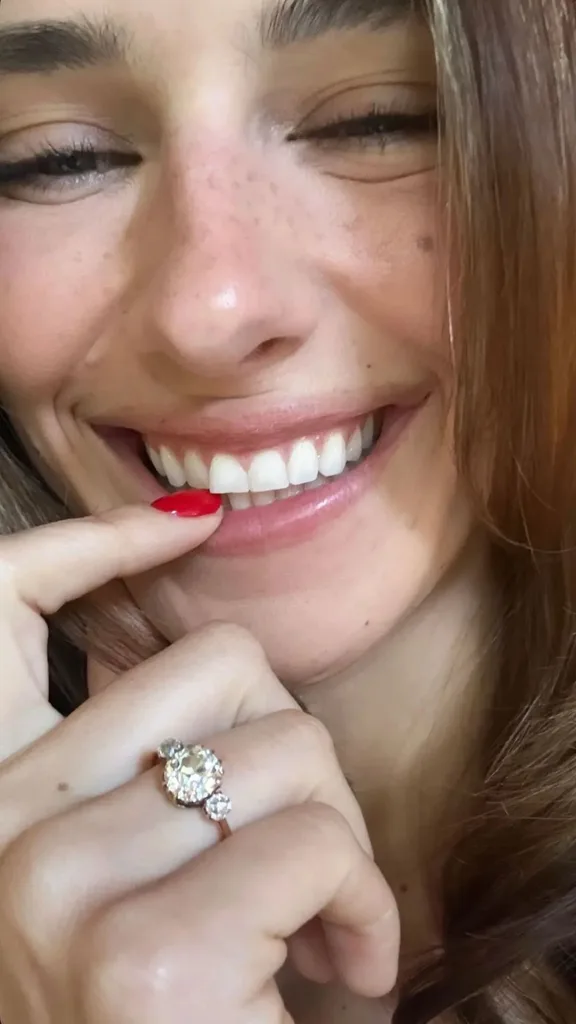
- Influencer Devon Lee Carlson recently confirmed her engagement to actor Duke Nicholson with a romantic, three-carat 19th-century trilogy ring in a cluster setting.
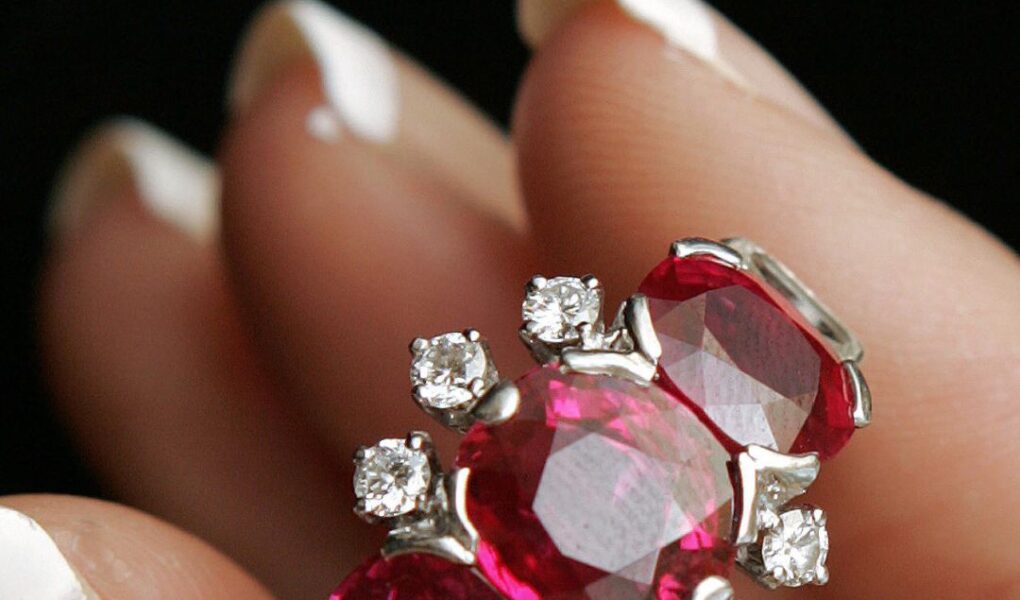
- Unlike single-stone solitaires, cluster engagement rings group three or more stones tightly together, creating a textured, high-impact “bouquet” with maximum sparkle and antique charm.
- As modern brides gravitate towards personalisation, Adobe search data has revealed a dramatic rise in the popularity of vintage arrangements, with cluster settings spiking 112%, intricate filigree designs 119% and halo settings 53%.
Here at ELLE, when a celebrity announces their engagement, the first place our eyes go to is their hand. So when influenceer Devon Lee Carlson showed off her engagement ring from actor Duke Nicholson in June, we clocked the unique three-carat trilogy cluster design on her finger immediately. Sourced with the help of LA-based Platt Boutique Jewellery and Australian vintage jewellery concierge The Tray Jewellery the stunning 19th-century piece featured one larger old-mine-cut diamond framed by two smaller twins.
I’ve seen a few dazzling celebrity engagement rings in my time, and next to the ice-rink-sized rocks we’re used to (ahem, Cristiano Ronaldo), Carlson’s was positively petite. But there was something charming about the warm champagne glow of those sweet round brilliant cut diamonds. It also bore a striking resemblance to the vintage-inspired, custom antique pieces flooding my engagement ring-saturated Instagram and TikTok feeds. So, I did some investigating.
It turns out that Carlson’s delicate trilogy ring is representative of another evolution of the vintage engagement ring trend. According to data from Adobe Firefly (the software giant’s creative AI studio) shared by WWD, couples using the platform to design their dream rings are increasingly drawn to alternative settings. Intricate filigree designs are up 19 per cent, halo settings have risen 53 per cent, and cluster settings have more than doubled, up 112 per cent. Here’s everything you need to know about the newest (old) ring style popping up on our radar.
The Cluster Engagement Ring Trend
If A-listers are anything to go by, when it comes to buying jewellery to celebrate our futures young people are very much looking to the past. Since 2025, celebrities have been ditching oval solitaires for vintage styles at a rapid pace since 2025. Zendaya debuted her Art Deco-inspired east-west diamond in January 2025; we then had Dua Lipa rocking the mid-century cigar band in June (with Miley Cyrus hot on her heels with the same style in December); and finally Taylor Swift, whose blazing old mine-cut diamond ring put antique stones on the map that August. And while all of these A-listers have close relationships with luxury jewellery houses, they all opted for custom, character-filled creations from smaller, specialised jewellers.
“Anything vintage or antique is back!” says Monica Ruggerino, Gouacheuse, Goldsmith, and Gemologist. “We’re in a period of high-quality natural pieces taking preference; they convey intricate detail and personality at a lower price point.”
Shop: Cluster Engagement Rings
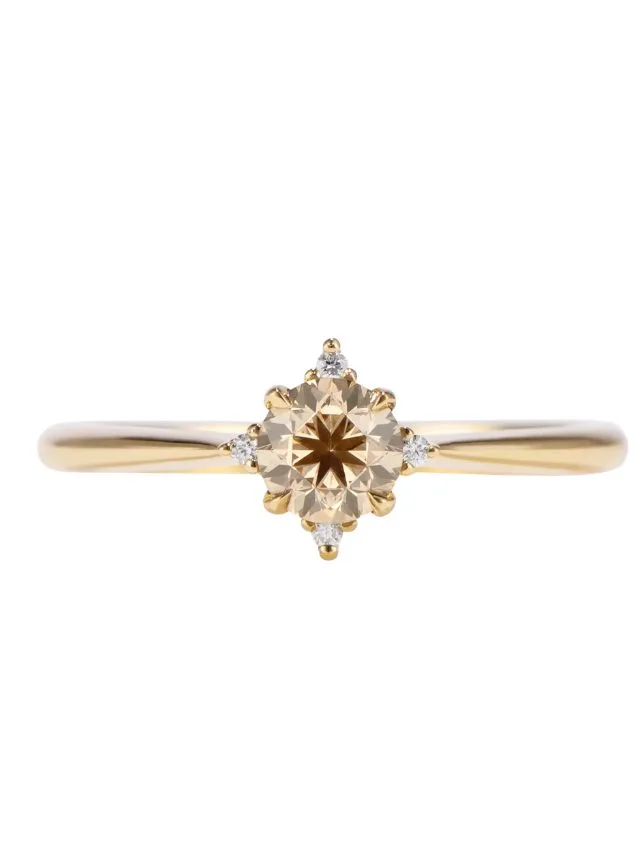
CUSHLA WHITING
Mini Lucia 0.38ct Round Champagne Cluster Ring
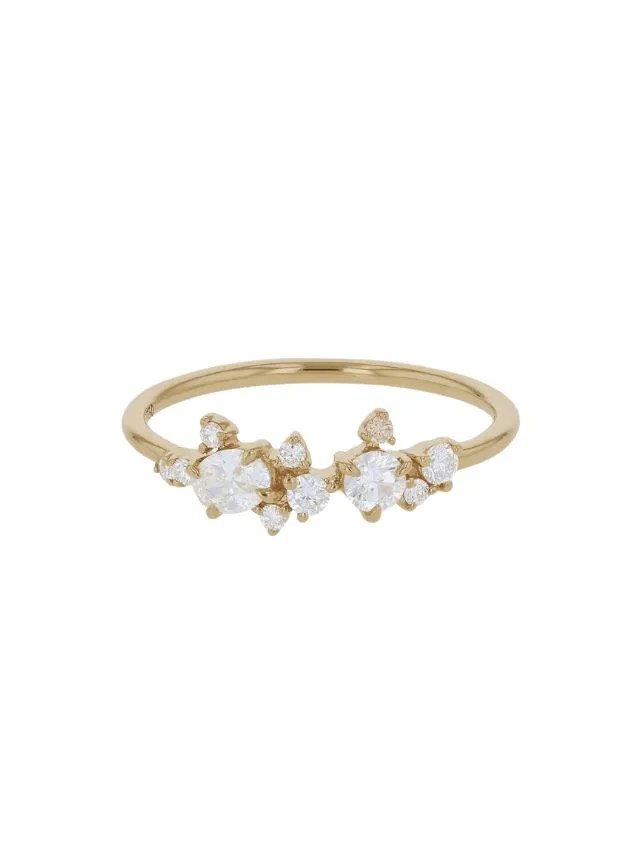
SARAH & SEBASTIAN
Aether Cluster Ring
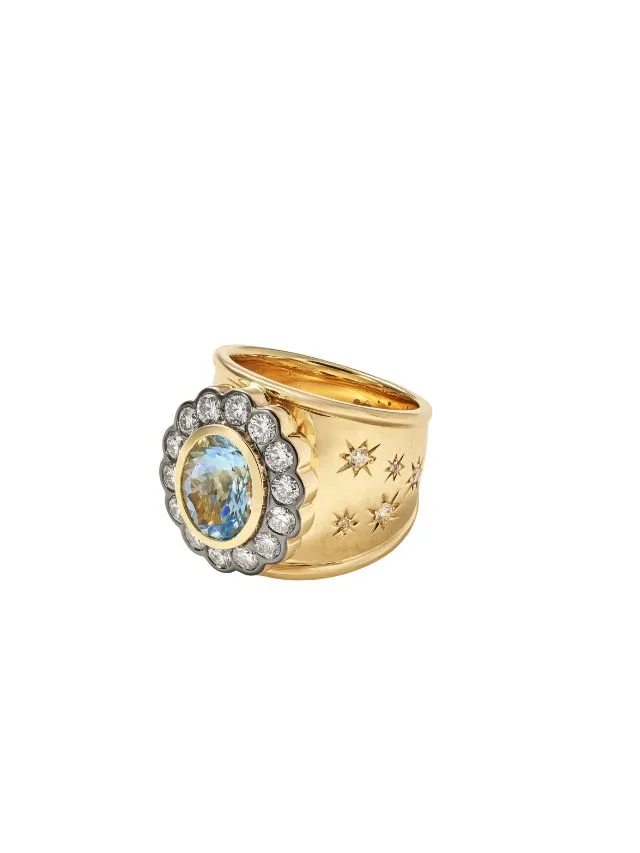
MARLO LAZ
Alix Cigar 14-karat Gold Ring
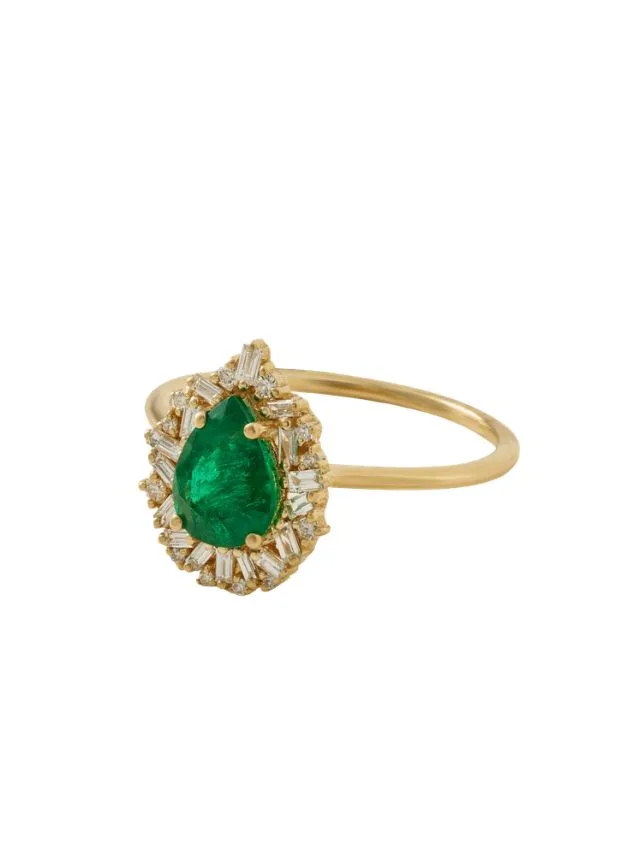
SUZANNE KALAN
18-karat Gold, Emerald & Diamond Ring
But this isn’t just about price. This shift is reflected in luxury trends worldwide. The Business of Fashion has reported that for luxury customers, emotional connection is now the biggest driver of desirability — outranking traditional drivers like scarcity — with consumers looking for products that fit with their identity.
Something like a cluster engagement ring aligns perfectly with this cultural shift, offering a level of personalisation that a standard solitaire simply cannot.
“The cluster engagement ring offers a huge amount of room for personalisation,” says Cushla Whiting, jeweller and co-founder of Cushla Whiting. “Florals, asymmetry, mixed cuts, a cluster gives a jeweller room to design something that’s very bespoke,” he explains. “They can bring together different stones, shapes and silhouettes, even leaning fully asymmetric.”
They also allow for the seamless incorporation of sentimental jewels. You may have a family ring you inherited in a style you don’t like—a cluster setting lets you repurpose the jewels and carry the story forward in a way that feels natural to you. You could also add birthstones or unique gems purchased on memorable holidays to create a pastiche of memory and meaning.
What Is the History of the Cluster Engagement Ring?
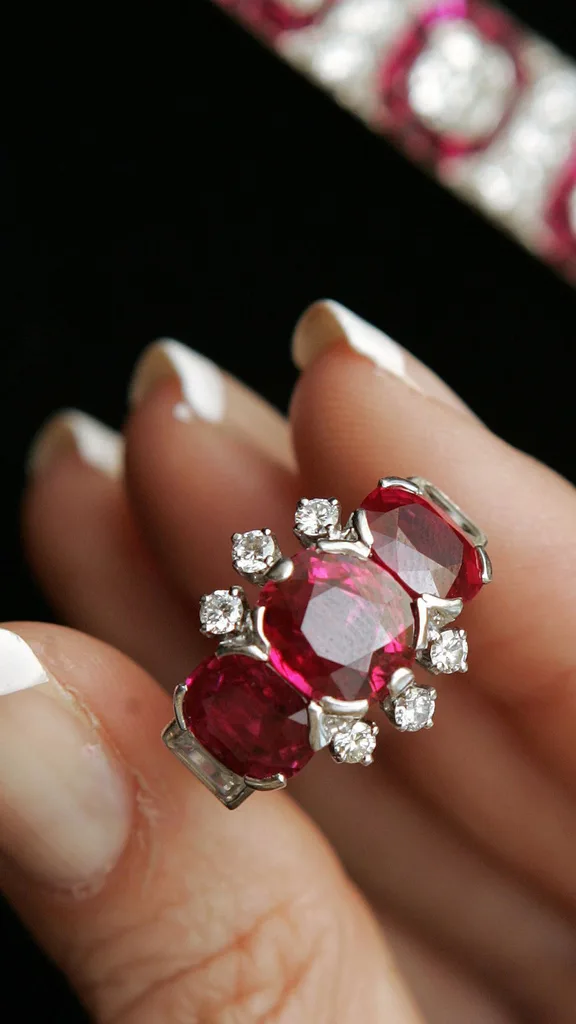
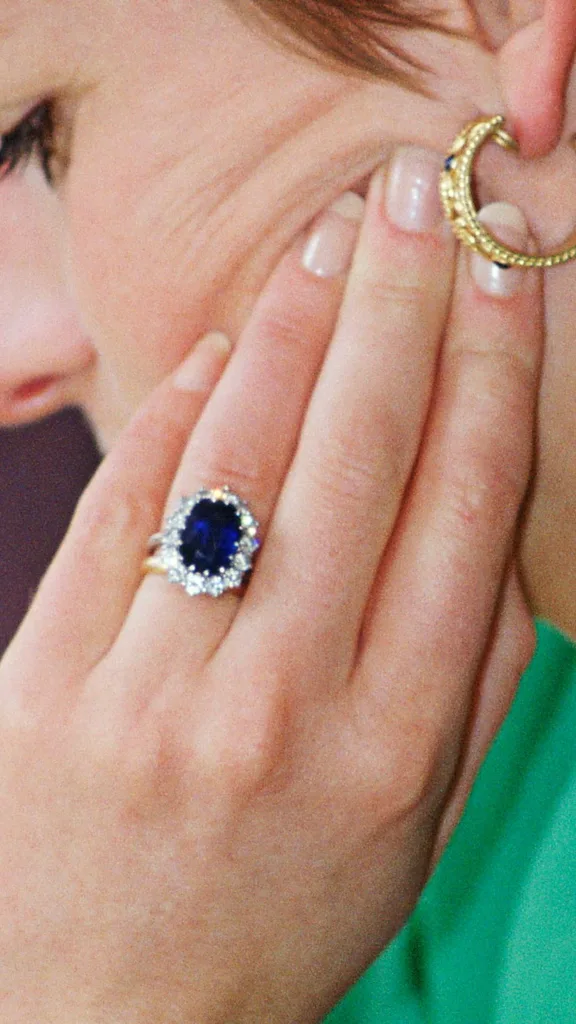
Whiting explains that the cluster engagement ring has quite a long history. The style dates back to the Georgian and Victorian eras when larger stones were much harder to source. “Smaller diamonds would be set close together to maximise sparkle,” he explains.
This trend resurfaced in a more stylised form during the Art Deco period and was again popularised in the 1960s when Antony Armstrong-Jones proposed to Princess Margaret with a large ruby, set in gold and surrounded by diamonds in the shape of a flower bud. Another famous royal heirloom is Princess Diana’s sapphire-and-diamond cluster engagement ring from Prince Charles, which is now worn by her daughter-in-law Catherine, Duchess of Wales.
What Are The Benefits Of A Cluster Engagement Ring?
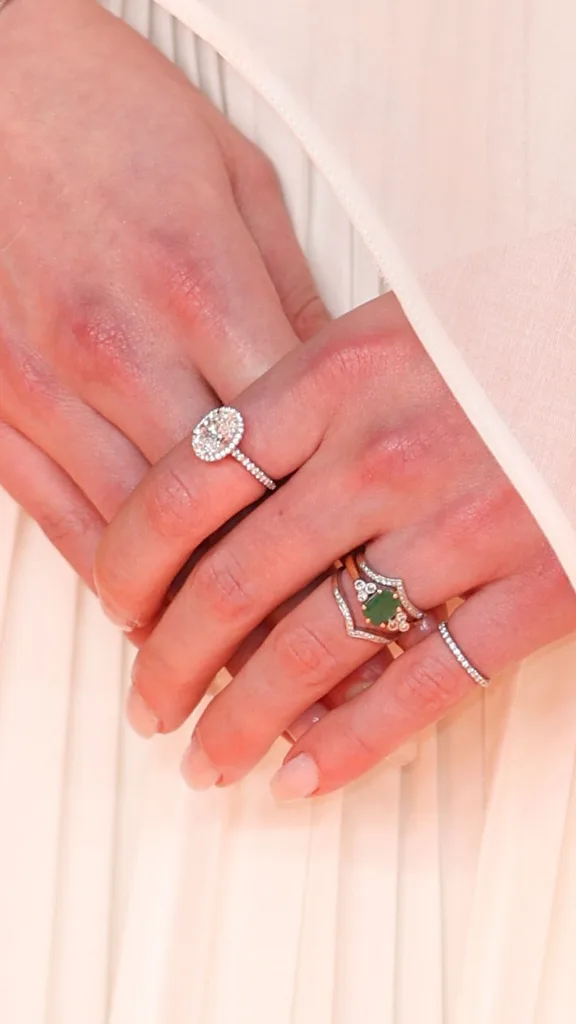
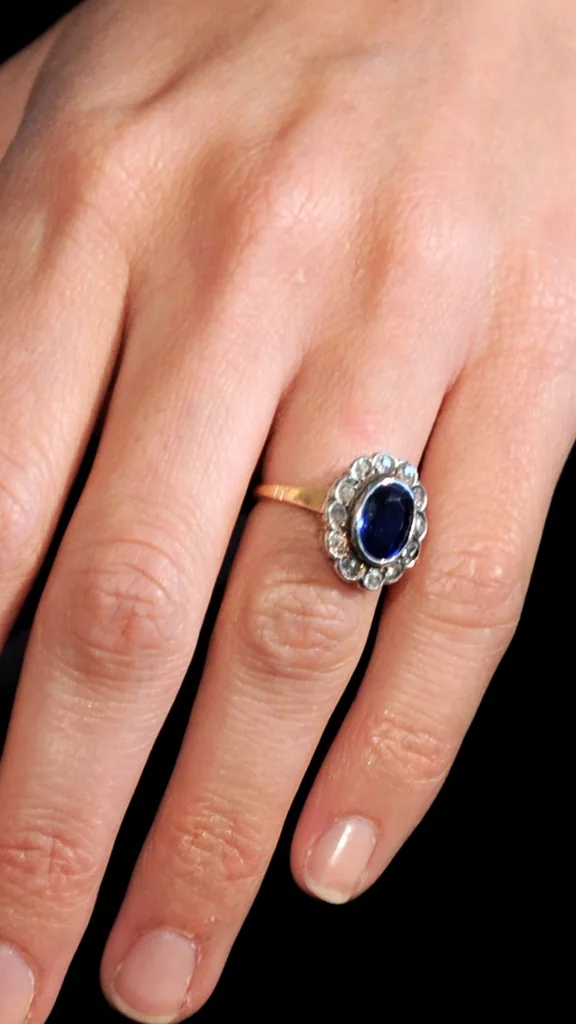
Aside from the deep potential for personalisation, the cluster style offers several practical benefits from a design perspective. Monica Ruggerino, Gouacheuse, Goldsmith, and Gemologist, explains that they are the perfect way to create volume on the finger without adding awkward height, which naturally enhances the visual impact and perceived size of smaller central gemstones.
Whiting adds that the cluster style possesses a unique charm that the traditional solitaire simply can’t match. There is an optical sense of depth to these arrangements. Because of the layered setting and the unique angles of the smaller grouped diamonds, they catch light and sparkle in a way that a single, flat-set stone just doesn’t.
Even a brand-new cluster ring tends to carry that antique, heirloom feel, which is arguably why the style keeps coming back. Younger buyers are drawn to styles that feel individual rather than conventional, and a cluster ring stands completely apart from the ubiquitous oval solitaire.
Cluster Engagement Ring Ideas
From Whiting’s point of view, the modern cluster is no longer limited to the traditional, symmetrical halo arrangement favoured by the House of Windsor. “They can bring together different stones, shapes, and silhouettes, even leaning fully asymmetric.”
If you want to bring this trend to life, there are three key ways to style a cluster arrangement:
- Upcycle and Repurpose: If you have inherited a family ring in a setting you don’t love, a cluster arrangement allows you to break down the jewels and carry their story forward in a way that feels natural to your personal style.
- Tell a Personal Story: You can incorporate your own birthstones or unique gemstones purchased on memorable holidays to create a particular meaningful “bouquet” of stones.
- Embrace Asymmetry: Pair colored gemstones, surprise silhouettes, and mixed cuts together for a bespoke design.
The post The Vintage Engagement Ring Trend That Has Brides Choosing Character Over Carat Count appeared first on ELLE.