Views: 12
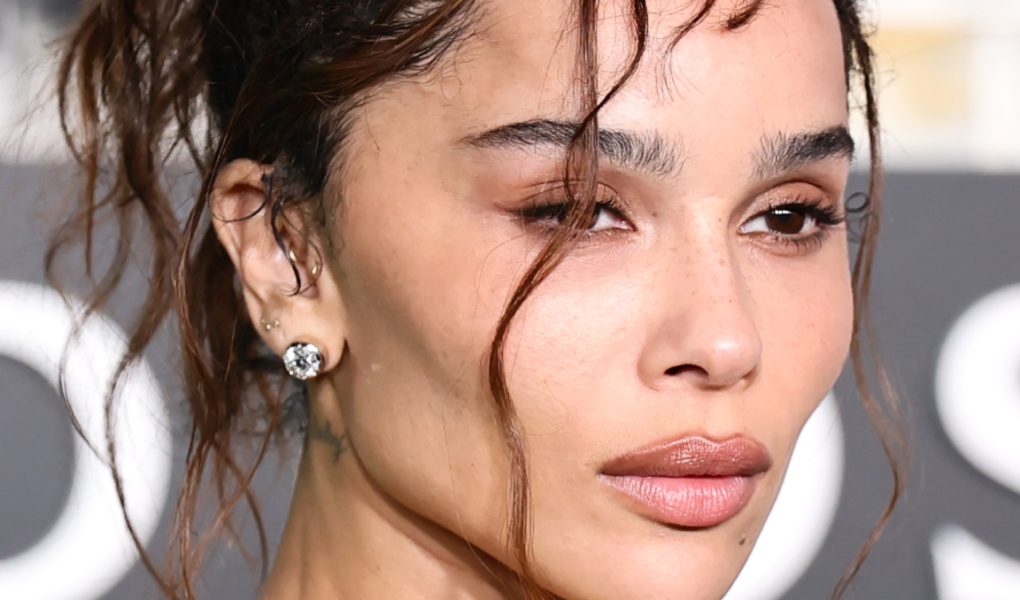
How many strands of hair does it take to constitute a fringe? If Zoë Kravitz’s latest hairstyle is anything to go by, considerably fewer than we’d previously considered necessary.
Stepping out at the New York premiere of How To Rob A Bank, Kravitz sported a rather intriguing arrangement of hair across her forehead. Too sparse to qualify as a traditional fringe, yet too deliberate to be dismissed as a few stray strands, the hairstyle is something of a fringe-adjacent phenomenon. We’re dubbing it the ‘tassel fringe’.
The work of renowned hair artist Nikki Nelms, the look is a lesson in the distinction between undone and unconsidered. For all its apparent nonchalance, there’s an impressive degree of precision to the placement of those four strands.
The resemblance to decorative fringing lies in the way the individual pieces of hair hang independently of one another. The shortest strands delicately fall across the forehead, while the longer tendrils snake their way down either side of the face. Where a traditional wispy fringe relies on softly diffused strands, the tassel fringe makes a feature of its separation. In fact, there’s arguably more forehead than fringe involved.
“I love how this fringe challenges the idea that every hair needs to sit perfectly in place,” says Mary Alamine, founder of Royals Hair. “It’s delicate, slightly rebellious and incredibly chic. The beauty is in the negative space between the strands, which gives it that effortless, editorial edge.”
Now, would we be quite so intrigued by this particular hairstyle had it appeared on anyone other than Kravitz? Debatable. The actress is uniquely positioned to pull off basically any beauty look, even those that might otherwise prompt those around you to ask if you’d like a bobby pin.
Kravitz has never been one to subscribe to the usual rules of a traditionally ‘flattering’ haircut (see: her longstanding love affair with the micro fringe). While the rest of us choose hairstyles to suit our faces, Kravitz is free to operate on the rather enviable premise that her face will suit whatever hairstyle she chooses
“Zoë wears this beautifully because the fringe doesn’t compete with her features, it enhances them,” explains Alamine. “The fine, irregular pieces soften her hairline and highlight her incredible bone structure.”

The tassel fringe also marks an interesting departure from the slicked-back aesthetic that has dominated our feeds for the better part of the past few years. Having expended considerable energy (and many tubs of various styling gels) ensuring not a single hair falls out of place, we’re now contemplating the merits of setting a few select strands free.
It’s also a natural evolution of the ’90s tendril revival, albeit with considerably less hair involved. Think less chunky face-framing sections, more the delicate fringing on a vintage silk lampshade. We’ve seen decorative fringe make a triumphant return to our interiors, and hair was evidently the next phase of its domination rollout.
Will we be beelining for the salon armed with a picture of Kravitz and a request for a tassel fringe? Perhaps not en masse. But in an era in which even our supposedly effortless hairstyles have become remarkably formulaic, we can appreciate a fringe (or at least, fringe-like thing) that goes a little rogue. All four strands of it.
The post We Need To Talk About Zoë Kravitz’s ‘Tassel Fringe’ appeared first on ELLE.