Views: 63
As guests filed into the Via Solari showroom on a sunny Wednesday afternoon in Milan, they were met with a line from E.E. Cummings emblazoned across the wall: “I like my body when it is with your body.” It set the tone for a collection that was unmistakably Maria Grazia Chiuri.
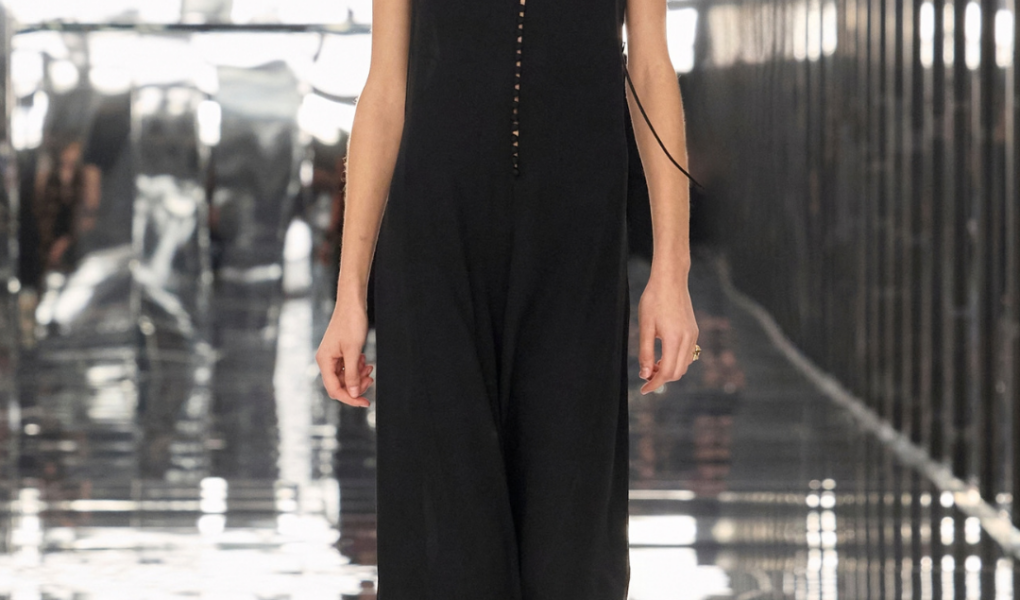
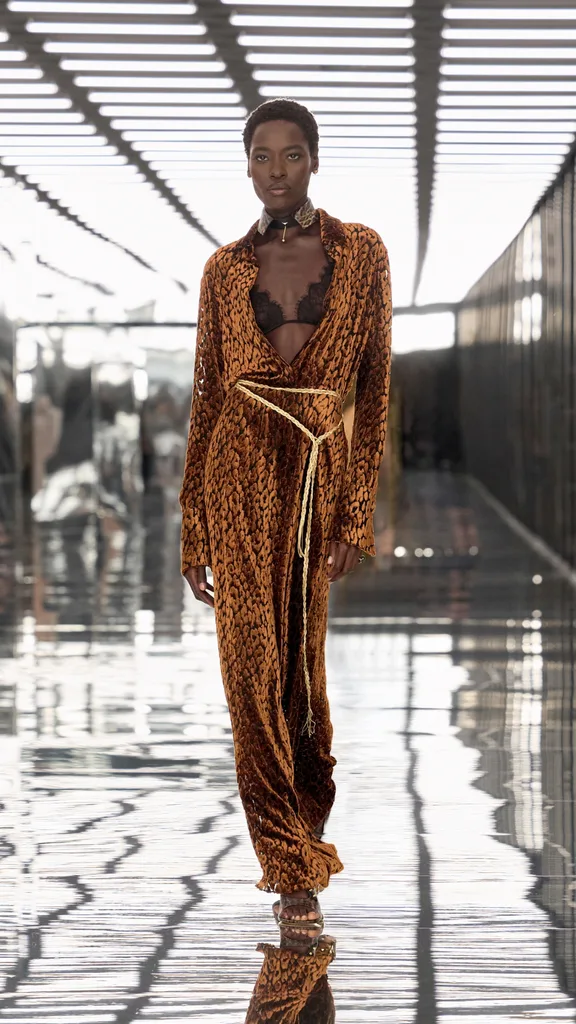
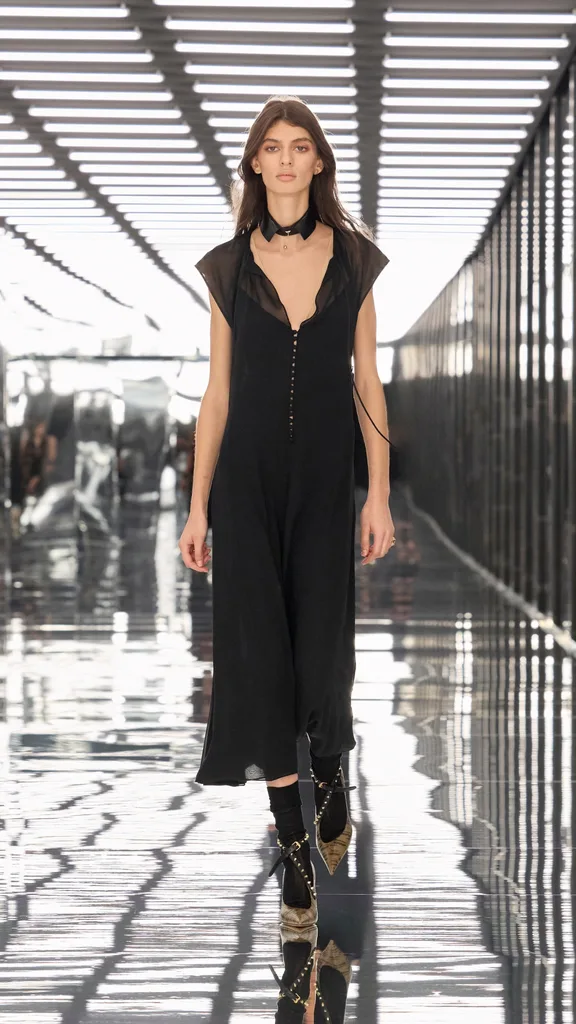
At the centre of the room stood a two-way mirrored box. As the models moved through it, their reflections multiplied and scattered across the space, creating the illusion that they were walking among the guests rather than past them. The reference, according to the show notes, was Cubo di specchi (Mirror Cube) by Luciano Fabro, the Arte Povera artist whose mirrored sculpture forces viewers to confront themselves and one another in its surfaces. For Chiuri, the mirror is about mutual recognition, the discovery of others in our own reflection.
But a two-way mirror carries another meaning in 2026. It is the glass of the interrogation room, the surface you are seen through without seeing who is looking. In an age of smartphones and front rows filming every look, it was hard not to read the box as a comment on how we are constantly being observed. The clothes were made to be looked at, and the set made everyone aware of looking.
That tension ran through the collection itself, which began with the body. Chiuri took undergarments for both men and women as her starting point: a fine, intimate layer that can conceal or reveal, worked in lace, embroidery and colour. Bodysuits and fluid, flowing dresses moved easily on the body, sensual without being severe.
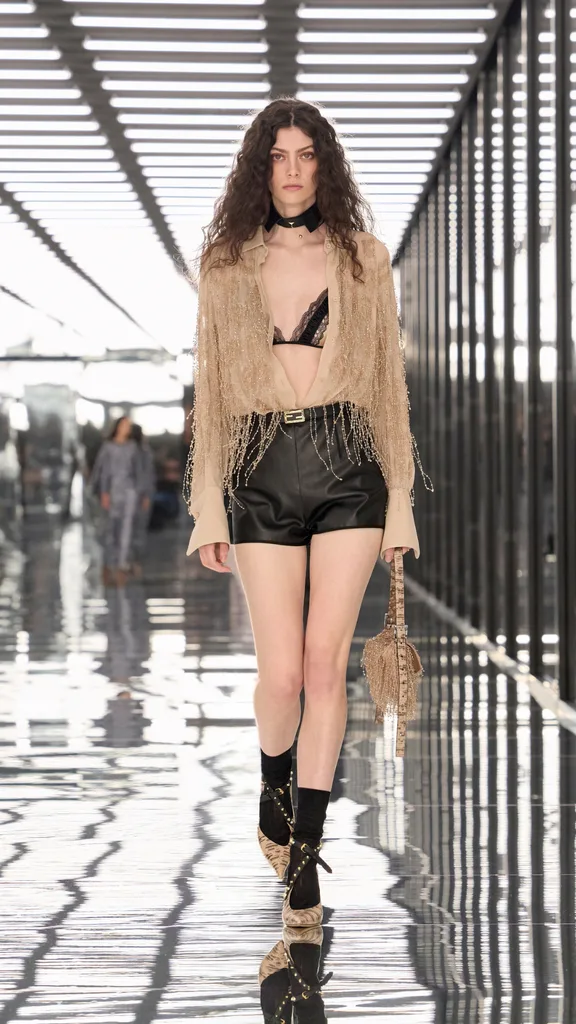
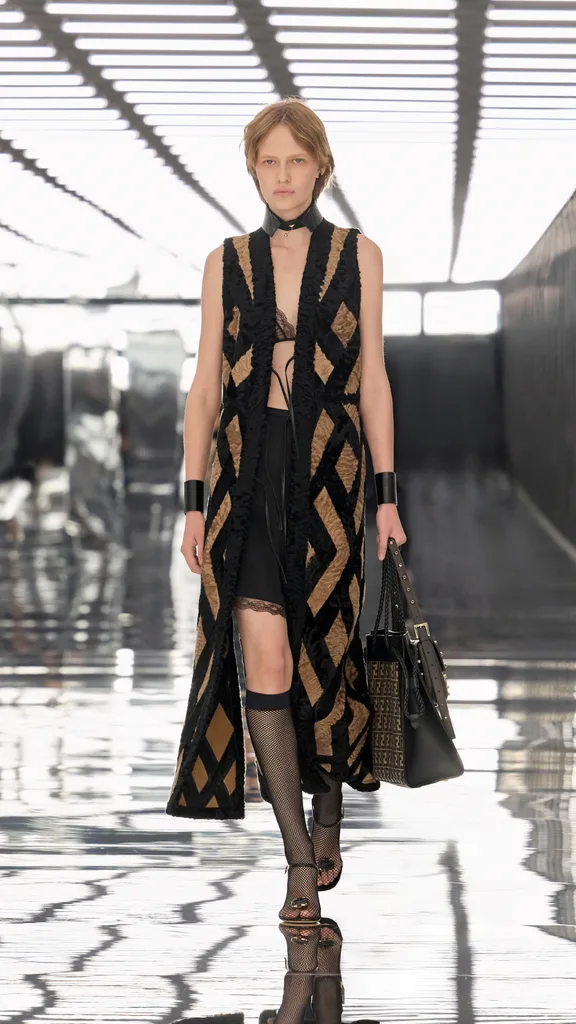
The mood came from 1970s Italian pop culture. Chiuri cited Raffaella Carrà, the glittering television star whose costumes and cheek made her a symbol of female independence, and Adriano Celentano, whose 1972 song Prisencolinensinainciusol was sung entirely in invented words meant to sound like English to Italian ears. The famous television performance, with Carrà and a troupe of dancers repeating and reflecting one another, was echoed in the mirrored box.
There was also something of Chiuri’s fellow Dior alumnus Hedi Slimane in the silhouettes: a lean, rock-star ease and a boho, Laurel Canyon cool. Both share an appreciation for an impossibly cool era. Where Slimane has long drawn on Bowie and Jagger, Chiuri reached for their Italian counterparts. It was clearest in a series of black wool jackets with gold soutache and shearling trim, worn over open silk shirts, layered chains and faded denim, the military frogging of ’70s rock stars reimagined.
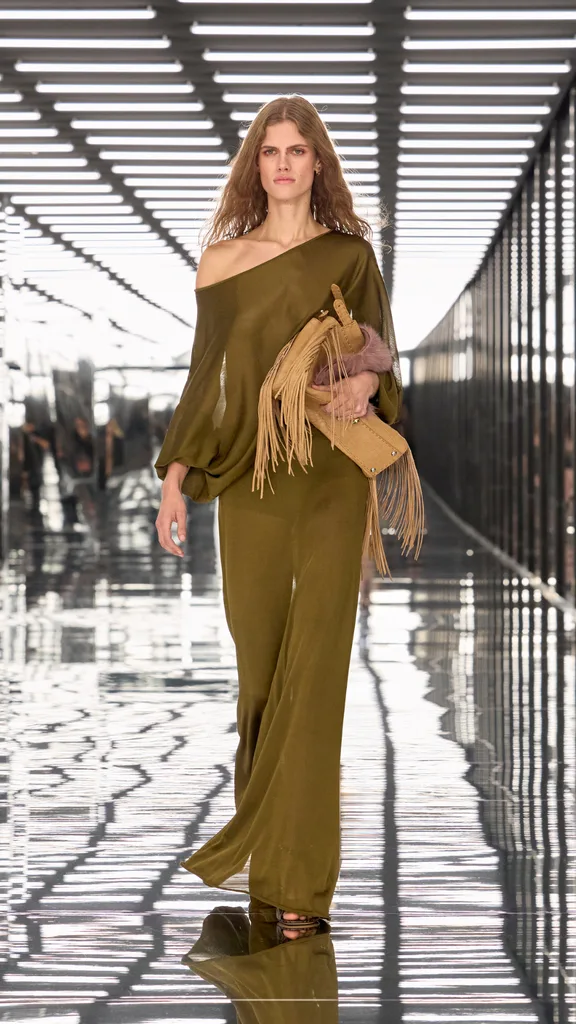
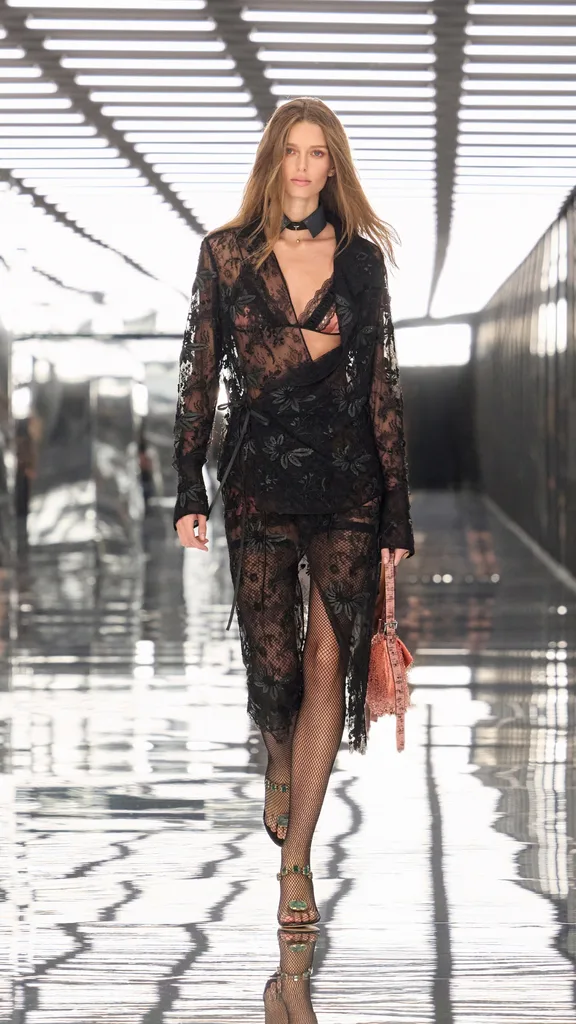
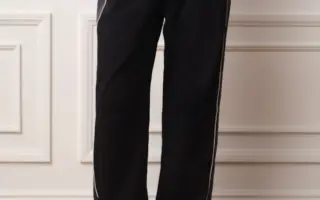
The palette was largely sultry, broken by flashes of fun in turquoise fur and pastel silk with a touch of disco about them. The contrasts continued in the materials, glossy against matte and silk against animal print, with the dressing gown taken out onto the street and jewelled shoes finishing the looks. Men and women walked as equals, the lingerie offered to both, and gendered dressing set aside. As the show notes put it, this was an exaltation of bodies, not constriction.
What Chiuri does best is make an idea wearable. For all the references, these were easy, cool clothes that a customer will want to live in. And as the last looks passed through the mirrors and out into the room, the point landed: the Fendi woman and man were not on a stage elsewhere. They were already walking among us.
The post The Fendi Woman And Man Walk Among Us appeared first on ELLE.